What is Flex Space in Commercial Real Estate? A Complete Guide
What is flex space in commercial real estate? As flex space increases in popularity, more small businesses, startups, mobile workforces, and service-oriented companies are wondering about the affordability and flexibility of this option. In this complete guide to flex space, we’ll explore what flex space is, some of its most common qualities, what type of businesses use flex space, advantages and disadvantages, and tips for leasing your next flex property.
KEY TAKEAWAYS / TL;DR
- Flex space is a type of commercial real estate that combines warehouse and office/retail space in a single-story layout, typically featuring shorter lease terms and smaller warehouse sections than traditional warehouses.
- Flex properties typically allocate at least 50% of the space to office areas and include features such as loading docks, higher ceiling heights, and customer-facing front sides that distinguish them from traditional industrial warehouses.
- Service-oriented businesses, startups, mobile workforces, and small companies are the primary users of flex space due to its affordability, which can be approximately 50% less expensive than traditional office space in some markets, such as Charlotte.
- The main advantages of flex space include cost effectiveness, adaptable layouts, and shorter lease terms, while disadvantages include lower-quality office environments with fewer windows, potential zoning restrictions, and higher maintenance costs.
- Flex properties appeal to a wide range of tenants and offer scalability options that allow businesses to expand or contract their leased space without relocating to a new property.
What is Flex Space in Commercial Real Estate?
Flex space is a type of commercial real estate that generally combines warehouse and office/retail space, providing a flexible and adaptable option for tenants. Flex buildings typically have shorter lease terms than traditional office buildings, smaller warehouse sections than traditional warehouses, and are usually found in prime locations that offer easy access to a wide customer base.
More and more businesses are turning to flex space buildings for their affordability, adaptability, and convenience. Small businesses, startups, mobile workforces, service-oriented businesses, and smaller companies looking for shorter leases often tend to gravitate toward the flex property option.
And for investors, flex properties offer the benefit of appealing to a wide range of users. Both their high demand and versatility make flex assets a popular investment option.
Common Qualities of Flex Space
1. Single-story layouts
Most commercial flex space properties feature a single-story building, which provides easy access and an adaptable layout for different users. One downside of having the entire building on one ground floor is that there are typically fewer windows than other commercial office spaces with many stories and windows on all sides.
On the other hand, flexible office spaces not only support a variety of users, but these types of properties also offer easy access to the parking lot without having to navigate elevators or travel farther distances to the attached warehouses. Flex space users typically also enjoy convenient restroom access, with self-contained restrooms within the space.
2. Loading docks
Flex buildings typically have at least one loading dock or warehouse door that makes the warehouse section usable for shipping and receiving facilities. Usually, this tends to be a roll up door instead of a dock door.
3. Higher ceiling heights
High ceilings are another common feature of flex warehouse space. This feature allows more storage space for different types of companies – whether a warehouse, manufacturer, or distribution center.
4. Smaller parking lots
Unlike traditional industrial properties or warehouse spaces, flex spaces typically have smaller parking lots, since they don’t need to accommodate large trucks and trailers in the same way that distribution buildings do. Most of the time, flex parking lots are simply hosting employees and smaller trucks, such as FedEx and UPS vehicles.
5. Customer-facing front side
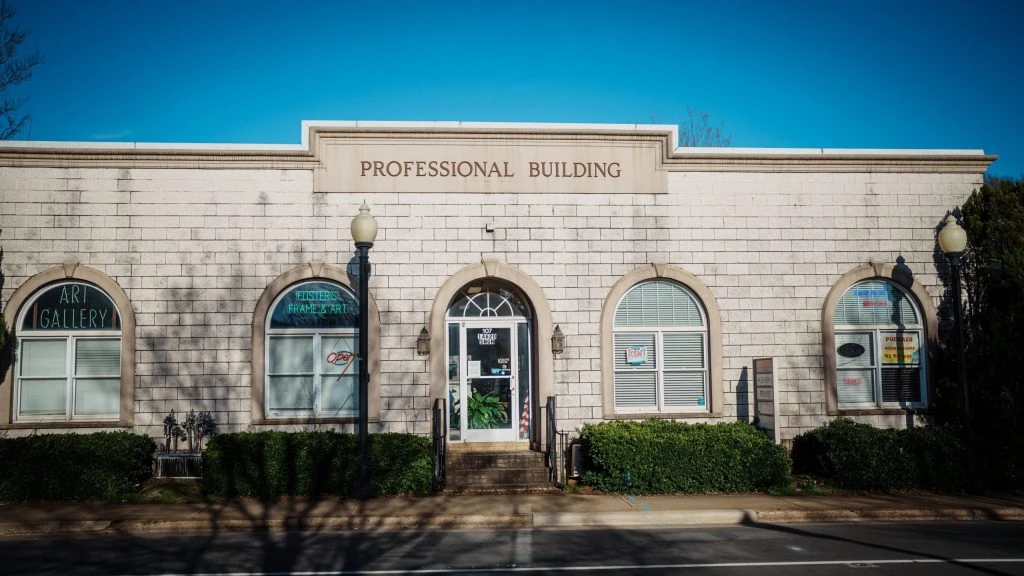
Unlike typical warehouse industrial space, an industrial flex building usually has a customer-facing front side. This allows the business to welcome customers and clients in a professional manner. The office segment, usually located on the front side of the building, also makes it easy for administrators to greet guests when necessary.
6. Significant office portion
In most flexible spaces, the office areas take up at least 50% of the space. Flex office space is sometimes leased by only one company, but often, it’s shared by many companies. This coworking option for office work cuts down on costs for users compared to traditional office space.
The typical layout of these offices features a more open floor plan than traditional office buildings, which usually have separate rooms or cubicles. This allows for greater flexibility for a variety of users as well as for the changing needs of businesses.
7. Common areas
Flex offices typically have common areas where employees can network, collaborate, and experience a sense of community within the workplace. While this can lead to better brainstorming sessions, greater creativity within the company, and improved morale through stronger relationships, it can also lead to less privacy, which can be a downside for some tenants and employee personality types.
8. Convenient access
Flex properties are usually found in key locations such as near main roads, highways and interstates, urban areas, and other transportation hubs. Since these spaces are often used by service-oriented businesses, having an accessible location is vital for being able to quickly travel to a wide customer base, as well as to suppliers and partners.
9. Scalability
Flex spaces offer businesses the opportunity to grow by leasing out smaller or larger portions of the space as needed. For business owners, the option of being able to scale the business without having to find a whole new property can be an invaluable feature of flex space.
10. Shorter leases
Shorter lease options offer greater viability to small businesses and startups who aren’t sure how much or how quickly business operations will change. Being able to adapt to market conditions due to the option for shorter lease terms is a major perk of flex space for businesses.
Some property owners even offer month-to-month lease options. Compared to long-term leases, this option allows businesses to be able to easily pivot and adapt for future opportunities.
Flex Space vs. Traditional Commercial: Feature Comparison
| Feature | Flex Space | Traditional Office/Warehouse |
| Office Portion | 50%+ of total space | 100% office or <10% office |
| Typical Lease Length | 1 year or month-to-month | 3-5 years minimum |
| Ceiling Height | 14-20 feet | 9 feet (office) or 24+ feet (warehouse) |
| Customer Access | Front-facing entrance standard | Limited or dock-only access |
| Building Stories | Single-story layout | Multi-story (office) or single (warehouse) |
What Types of Businesses Use Flex Space?
Flex space is often used by service-oriented businesses, startups, mobile workforces, and other small businesses looking for an affordable and flexible lease option.
Common flex space users include:
- Painters
- General contractors
- Roofers
- Cleaning companies
- Pest control companies
- Tech companies
- E-commerce companies
- Research and development (R&D)
- Fitness centers
- Retail and logistics
- Mobile workforces
Benefits of Flex Space
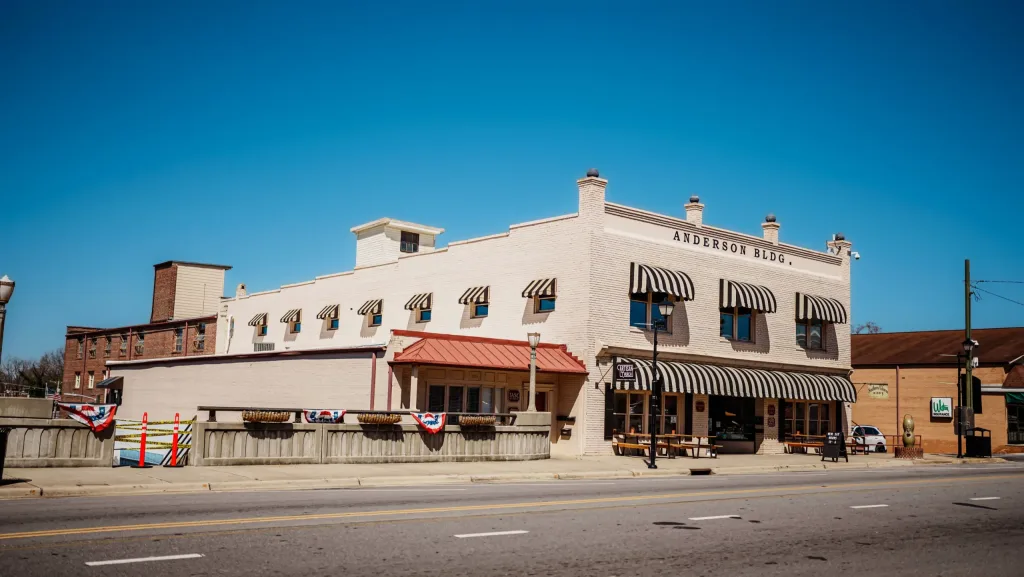
- Cost Effective. Most flex properties lease for a lower cost than traditional office buildings. In the metro Charlotte area, we’ve found that flex is actually about 50% of the cost of traditional office space. This makes flex properties a great option for a variety of industries, offering effective solutions that are especially helpful for startups and small businesses.
- The layout of flex buildings is generally very adaptable, providing options for different types of office and warehouse needs. Usually, flex buildings feature a more open office work environment and a warehouse with high ceiling heights and at least one dock door. The versatility of these spaces allows companies to customize the space to fit their specific needs.
- Shorter lease terms. Flex property owners typically offer shorter lease options, with some even being open to month-to-month agreements. This flexibility is ideal for newer businesses or anyone who may need to change direction quickly.
Disadvantages of Flex Space
- Lower-quality offices. Flex offices typically have fewer windows than taller office buildings, which can be difficult for employees who work full time in the office segment. On the other hand, many flex office workers only work part time or travel to different parts of the building during the work day. Flex offices also have less privacy and more common areas than traditional office spaces, which can be distracting for workers.
- Zoning restrictions. It’s important to note local zoning regulations before signing a lease for a flex property. Some municipalities have restrictions on the type of manufacturing or retail operations that can take place in different zoning.
- Higher maintenance costs. Although the overall cost of flex space is typically quite low compared to other types of properties, maintenance costs can be higher for these buildings. This is due to the nature of having both office and warehouse space and the need to keep all features up to date in both portions of the building.
Flex Space Trade-offs: What You Gain vs. What You Give Up
| Consideration | Advantage | Trade-off |
| Office Environment | 50% lower cost, flexible layout | Fewer windows, less natural light |
| Privacy | Open collaboration spaces | Limited private offices or quiet zones |
| Operational Use | Warehouse + office in one location | Potential zoning restrictions on activities |
| Maintenance | Control over both office and warehouse | Higher overall maintenance responsibility |
| Lease Flexibility | Short-term options, easy adaptation | Less long-term stability, potential moves |
Tips for Leasing Flex Space
1. Check zoning
Zoning restrictions in different municipalities mean that some types of businesses will not be allowed to operate in certain zones. Before closing on a flex space, make sure that you’ve checked the zoning and that it’s adequate for your business.
2. Consider your service area
Flex users are often traveling to customers and clients. Fortunately, most flex spaces are located in higher-traffic areas near interstates and other transportation hubs. Consider not only your service or trade area, but also the accessibility of your new property to your employees.
Convenient flex locations allow businesses to operate swiftly and save time and money by reaching clients quickly and efficiently.
3. Ask about expansion options
A major benefit of many flex spaces is the ability to expand and adapt with changing business needs. If you’re only going to be leasing part of the building, be sure to ask about possible future expansion options to different portions of the building.
4. Understand the lease terms
Understanding options for lease length as well as the specific type of lease and lease terms is key for a positive leasing experience. Take the time to understand all of the terms of your lease agreement, and consider working with an experienced tenant representative to help you navigate the gritty details and avoid future frustration.
5. Amenities and maintenance
Lastly, consider the amenities in both the office and warehouse portion to make sure they adequately fit your needs. Will the office be conducive to the work styles in the building? Are the warehouse’s power supply, ceiling height, and loading capabilities all compatible with the type of manufacturing or storage that will take place?
In addition, keep in mind that you will likely be responsible for keeping up with maintenance on all features, so make sure the building doesn’t have significantly more space or features than you need.
Pre-Lease Checklist: Critical Questions Before Signing
| Evaluation Area | Key Questions to Ask | Red Flags |
| Zoning Compliance | Does zoning allow your specific operations? | Vague answers about permitted uses |
| Expansion Rights | Can you expand into adjacent space if available? | No first-right-of-refusal option offered |
| Lease Structure | What’s included in base rent vs. additional costs? | Unclear CAM or maintenance fee calculations |
| Infrastructure | Are power, HVAC, loading adequate for your needs? | Deferred maintenance or outdated systems |
| Location Access | Travel time to your primary service area? | More than 20 minutes from customer base |
FAQs About the Kannapolis, NC Neighborhood Near Charlotte
What’s the difference between flex and industrial space?
The biggest difference between flex space and regular industrial space is that flex space includes a certain percentage of the building that’s dedicated to an office setup. Usually, flex properties have a front-facing office area with a warehouse in the back.
In addition, flex space typically offers more flexible lease terms, more open layouts, and, in some cases, better access to highways and interstates in comparison to traditional industrial space.
Is flex space cheaper than office and warehouse space?
Flex space in Charlotte is typically much less expensive—often 50% of the cost of office space.
In addition, many tenants can save a significant amount of money by combining the company needs into one flex building rather than leasing an office building in addition to a warehouse building.
How long are flex space leases?
Flex space lease terms are typically fairly short, with some landlords even offering month-to-month leasing. Commonly, you can expect to find flex lease agreements with 1-2-year terms.
How are flex buildings different from office buildings?
While flex buildings have office sections, a good portion of the building—often up to 50%—is also taken up with warehouse space. The office portion that does exist is usually more adaptable, often with collaborative spaces and rearrangeable desks. Flex offices are typically a bit lower quality than traditional offices, often with less natural light and fewer private rooms.
What are some qualities of flex space?
Most flex spaces include similarities such as:
- Single-story layouts
- One or more loading docks (often a roll-up door instead of a dock door)
- Higher ceilings
- Smaller parking lots (accommodating employees and smaller trucks rather than large trailers)
- Customer-facing front
- Significant office portion (usually 50% or more)
- Common areas for employee collaboration
- Convenient access near highways and interstates
- Scalability
- Shorter leases
What are the benefits of flex space?
The main benefits of leasing flex space include its lower cost compared to traditional office space, adaptability within the space, and shorter lease terms, providing more flexibility to changing businesses.
What are some tips for leasing flex space?
Before you lease flex space, make sure the property is zoned correctly, consider proximity to your client base, work with a commercial broker to go over lease terms and options, and check the full list of amenities included.
What happens if my business outgrows the available expansion space in my flex building?
If you've maximized your flex property and no adjacent units are available, you'll face the decision to relocate or split operations across multiple locations. This is why negotiating first-right-of-refusal clauses for adjacent spaces is critical when you initially sign your lease.
Some businesses successfully operate a hybrid model—keeping their flex space for core operations while adding a secondary pure warehouse location for overflow inventory or a satellite office for regional teams.
Are coworking flex spaces differ from single-tenant flex properties?
Yes. Coworking flex spaces divide the office portion among multiple small businesses, who share common areas, conference rooms, and amenities. Single-tenant flex gives one business exclusive use of the entire property.
Coworking options typically offer more flexibility with shorter terms and smaller minimum space commitments (sometimes as low as a single desk and storage unit). The downside is that you sacrifice privacy and exclusive control over the space, and per-square-foot costs are often higher than single-tenant arrangements.
Can flex space accommodate heavy manufacturing equipment?
Most flex spaces are designed for light manufacturing and assembly operations rather than heavy industrial use. While they feature higher ceilings (14-20 feet) and loading docks, the floor load capacity and power infrastructure are typically limited compared to dedicated manufacturing facilities.
If your operations require specialized equipment, cranes, or three-phase power exceeding standard capacity, it’s a good idea to verify these specifications with the property owner before signing a lease.
Find Your Next Flex Space Property with Regent CRE
As experts in the Charlotte Metro commercial real estate market, our team at Regent Commercial Real Estate has successfully closed over 500 flex space transactions. From a custom list of ideal potential properties to closing support through the last step, we’re here to make your experience seamless and successful. More than simply finding a property, our goal is to help you take the next step to a thriving future for your business.
When you work with Regent CRE, you can expect top-notch negotiation skills, more time to focus on your business, and the best value for your money.
Ready to get started? Browse flex options around Charlotte, or contact us today.
Share This Story, Choose Your Platform!
About the Author: Brian Smith, SIOR | CCIM | MBA

Related Posts



What our clients are saying


Unlock Exclusive Commercial
Property Listings