Flex Space Vs. Warehouse and Office – Which is Right for Your Business?
Flex space is a newer category of commercial real estate that’s continuing to rise in popularity. For many businesses, the option of flex space has eliminated the need to buy or lease two separate buildings – a warehouse building and an office building. Instead, flex space combines these two uses into one building.
For some businesses, this option can provide numerous benefits – less overhead costs, only one utility bill, and convenience, just to name a few.
However, for other businesses, it makes more sense to use a warehouse building along with a separate office building, in different locations.
What decision makes the most sense for your business? Let’s explore the pros of using one flexible space, then contrast the pros of leasing two separate buildings (office and warehouse).
What is Flex Space?
First of all, what exactly is flex space?
Flex buildings are a type of commercial real estate that combines both office space and warehouse space into one building. While traditional warehouses may have a small portion of office space, industrial flex space typically has offices filling at least 50% of the building. Some flex spaces are more suited to a warehouse and retail mix, rather than purely warehouse and office.
These types of spaces can serve a variety of purposes, and are often a good option for growing businesses, allowing them to meet the changing needs of the company. They also tend to be a more affordable option. In the Charlotte area, we find that flexible spaces are typically about 50% less expensive per square foot than traditional office space.
Many industrial flex buildings are also shared by multiple businesses, which further lowers the cost for each tenant.
Service-based businesses are common tenants for flex industrial space, since they generally need some amount of warehouse space to go along with the administrative office areas. These buildings typically offer easy access to highways and interstates, allowing service businesses to reach a broad range of clients quickly.
General contractors, cleaning companies, auto repair shops, tech companies, data centers, and pest control companies are just a few examples of the types of businesses you’ll often find in flex buildings.
Should You Have One Building or Two Buildings? Flex or Warehouse + Office
Businesses who need both office and warehouse space are faced with the question of whether to use one combined flex building or two separate buildings (a warehouse building and an office building).
This decision is a personalized choice that depends on the individual company’s needs, and it should be weighed carefully. As flex buildings continue to rise in popularity, many small businesses are moving over to the option of combined flex warehouse space.
However, while these types of buildings provide many benefits to certain businesses, they don’t work for everyone.
Using one flex building can streamline business operations, reduce overhead costs, and provide a flexible option to meet changing business needs.
On the other hand, for some businesses, it works best to have two optimized locations – one for the office and another for the warehouse. In addition, business operations may demand a larger warehouse or a higher quality of office space that is difficult to achieve in an industrial flex building.
Is a flex building right for you? Or will two separate buildings better support your business operations?
Let’s look deeper into the pros of each option.
Pros of Having One Flex Building for Your Business
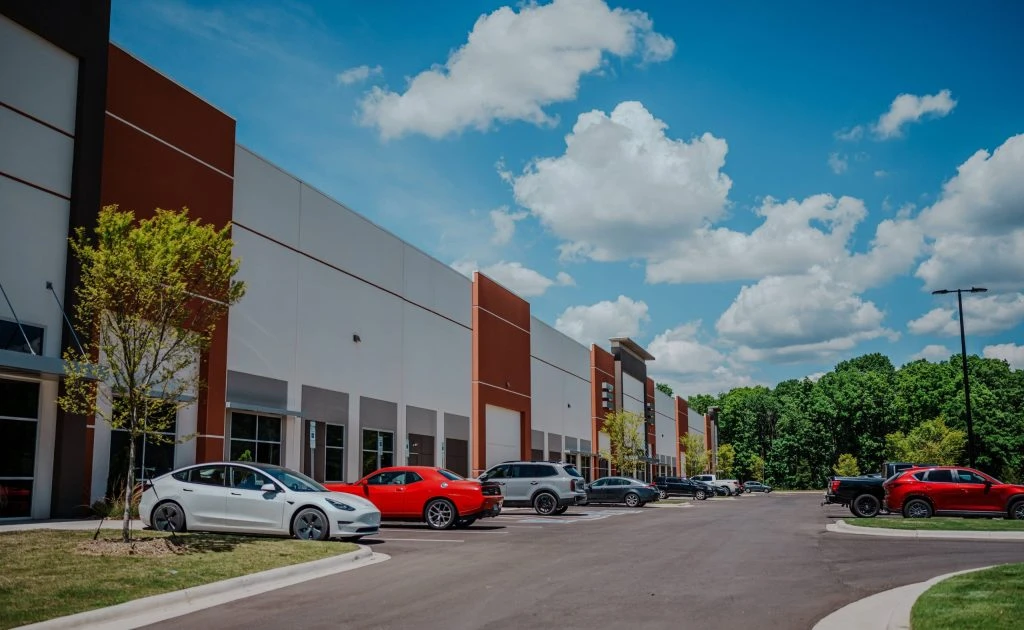
For many businesses, flex industrial buildings are the perfect solution for finding a lower-cost option that can grow and change with the business. Here are 5 pros of having only one flex building for all of your business needs.
1. Reduced Overhead Costs
Business owners have numerous costs to keep track of – monthly rent payments, utilities, internet, and maintenance fees all add up when leasing a building. Even those who purchase a building have nearly all of these costs to think about each month.
By utilizing only one building, you may be able to lower many of your monthly costs. In many cases, the cost of these expenses is less in one flex building than it would be for two buildings (a separate office and warehouse space).
In addition to reduced utility and maintenance fees, flex properties are often listed at a significantly more affordable cost than traditional offices, which also lowers the monthly rent or mortgage.
2. Better Collaboration Between Departments
Having both office/administrative staff and warehouse staff in one building can streamline the workflow and make communication and collaboration between departments simpler. Flex buildings also make it easy for staff members who might have certain responsibilities in each department.
This type of space provides a flexible option, especially for very small companies who don’t necessarily need to be compartmentalized into two unattached buildings.
3. One Lease
With only one lease to consider, flex occupants have less worry about lease fees going up, or being charged for building repairs at the end of the lease. One building is easier to manage.
In addition, flex spaces typically offer shorter leases. For small businesses or those with quickly evolving needs, short-term leases provide more flexibility and less stress if business operations change.
4. Flexible Layout
The flexible layout of this type of industrial real estate makes it easy for a growing business to adapt and meet diverse needs without having to worry about moving.
Flex spaces typically have somewhat fluid floor plans that can more easily be adjusted to serve a wide variety of uses. Rather than a traditional office building that serves one specific purpose, flex buildings often have rearrangeable desks or coworking areas and creative workspaces. In many cases, they can be shared by multiple tenants, which creates even more options for adaptability.
5. Climate Control
Traditional warehouses don’t usually have air conditioning, since they’re designed more for storage than for human occupancy. However, more flex warehouses are installing amenities such as A/C. Flex buildings often offer controls for achieving different climates in different parts of the building.
Pros of Leasing Separate Warehouse and Office Buildings
While flex buildings provide many benefits, for some businesses, it makes more sense to have two separate buildings. Let’s look at the benefits of having both an office building and a separate warehouse space.
1. Optimized Locations
Flex buildings are typically located close to highways and interstates, but not necessarily in high foot-traffic areas. If your business benefits from having office or retail space in a high-traffic area, it might make more sense to lease an office in town and pay a lower cost to have a warehouse in a more obscure area.
In other words, businesses that regularly welcome clients and customers into the building may benefit from two optimized locations.
2. Better Office Space
Flex spaces are typically single-story buildings with high ceilings. This one-story model means that there tends to be less natural light than traditional office spaces that have multiple floors and more outside walls and windows.
In general, flex office space tends to be of a lower quality than traditional office space. Not only is there less natural light, but the office portion is typically a more open space rather than dedicated, private offices.
While this works well for hybrid workers, part-time administrative staff, and collaborative workforces, businesses who rely on more employees with dedicated office work may enjoy a traditional office space instead.
3. Optimized Zoning
For any industrial business, it’s imperative to look into zoning before choosing a building. Industrial buildings generally fall into either heavy industrial or light industrial zoning.
Different municipalities have different restrictions on what’s allowed in certain areas. It’s important to make sure that your building is properly zoned, whether you choose one flex space or two separate buildings.
4. Warehouse functionality
Flex warehouses are often smaller than standalone warehouses, and often come with one grade-level, drive-in door. Dock doors are less common for flex spaces.
In many cases, standalone warehouses offer more power, larger overhead doors, and higher ceilings. And while traditional warehouses don’t usually have large parking lots, they generally offer more parking space than flex properties, since they’re designed to accommodate large trucks. Flex spaces, on the other hand, usually only host smaller trucks (such as UPS or FedEx trucks).
For businesses who need more storage capacity, higher clear heights, and multiple dock-high doors, having a standalone warehouse may be a better option.
FAQs About Flex Space Vs. Warehouse and Office
Is flex space less expensive than regular office space?
Yes. Flex space is typically about half the cost of traditional office space per square foot.
In Charlotte, NC, many businesses are turning to flex space for its cost savings in addition to the adaptability and resilience that it offers to businesses.
Is flex space typically shared?
Flex space can be leased by only one business or shared by multiple businesses. Sharing the space allows tenants to further reduce the cost of leasing the building, contributing to the ability for each business to be more adaptable.
Is it cheaper to lease flex space instead of office and warehouse?
While the actual cost of leasing each space depends on the specific location and property or properties, in general, leasing one flex space tends to reduce costs for businesses.
Not only are overhead costs reduced, but working in one building instead of two tends to streamline operations, boosting productivity and therefore increasing income.
What is flex office space like?
Flex office space tends to be slightly inferior to traditional office space. Because of the single-story layout of most flex buildings, offices tend to have less natural light. In addition, they’re often less private. Many flex office employees are only in the office part time.
What is flex warehouse space like?
Flex warehouses tend to be a bit smaller than traditional warehouses, with lower clear heights and parking lots that are designed to accommodate smaller trucks. On the plus side, they do often have more amenities such as air conditioning.
Find Your Ideal Commercial Building in Charlotte, NC
Flex space is growing in demand worldwide, and the greater Charlotte area is no exception. Fortune Business Insights projects that the flex market will “grow from USD 45.24 billion in 2025 to USD 136.46 billion by 2032.” This demand is partially due to the increase in hybrid and remote work models, as well as a rise in small businesses and more e-commerce.
At Regent Commercial Real Estate, we’re laser focused on staying on the cutting edge of real estate trends, especially in metro Charlotte. We’re committed to partnering with our clients to find real estate solutions that allow your business to thrive.
Whether it makes more sense for your business to occupy two separate spaces or to combine business functions into one flex building, we’re here to help you find your ideal property. We understand that each business is unique, which is why we take the time to understand your business right from the start.
Request your free, customized market report today, or contact us to get started.
Share This Story, Choose Your Platform!
About the Author: Brian Smith, SIOR | CCIM | MBA

Related Posts



What our clients are saying


Unlock Exclusive Commercial
Property Listings