5 Ways Flex Office Space Supports Hybrid Work Compared to Traditional Offices
According to 66% of employers, a hybrid work model leads to increased productivity among employees. So it’s no surprise that as Covid-19 necessitated a push toward the rise of remote work, employers have continued to adopt the gravitation toward flexible workspaces, hybrid teams, and a better work-life balance for their employees.
However, while the hybrid model existed before 2020, its recent explosion is still a learning curve for many companies.
What type of office space supports remote workers and hybrid workplace models?
What amenities are necessary for catering to the needs of employees, so that they want to return to the office for necessary collaboration?
What are the best office layouts within the space (lounges, hot desks, private pods, collaboration areas, etc.)?
How do employers grapple with scalability and agility when the number of office workers on any given day isn’t static?
What strategies cultivate higher job satisfaction and workforce retention?
As companies scramble to find answers to these questions, one trend that continues to stand out within the office marketplace is the shift from traditional offices to flexible office spaces.
KEY TAKEAWAYS / TL;DR
• Flex office spaces feature modular layouts, shared amenities, move-in ready infrastructure, shorter lease terms, lower rental rates, and scalable multi-tenant buildings that provide greater adaptability than traditional offices.
• Hybrid work models lead to increased productivity, with 66% of employers reporting higher performance among employees working in flexible arrangements.
• Traditional office leases typically span 3-10 years, while flex office leases offer month-to-month, quarterly, or 1-3-year periods with options for early termination and customizable terms.
• Demand for flex office spaces has increased by 40% in smaller cities and up to 91% in major U.S. cities in recent quarters.
• Flex rental rates in the Charlotte, NC area average approximately 50% lower than traditional office space rates.
What Do Employees Want in Hybrid Office Space?

While 37% of job seekers in the United States say they desire fully remote roles, the struggles of isolation, home distractions, technology issues, and motivation are real, and in fact are the most common challenges for remote and hybrid workers.
A hybrid work arrangement is the answer, possessing the potential to give team members the best employee experience while in the office, yet also providing the freedom they need – and often demand – to pursue a better work-life balance.
Whether an office runs a fixed hybrid model (with set in-office days), a flexible/employee-led schedule (a trust-based system), an activity-based hybrid approach (where employees complete focused tasks at home and collaborative projects in-office), or another hybrid model, the office has to be an attractive, intentionally-designed flexible space that provides real benefits to employees.
So what do employees want in a hybrid office space?
- Autonomy and choice. The future of work is creative. In opposition to a traditional office model, employees desire flexible workspaces where they can do their best work, and the freedom to choose. More than just the opportunity to choose between remote or in-office work, creative workforces need the option to go between collaborative zones, quiet areas, and available desks.
- Collaboration opportunities. Although workers are pushing for an increased level of flexibility in their weekly work schedule, the need for face-to-face contact and connection is still there, especially for Gen Z workers. The office has to be a place where company culture is cultivated and a collaborative work environment is promoted.
- Wellness and comfort. Employers must see the trends. Workers no longer want ping pong tables, basic coffee pots, beige doors, and clunky cubicles – they want functional amenities that promote workplace comfort and a better work-life balance. Top office amenities include convenient parking, natural light, fitness centers, quiet spaces, ergonomic setups, and outdoor workspaces, among others.
- Technology integration. Good technology is essential for remote work, satellite offices, and hybrid spaces. The right tools and access to tech support provide seamless connectivity for video conferencing and project management.
- Access and convenience. Access to restaurants, coffee shops, and other conveniences is important to modern-day workers. Still, one study found that 49% of employees stated that being close to home is the most important factor when it comes to office location. Workplaces in close proximity to their employee base or to major transportation hubs are seen as a major win among employees.
Top Employee Priorities for Hybrid Office Environments
| Priority | What Employees Want | Primary Benefit |
| Autonomy & Choice | Flexible workspaces with collaborative zones and quiet areas | Enhanced productivity and job satisfaction |
| Collaboration Opportunities | Face-to-face interaction spaces and team areas | Stronger company culture and connection |
| Wellness & Comfort | Natural light, ergonomic setups, fitness centers | Improved work-life balance |
| Technology Integration | Seamless connectivity and tech support | Efficient remote collaboration |
| Access & Convenience | Close proximity to home (49% prioritize this) | Reduced commute stress |
What Is Flex Office Space?
Flex offices are adaptable work buildings whose building structures offer more versatile environments than traditional office layouts. These flexible workplaces typically feature modular layouts, shared amenities, and move-in ready infrastructure. And in most cases, they also provide shorter and more flexible lease terms, lower rental rates, and scalable multi-tenant buildings that supply greater agility to small businesses, hybrid teams, satellite teams, and startups.
With the rise of hybrid work, the demand for flex office spaces is booming. In recent quarters, there’s been a 40% increase in flex space demand in smaller cities, with as much as 91% increases in major U.S. cities.
Many employers are finding that while traditional offices are leading to empty desks and wasted space, transitioning to a flex work environment is a strategic move that offers the collaborative areas, flex desks, and creative spaces that allow modern employees to thrive.
5 Ways Flex Office Space Supports Hybrid Work
So how exactly does a flexible office model support hybrid work in contrast to a traditional office building? Here are 5 ways:
- Flexible Layouts
- Improved Employee Experience
- Greater Agility
- Lower Rental Rates
- Seamless Technology and Connectivity
1. Flexible Layouts That Give Way to Varied Work Zones
Traditional offices offer the familiar compartmentalized zones – cubicles, private offices, permanent desks, and other enclosed spaces.
Flex office buildings, on the other hand, boast more open-plan offices, with adaptable features such as:
- Movable walls for collaborating with various team sizes
- Varied work zones including quiet spaces (phone booths/pods) for focused work, common areas for relationship-building, conference rooms for team meetings, and other open areas for collaboration
- Hot desking rather than a specific assigned desk for each employee
- Reconfigurable furniture, to easily transform the space for specific needs, from team training to focused work to brainstorming sessions
- An open floor plan that adapts with hybrid team changes
Traditional Office vs. Flex Office Layout Features
| Feature | Traditional Office | Flex Office |
| Workspace Design | Fixed cubicles and assigned desks | Hot desking and varied work zones |
| Walls & Partitions | Permanent enclosed spaces | Movable walls for team flexibility |
| Floor Plan | Compartmentalized zones | Open-plan with adaptable features |
| Furniture | Fixed desks and static layouts | Reconfigurable for specific needs |
| Work Zones | Limited variety | Pods, lounges, collaboration areas |
2. Improved Employee Experience for Better Retention and Company Culture
Employees are demanding more autonomy than ever, and flex office spaces give employers the adaptability they need to offer employees the balance they crave. Flex features lead to a better employee experience, and happy employees lead to better retention rates and improved company culture.
Flex spaces for hybrid work offer employees:
- The option to choose different zones based on work style preferences. For a day in the office, employees have the freedom to choose between meeting rooms for collaboration, focused pods, and lounges for creative work, depending on their task and work style.
- Non-cramped layouts. Modern workers no longer want to sit at a fixed desk in a beige cubicle for 40 hours per week. The adaptable, open spaces that flex offices provide allow employees to spread out and get a change of scenery throughout the work day.
- Social zones that encourage informal interaction. Remote and hybrid workers struggle with loneliness, especially those under the age of 35. Sadly, some studies have found that Gen Z is the loneliest generation we’ve ever seen. Many employees state that they value hybrid work for the interaction and camaraderie that it provides.
- Bookable desks and rooms for smoother in-office days. Some hybrid workplaces implement hot desking (a first-come, first-serve system), while others find bookable desks and rooms to promote smoother in-office days and higher levels of productivity.
- Front-door access and ground-level parking meet one of the most pressing needs of employees: accessibility. Offices that have convenient and easily accessible lots reduce stress levels among employees and promote feelings of relaxation and happier moods, leading to greater productivity and job satisfaction.
- Greater autonomy. Varied work zones, creative layouts, movable furniture and walls, and easy access provide employees with feelings of greater autonomy. One large study found that 79% of autonomous employees are also engaged employees who perform better on the job.

3. Greater Agility Through Flexible Lease Terms
Compared to traditional office leases, flex office leases typically have shorter and more flexible terms. Whereas traditional, long-term office leases are often 3-10 years in length, flex office leases can be month-to-month, quarterly, or 1-3-year periods.
And in contrast to the rigidity and long-term commitments that normally go with an office lease, flex terms allow for more adaptability, with options for early termination or customizable terms.
In many cases, flex offices also offer scalability throughout the building, giving tenants the option to rent more or fewer square feet in accordance with their business needs.
This flexibility allows for a more customized tenant experience, which gives hybrid workplaces, startups, and seasonal businesses a significant advantage.
4. Lower Rental Rates Rates Supporting High-Impact Amenities
In addition to more flexible lease terms, in many cities, flex offices also sport lower rental rates than traditional offices. In the Charlotte, NC area, we’ve found flex rental rates to be – on average – about 50% cheaper than those of traditional office space.
The cost savings of a flex office can easily be transformed into high-impact amenities that support greater productivity, increased employee satisfaction, and improved retention.
More adaptable furniture, tech-enabled rooms, inspiring lounges, and outdoor spaces all make the office a place that truly attracts employees.
5. Seamless Technology and Connectivity
Many flex spaces are all-inclusive, offering a turnkey experience pre-equipped with high-speed internet, meeting tools, and audiovisual systems.
Other plug-and-play infrastructure might include enterprise-grade Wi-Fi, printers, and access control already installed. Instead of tenants having to source internet service, cabling, AV, and meeting‑room tech themselves, flex offices often provide this as a core part of their value proposition.
Plus, while traditional leases typically lay all IT responsibilities on the tenant, flex operators often provide on-site support staff who can troubleshoot connectivity or room-tech issues quickly, reducing disruptions for teams.
FAQs About How Flex Office Space Supports Hybrid Work
What’s the difference between coworking space and flex office space?
Coworking spaces are typically open, shared environments used by individuals from different companies who pay for daily or monthly memberships.
Flex office spaces, on the other hand, offer dedicated or semi-private areas for specific companies. They typically offer customizable lease terms and greater control over the workspace layout.
Flex offices provide more privacy, branding opportunities, and scalability for growing teams compared to traditional coworking models.
How does workplace loneliness affect productivity?
Workplace loneliness can drastically reduce productivity and employee well-being. Studies show that lonely employees are twice as likely to miss work due to illness and report lower job performance. Research indicates that workplace loneliness costs U.S. employers approximately $154 billion annually in absenteeism and reduced productivity.
Hybrid work environments help combat isolation by creating in-person connection opportunities and giving remote workers dedicated spaces to interact with colleagues and build meaningful workplace relationships.
What can companies do to reduce employee stress?
Lonely workers are five times more likely to miss work because of stress.
Reliable ways for companies to reduce employee stress include:
- Offering flexible work arrangements (such as hybrid schedules).
- Providing wellness-focused amenities (including natural light, ergonomic furniture, fitness centers, and quiet zones) to create a healthier work environment.
- Implementing shorter commute times (through flex locations closer to where employees live).
- Offering autonomy in choosing work settings (by providing layouts with varied work zones such as quiet spaces, lounges, collaboration areas, and reconfigurable walls and furniture).
- Creating opportunities for employee connection (such as offering community lounges, scheduling “anchor days” and team lunches, and creating hobby-based channels or groups).
Which is the loneliest generation?
Generation Z (born between 1997 and 2012) is often identified as the loneliest generation. Studies show that Gen Z reports higher levels of loneliness compared to older generations.
Millennials also experience significant workplace loneliness, particularly among remote workers.
The rise of remote and hybrid work has intensified feelings of isolation among younger employees who may lack established professional networks.
Flex office spaces address this challenge by providing dedicated collaboration areas and in-person gathering spots that facilitate face-to-face interaction and help younger workers build stronger workplace connections and company culture.
What are flexible office layouts?
Flexible office layouts are adaptable workspace designs that feature modular furniture, movable walls, and varied work zones instead of fixed cubicles and permanent partitions.
These layouts include hot desking areas, collaborative pods, quiet zones for focused work, lounge spaces, and private meeting rooms that can be reconfigured based on team needs.
Unlike traditional office floor plans with compartmentalized spaces and assigned desks, flexible layouts offer open-plan designs with furniture and partitions that can be easily rearranged to accommodate different work styles, team sizes, and project requirements.
How long are lease terms for flex offices?
Flex office lease terms typically range from month-to-month agreements to 1-3 year commitments, offering significantly more flexibility than traditional office leases that span 3-10 years.
Many flex office providers offer quarterly leases or customizable terms that can be adjusted based on business needs. These shorter lease periods often include options for early termination without the rigid penalties common in traditional leases, and they allow companies to scale their space up or down within the same building as their workforce changes, making them ideal for startups, growing businesses, and companies with hybrid teams.
Is flex office space cheaper than traditional office space?
Yes, flex office space is generally cheaper than traditional office space in most markets. In the Charlotte, NC area, flex rental rates average approximately 50% lower than traditional office space rates.
The cost savings extend beyond base rent, as flex offices typically include utilities, internet, furniture, maintenance, and amenities in the monthly fee, eliminating the upfront capital expenditures and ongoing operational costs associated with traditional leases.
Additionally, shorter lease terms reduce long-term financial risk, and the ability to scale space as needed prevents companies from paying for unused square footage, making flex offices a more cost-efficient option for many businesses.
Explore Charlotte’s Top Flex Space Locations for Hybrid Companies
Hybrid work is here to stay, and the metro Charlotte area offers unmatched, practical solutions for flex offices that support busy teams. As the hybrid work model continues to evolve, companies that embrace these adaptive spaces will gain a competitive edge in talent retention and operational efficiency.
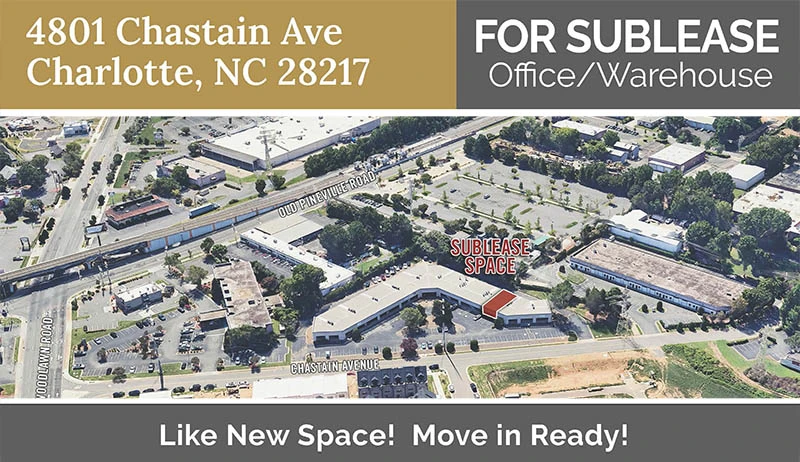
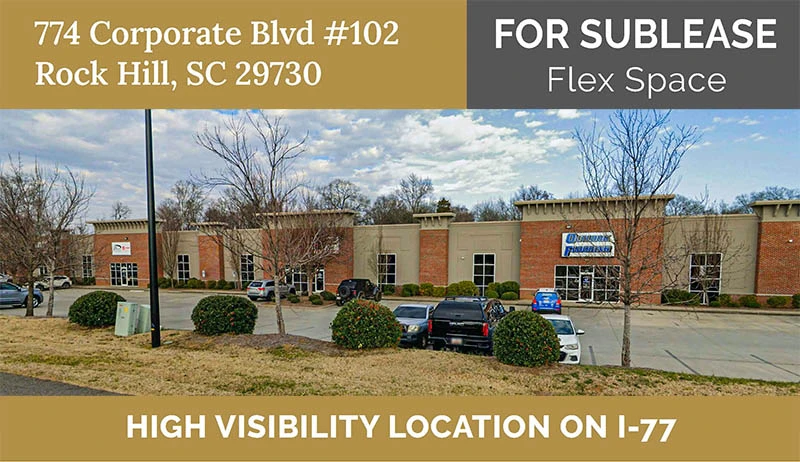
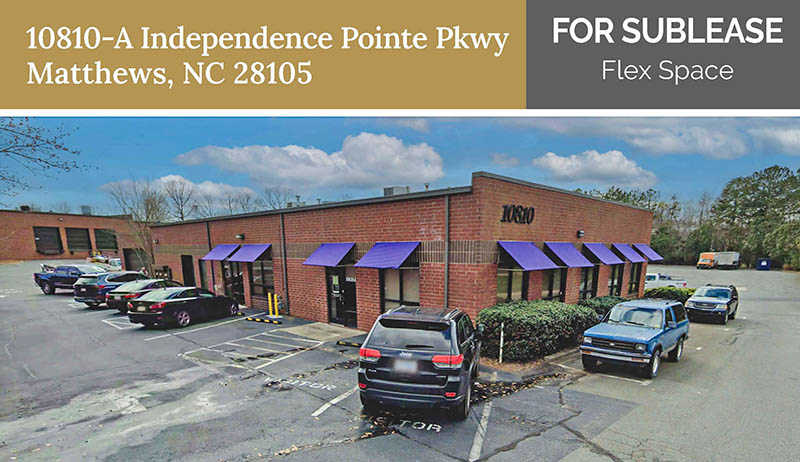
Around Charlotte, the Airport neighborhood, North End district, Matthews, Pineville, University City, Steele Creek, and many others boast affordable, accessible properties set up for modern teams who need adaptable space for focused work, seamless collaboration, and high‑impact client meetings.
Our team at Regent Commercial Real Estate has spent over a decade in the greater Charlotte area completing nearly 1000 sales and lease transactions. We understand the ins and outs of the neighborhoods and prioritize finding you a property that fits your needs.
Contact us today to get started on your search, or request your free customized market report.
Share This Story, Choose Your Platform!
About the Author: Brian Smith, SIOR | CCIM | MBA

Related Posts


What our clients are saying


Unlock Exclusive Commercial
Property Listings