Types of Fire Sprinkler Systems in Warehouse Buildings
Most commercial real estate buildings are required to have a fire protection system installed. If a fire were to start, it’s vital for buildings to have automatic fire sprinkler systems in place in order to protect both the building occupants and – as much as possible – inventory and equipment. The types of fire sprinkler systems in industrial buildings can vary, and older industrial properties tend to have more basic fire safety systems than new commercial buildings and those with higher racking heights.
The type of automatic fire sprinklers used in a building depends on a number of factors, including building codes, building usage, square footage, the type of equipment or product stored in the building, the setup of the warehouse or room, and more.
Let’s take a look at the different types of commercial fire sprinkler systems that you’ll most often find in commercial properties.
Types of Commercial Fire Sprinkler Systems
When you’re buying industrial property, it’s important to know what type of fire sprinklers are installed in the building. Commercial building owners have many different qualifications to think about when choosing the right space, and it’s important to not just have a reliable sprinkler system, but also one that fits the type of occupancy. Property damage is no joke, and for the commercial building owner, having proper fire suppression systems is an important consideration. In the event of a fire, you want to know that your building, inventory, and staff are protected!
Here are 6 of the main types of sprinkler systems you’ll find in commercial buildings.
- Wet Pipe Sprinkler Systems
- Dry Pipe Sprinkler Systems
- Pre-Action Systems
- Deluge Sprinkler Systems
- In-Rack Sprinkler Systems
- ESFR Sprinkler Systems
Let’s take a closer look at the differences between each type.

1. Wet Pipe Sprinkler Systems
Wet pipe sprinkler systems (also referred to as wet sprinklers or a wet pipe system) are usually found in older buildings. These sprinkler systems are very common and are generally the least expensive.
A wet pipe system is basically what most people imagine when they think about commercial building sprinkler systems. The system is made up of overhead pipes that hold a pressurized water supply, ready to be discharged in case of a fire. When fire alarms alert the system, the sprinkler heads on the network of pipes are activated and spray water.
The main benefits of wet pipe sprinkler systems is that they’re inexpensive to buy, and the cost of installation of the sprinkler systems is also low. They’re common and reliable, and generally less likely to malfunction than other types of systems (largely due to being fairly simple systems with minimal components). In addition, they’re quick and easy to restore after being set off in the event of a fire.
The downside is that the constant water pressure tends to cause leaks, and leaky pipes can, of course, lead to other maintenance problems and costs within the building. For wet pipe sprinkler systems, regular maintenance can be common, but it’s a tradeoff that comes with the product.
2. Dry Pipe Sprinkler Systems
A dry pipe system is used most often in areas that can reach freezing temperatures. They can often be found in unoccupied buildings, unheated warehouses, exposed loading docks, attics, commercial freezers and cold storage facilities, or anywhere else that might succumb to frozen pipes. To keep water from constantly flowing through the pipes (and potentially freezing), dry pipe sprinkler systems are filled with pressurized air held in by a dry-pipe valve.
In case of a fire, the fire sprinkler head will activate and the pressurized air will leak out, which allows a flow of water to release.
The advantage of dry pipe sprinkler systems is that they can be used in cold areas without worry about the water freezing or the pipes bursting. There are a few disadvantages of these systems, though, and they’re not regularly used in buildings where a wet pipe sprinkler system could be used. Dry pipe systems tend to be more complex, which usually leads to more maintenance and less reliability. In addition, the installation and maintenance costs are usually higher. They also have a slower response time in case of a fire (up to 60 seconds). Lastly, if discharged, the pipes must be drained and dried in order to prevent corrosion.
3. Pre-Action Systems
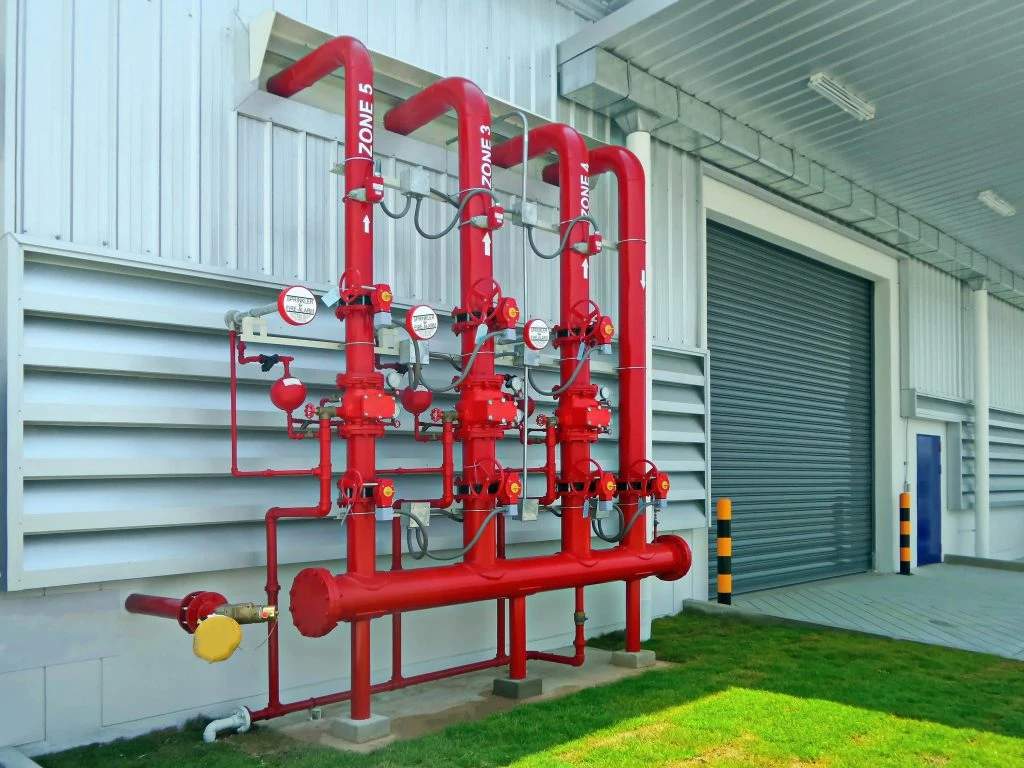
A pre-action fire sprinkler system is used in areas that can be easily ruined by water or have sensitive equipment. Libraries, IT equipment rooms, museums, cold storage warehouses, and data centers are common places to find this type of sprinkler system. They work on a two-trigger method, requiring both to be activated before releasing the water. This allows for less chance of accidental water damage.
Although these types of fire sprinkler systems are more expensive, the cost of a pre-action system is justified by the extra protection it provides from potential unnecessary water damage.
4. Deluge Sprinkler System
Deluge sprinkler systems are most often placed in hazardous areas that have the potential to have rapid fire spread. A deluge system is somewhat similar to a wet pipe system, however, the pipes are not continually filled with water as in the case of a wet pipe system. Instead, the sprinkler heads are always open, and in the case of activation, water is released to all of the heads at once, rather than each one opening individually. Where most systems limit the spread of fires, a deluge sprinkler system floods an area very quickly, essentially negating the chance for a fire to grow out of control. The other benefit to having dry pipes is that they’re not at risk of freezing.
Because of their specialized components, deluge systems can be costly. However, their benefits often make up for the cost in consideration of protecting expensive equipment from warehouse fires and keeping hazardous areas safe.
Deluge sprinkler systems are commonly found in aircraft hangers, chemical plants, and power plants.
5. In-Rack Sprinkler Systems
In-rack sprinkler systems are common in warehouses with tall storage racks. They’re especially useful and necessary in buildings which have racks with solid shelving that would prevent overhead sprinkler systems from getting water to every area of the room. With in-rack sprinklers, the piping is built into the storage racks, allowing for effective water discharge to every part of the warehouse.
These systems include smoke detectors within the storage racks, which allow them to discharge quickly in the event of a fire.
One major benefit of in-rack systems is that they can be expanded with the addition of more storage racks. They’re also fairly cost effective. As a downside, however, they’re more susceptible to damage, since they’re integrated into the racks and can sometimes be damaged with loading and offloading of products.
It’s important to make sure that in-rack systems receive regular inspections and maintenance checks to ensure that they haven’t been damaged by the work environment.
6. ESFR Sprinkler Systems
ESFR stands for “early suppression, fast response”. These high-end sprinkler systems are highly effective and tend to be found in newer buildings. While other sprinkler systems are designed to control a blaze and prevent it from expanding, ESFR systems are made to completely stop a fire in its tracks. They release more water more quickly, at an output of around 100 gallons per minute – a significant amount compared to the standard 30-60 gallons per minute of most other systems.
The more sensitive thermal elements of ESFR systems also elicit a near-immediate response to high temperatures.
ESFR sprinkler systems are commonly found in warehouses with high clear heights, newer or high-class industrial buildings, and other challenging warehouse situations.
The main downside of ESFR sprinklers is that they require precise installation, ensuring that the sprinklers can access all areas of the warehouse and of each rack.
Choosing a Fire Sprinkler System
If you’re choosing a fire sprinkler system, take the time to consider the best option and take into consideration the space and its specific usage. You’ll want to consider:
- Size of the building
- Type of product or equipment stored
- Building temperature
- Potentially hazardous materials
- Warehouse setup
To learn more about the National Fire Protection Association (NFPA) standards for fire sprinkler systems, you can refer to the NFPA 13 and NFPA 25 standards.
Commercial Sprinkler System FAQs
How do you determine what type of sprinkler system a warehouse needs?
Factors involved in determining warehouse sprinkler needs include the type of products or equipment stored, the height of the building, warehouse square footage and setup, building codes, and building usage, among other factors.
What are the main types of commercial fire sprinkler systems?
The most common commercial sprinkler systems include:
- Wet Pipe Sprinkler Systems
- Dry Pipe Sprinkler Systems
- Pre-Action Systems
- Deluge Sprinkler Systems
- In-Rack Sprinkler Systems
- ESFR Sprinkler Systems
What’s the most common sprinkler system for commercial buildings?
Wet pipe sprinkler systems are very common, especially in older buildings. They’re inexpensive, easy to install, reliable, and easy to restore in case of use.
What is an ESFR sprinkler system?
ESFR systems are known for “early suppression, fast response”. They release about twice as much water as a conventional sprinkler in the same amount of time, suppressing fires much more quickly than other systems.
These high-quality systems are often found in newer warehouses and buildings with high clear heights.
Finding Your Ideal Warehouse Space
When searching for your ideal warehouse or distribution building, fire protection systems are just one aspect of the building to take into account. Aside from bigger decisions such as the property size and location, business owners and managers must consider factors such as zoning, power requirements, security, parking, heating, loading docks, clear height, and more. You can read more about finding your perfect warehouse space on our website.
If you’re searching for space in the metro Charlotte area, our experienced team at Regent Commercial Real Estate is here to guide you on your hunt for the perfect property. With nearly 1000 successful sales and lease transactions under our belt, we’re committed to excellence, professionalism, and personalized solutions in the commercial real estate industry in North Carolina and South Carolina. Whether you know exactly what you need or you’re just getting started on your search, we’re here to help.
Contact us today or request your free market report to get started.
Share This Story, Choose Your Platform!
About the Author: Brian Smith, SIOR | CCIM | MBA

Related Posts



What our clients are saying


Unlock Exclusive Commercial
Property Listings