5 Most Common Industrial Space Uses in Charlotte, NC
Charlotte’s rich history of industry combines with its ideal location and transportation options – making it a strategic location for storage and distribution, assembly, and much more. For both the business owner and the real estate investor, probing the greater Charlotte industrial market leads to business growth and success in a variety of sectors. What are the 5 most common industrial space uses in Charlotte, NC? Let’s find out in this article.
Charlotte’s Industrial Sector – Prime Opportunity Through Ideal Transportation Options
Logistics around Charlotte’s major highways and other transportation options make it a strategic location for industrial real estate. With easy access to major ports, the east coast’s highly efficient interstate systems, the Charlotte Regional Intermodal Facility in close proximity to Charlotte and its surrounding cities, and the Charlotte Douglas International Airport, convenient access makes industrial logistics simple in this local market.
Transporting Ocean Goods Through Charleston and Savannah’s Ports
One of the major points of access for many industrial businesses around the Charlotte market are the ports at Charleston and Savannah. Only about 3-4 hours away from the metro Charlotte area, these ports allow for easy access when shipping in ocean goods. From the ocean ports, innumerable products are transported out directly by truck or by train. With trains delivering to the intermodal facility less than 10 miles from Uptown Charlotte, these logistics solutions make moving goods simple for industrial businesses.
From transporting smaller products to distributing BMWs, the convenient Charleston and Savannah ports are a major connection for Jacksonville, Atlanta, and Charlotte.
Easy Access on the I-85 Corridor
In addition to the ocean ports, the I-85 corridor is a major Southeastern interstate, running from Petersburg, VA to Montgomery, AL. From its northern point at the I-95 interchange, it continues through Washington, D.C. and up into New York City. This major east coast logistical point is another strength for industrial markets in the Carolinas, making both North and South Carolina prime locations for easy truck access.
Charlotte’s History of Industry
Right around the beginning of the 19th century, gold was discovered in North Carolina by 12-year-old Conrad Reed. This kicked off the Carolina Gold Rush. In the following years, many important mines were located in Charlotte. To this day, there’s still an active gold mine (Haile Gold Mine) in Lancaster County in Kershaw, South Carolina.
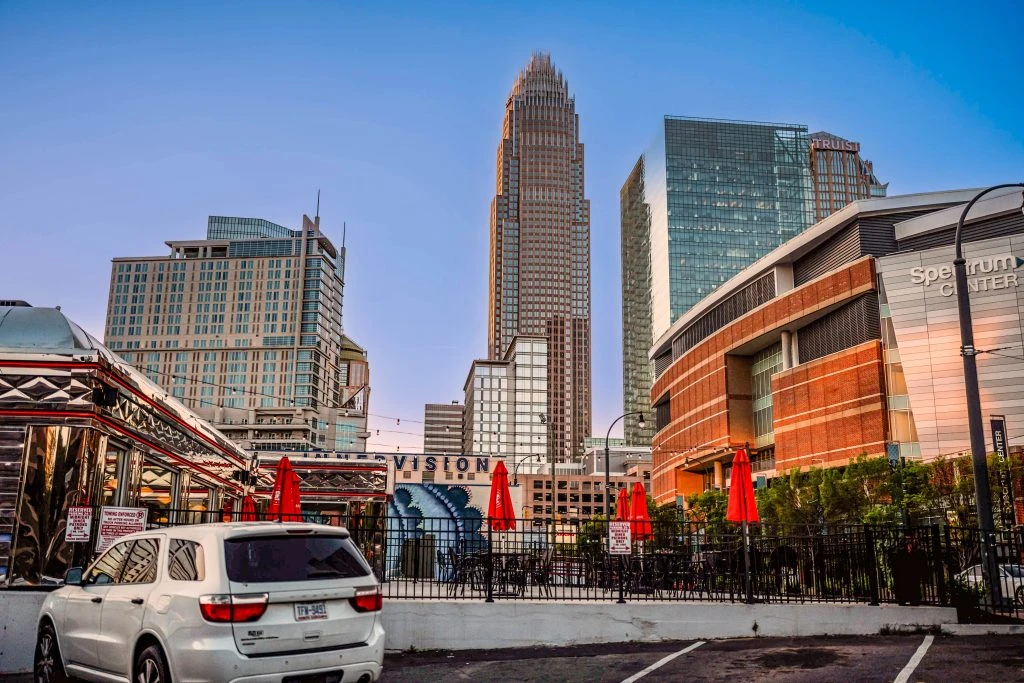
The gold rush was a main contributor for bringing major population growth to the Charlotte area. Then, toward the middle of the century, the banking industry took hold, and the opportunities around Charlotte have only become more diverse since then. Charlotte’s rich history and variety of industries – from banking to furniture making – make it an ideal place for businesses to discover growth and opportunity.
5 Most Common Industrial Space Uses in Charlotte, NC
Industrial properties around metro Charlotte provide convenient locations for businesses to thrive in its busy and growing economy. From smaller flex space industrial buildings with office components to major industrial parks, the greater Charlotte area is one of the top markets for a plethora of industrial commercial property types.
Here are the 5 most common industrial space uses around the Charlotte area:
- Storage & Distribution
- Assembly
- Equipment Rental
- Cold Storage Properties
- Food Processing Facilities & Catering
1. Storage & Distribution

Storage and distribution makes up a large portion of industrial property use in Charlotte and its surrounding cities. These types of properties are used frequently by companies like Amazon and FedEx. The buildings store all sorts of supplies and products from various business partners that are often manufactured overseas and shipped to America for distribution. These storage and distribution centers provide the holding place for all of these products.
Because of Charlotte’s easy access from the ocean port as well as its availability by interstate, it has a strong storage and distribution presence, making this category one of particularly high usage around the area.
Unique identifiers of these types of properties include a small office portion, a larger warehouse, and fairly minimal parking space.
Typically, the setup of these industrial space listings has a small office space in front for the workers who manage the administrative processes of the business. Since there aren’t usually a significant number of employees in the building at any given time (unlike, say, manufacturing buildings), a large parking lot is not necessary.
The warehouse portions of these properties tend to have a number of loading docks and drive-in doors for easily getting lots of trucks in and out.
Storage and distribution buildings are classified as light industrial properties.
2. Assembly

Next is assembly. These industrial property spaces are used for companies who are assembling items and putting them together.
Commonly, industrial assembly buildings are largely made up of a big, open warehouse space. In addition, these buildings tend to have higher power requirements for the equipment that’s used in them. Some offer air conditioned and heated space for the workers.
On the outside, assembly buildings tend to have lots of parking, since there are generally many employees working in the warehouse at once.
If the assembly building is largely manufacturing and assembly focused and is not a distributor, there’s usually not as much need for numerous dock high doors.
Some of the top assembly businesses around the greater Charlotte area include Otto-USA, Keller Technology Corporation, American Circuits, and Giti Tire USA, among numerous others.
A lot of ideal industrial space options for assembly are found in areas where warehouse space is less expensive. Salisbury, Kannapolis, and other rural areas are top choices for assembling facilities. In these rural areas, land is inexpensive, making it easy to get lots of parking, and warehouse space is quite affordable, too. In addition, wages are also usually more affordable in rural areas. All of these factors combine to bring down the overhead, which in turn brings down the overall cost of the assembled products.
3. Equipment Rental

Equipment rental is another increasingly popular type of property around the greater Charlotte area. This type of use tends to be IOS driven – meaning that much of the space is outdoors. These industrial outdoor storage (IOS) properties are usually one or more acres of land with a smaller building somewhere on the lot. IOS properties are ideal for the specific needs of these companies, providing more space at a lower cost. They typically have outdoor security measures, proper topography for heavy equipment, and convenient locations.
Around the Charlotte area, many construction companies rent rather than own their equipment due to the high costs. Rental rates for equipment make more sense for many businesses, driving the need for IOS properties and equipment rental companies. Tractors, bulldozers, and generators are just a few types of equipment that are typically available in these yards.
4. Cold Storage Properties
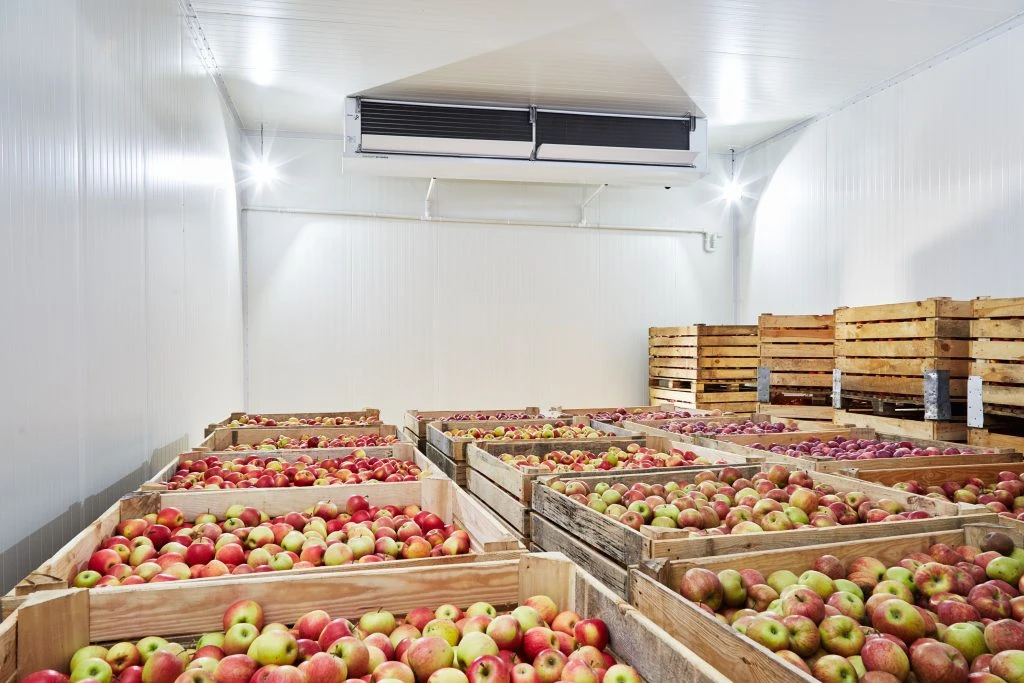
Cold storage warehouses are temperature-controlled storage and distribution spaces that are specifically used for their freezer and cooler aspect. These temperature-regulated warehouses are specialized facilities that can be used for many types of sensitive items, from food to chemicals to pharmaceuticals.
Cold storage properties tend to be more costly to operate due to both the specific maintenance they require as well as the higher day-to-day operation costs.
Common features of these properties include advanced monitoring systems and alarms, insulated doors and walls, separate warehouses kept at different temperatures, and backup power systems.
5. Food Processing Facilities & Catering

Lastly, food processing facilities are industrial buildings that can be used for all sorts of food preparation – from manufacturing, packaging, and labeling food to preparing meals for catering services.
Compass Group USA is one of the largest and most highly-known food service companies – headquartered right in Charlotte. Serving more than 13 million meals per day, they provide food to cafeterias in colleges, hospitals, schools, and corporations, as well as airport lounges, ballparks, and more. Many other companies use similar types of facilities to prepare meals that are served at kiosks, in large-scale catering scenarios, and for other types of dining options.
Food processing and manufacturing facilities are often built with metal and tend to have open floor plans. They prioritize sanitation and safety with high-quality air pressure systems, drainage, and building materials. These facilities tend to be located in convenient locations with easy access to both their raw materials and their labor force.
Find Your Next Industrial Property With Regent CRE
Whether you’re searching for storage & distribution properties or space for equipment rental, Charlotte and its surrounding cities offer high-quality listings with numerous benefits. From its thriving economy to its convenient transportation options, the greater Charlotte area is a sought-after location for leasing industrial property as well as for investment opportunities.
At Regent Commercial Real Estate, we’re committed to gaining a deep understanding of our clients’ needs in order to pair you with the ideal space for your business to grow and thrive. From initial custom market report to the negotiation process to move in, we take care of the complicated details – every step of the way.
With over 10 years of experience in the metro Charlotte area and nearly 1000 successful sales and lease transactions under our belt, we understand the intricacies of the Charlotte market.
Ready to find your next industrial property? Contact us today to see how we can help!
Share This Story, Choose Your Platform!
About the Author: Brian Smith, SIOR | CCIM | MBA

Related Posts




What our clients are saying


Unlock Exclusive Commercial
Property Listings