South Carolina Incentives for Small Businesses (Why Choose SC?)
When it comes to the Carolinas, both North and South Carolina offer an array of benefits for business startups and relocations. While North Carolina has a high-growth economy and access to major economic hubs, more and more businesses are making their way to South Carolina for its affordability, relatively low cost of living, lower corporate tax rate, and growing incentive system.

The Advantages of Crossing the Border Just South of Charlotte
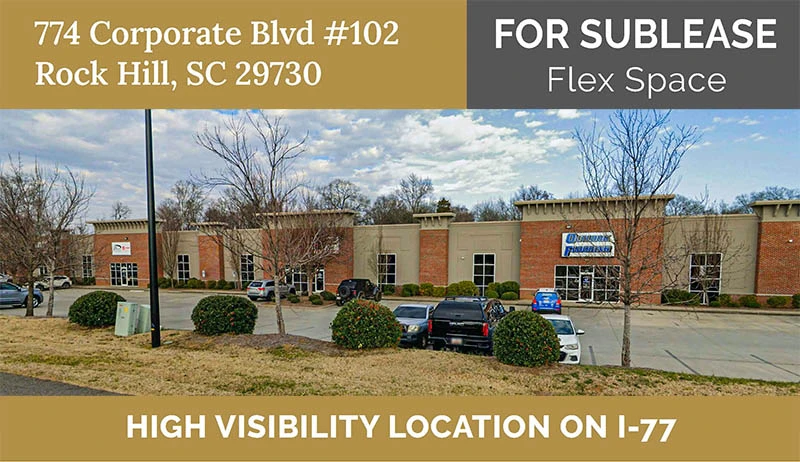
Lower taxes, cash-based job credits, training assistance, and federal funding programs are just a few of the incentives offered to businesses who take advantage of the pro-business climate just south of the Carolina border. While numerous businesses are flocking to Charlotte, others are exploring the benefits of migrating just 20 miles south to thriving cities like Fort Mill, Rock Hill, and Indian Land.
The northern South Carolina cities in York and Lancaster counties thrive off of quick access to Charlotte—just an easy half-hour drive—while reaping all of the advantages of having a South Carolina address.
South Carolina’s Pro-Business Climate at a Glance
- Ranked one of the top states to do business. Because of its fast growth rate, performance-based tax incentives, cooperate state and local government, and more, South Carolina ranks as one of the top states to do business.
- Active support. The South Carolina Department of Commerce offers active support, and SC benefits from a stable regulatory environment.
- Low cost of living and corporate tax rate. The state’s low cost of living and low corporate tax rate is appealing for owners who want to keep overhead down. In addition, the low cost of living is attractive to employees, which can make talent attraction easier for business owners.
- Reduced overhead combined with access to major markets. For those who want to be close to Charlotte without the higher costs of a broader market, cities like Fort Mill, Rock Hill, and Indian Land offer the opportunity to reduce overhead while still benefitting from access to the Queen City.
- State-funded employment incentives, retraining incentives, tax incentives and exemptions, grants, and local support programs. South Carolina offers a variety of business loans, discretionary grant funds, workforce development programs, and other additional funding for the purpose of growing businesses and boosting the local economy.

In addition to numerous levels of support from state and local levels, South Carolina also has a wide variety of affordable commercial property options, including office space, retail, warehouses, and commercial land. If you’re looking to lease or buy commercial space for your South Carolina business, our team at Regent Commercial Real Estate can help.
South Carolina Small Business Incentives
Let’s explore the incentive programs, small business grants, and other financial assistance options that are available for small businesses in South Carolina.
Job and Employment Incentives
- Job Development Credits (JDC). This option is a performance-based incentive that uses a portion of the employees’ payroll taxes to offset costs related to the facility investment or hiring. It’s administered by the SC Coordinating Council and gives the state the opportunity to reimburse the company for capital expenditures without any financial impact on the employees. Eligibility criteria includes meeting industry requirements, creating at least 10 new jobs for full-time employees, providing an employee benefit package, and paying an application fee.
- Retraining Credits. In manufacturing, processing, or technology-intensive industries, companies can receive a credit equal to or less than $1000 per year to pay for retraining for employees who need to learn new technologies or skills. The State Board for Technical and Comprehensive Education must approve the retraining.
- ReadySC Program. This is a state-funded training program focused on fueling economic growth by helping companies bring new jobs to the state of South Carolina. ReadySC partners with 16 technical colleges to help eligible businesses in various industries provide training and talent development for their employees, tailored to the needs of the business and at no cost to the company.
Tax and Financial Incentives
- Pro-Business Tax Incentives. South Carolina has a 5% corporate income tax rate, no state property tax on business inventory, and no local income tax.
- Small Business Jobs Credit. This credit offers small business owners the opportunity to take a credit against individual income tax, bank tax, or insurance premium tax, limited to 50% of the tax liability. Its goal is to promote job creation and it’s directed toward qualified taxpayers that have fewer than 100 employees worldwide. Taxpayers must also add at least 2 full-time jobs in a year.
- Fee-in-Lieu of Tax (FILOT) Agreements. The fee-in-lieu of property taxes agreement is a tax incentive offered to eligible companies who invest at least $2.5 million in the state of SC. It’s a 20-year incentive that can allow South Carolina businesses to save around 40% in property taxes.
- Robust Sales and Use Tax Exemptions. South Carolina offers exemptions for manufacturing equipment, research and development (R&D) machinery, and specific construction materials.
Grants, Loans and Local Support Programs
- State Small Business Credit Initiative (SSBCI) Loan Program. This program is providing federal funding of $101 million to small businesses in South Carolina for the purpose of creating jobs and supporting the economy in local communities. The application process can be completed at local banks, and eligible applicants will receive short to long-term financing with attractive terms.
- SCRA Startup Grant. This grant is offered to companies in the technology sector for the purpose of supporting “one or more critical milestones towards commercialization and to advance the company’s pursuit of follow-on funding”. Eligibility requirements include being a member of the South Carolina Research Authority, being registered as a for-profit business, and having at least 51% of full-time employees located within the state of SC. For eligible candidates, grant money is awarded up to $25K.
- County-Specific Incentives: York and Lancaster counties also provide a number of supplemental grants, reduced permitting fees, or other methods of financial support for qualifying companies. When starting or moving a business to South Carolina, be sure to check into property tax relief, job tax credits, and local grant programs run through local governments and economic development offices in your area.

North Carolina Vs. South Carolina—Business Climate at a Glance
Both North Carolina and South Carolina offer a highly competitive, business-friendly climate. Each has their own strengths, and both have ranked in the top states for doing business. Which one is right for you? Here’s a closeup of the benefits of each state for business owners.
| Category | North Carolina | South Carolina |
| Overall business climate | Strong all-around business environment, particularly for growth. | Solid business environment, especially for cost-conscious owners. |
| Small business appeal | Better for businesses seeking scale, talent, and momentum. | Better for businesses seeking lower overhead and simpler operating costs. |
| Taxes | Competitive, but not usually the lowest-cost option. | Generally lower-tax and more cost-friendly. |
| Operating costs | Higher in major metro areas. | Often lower overall. |
| Access to capital | Stronger access to lenders, investors, and support networks. | More limited, but improving. |
| Incentives | Good incentive options, especially for growth and expansion. | Strong incentives, especially for job creation and investment. |
| Best fit | Businesses focused on growth and expansion. | Businesses focused on efficiency and lower costs. |
Which Carolina State is Best for Your Business?
In conclusion, North Carolina is a great fit for businesses who need a more developed startup environment, stronger access to capital, and a bigger customer base. Company owners who are looking to scale and expand tend to choose North Carolina for its strong all-around business environment and access to both a deep talent pool and other resources throughout the metro area.
On the other hand, South Carolina is typically an excellent choice for businesses seeking lower taxes, lower operating costs, and a more incentive-friendly environment. It’s a great fit for owners who want to stretch margins and keep low overhead, and who are comfortable with a smaller but growing market.
Choosing to plant your business in one of the northern South Carolina cities, such as Fort Mill, Rock Hill, or Indian Land, provides the benefit of lower costs while also giving easy access to the metro Charlotte area and its many resources.
For small businesses deciding between North and South Carolina, it’s helpful to think of North Carolina as a prime growth state, and South Carolina as a better cost state. North Carolina tends to be a good choice for businesses who value access to capital and customers, while South Carolina is ideal for those who value lower overhead and greater tax savings.
How Regent CRE Can Help Your Relocation
At Regent Commercial Real Estate, we’re here to partner with you—not just close on a property. Our process focuses on getting to know your needs from a holistic perspective. Right from the start, we’ll help you understand what you need to know about incentives, neighborhood tendencies, market trends, labor availability, and more. With nearly 1000 sales and lease transactions under our belts in the metro Charlotte area, we understand the ins and outs of what the Charlotte neighborhoods of North and South Carolina have to offer.
Whether you’re still searching for the perfect neighborhood or you’re ready to explore how your business can capitalize on South Carolina’s incentives while staying close to Charlotte’s energy, we’re here to help. Contact us today to get started.
Share This Story, Choose Your Platform!
About the Author: Brian Smith, SIOR | CCIM | MBA

Related Posts




What our clients are saying


Unlock Exclusive Commercial
Property Listings