Traditional Office Vs. Serviced Office – What Are the Pros and Cons of Each?
When you’re choosing an office space, you have the option of deciding between a traditional office or a serviced office lease. What’s the difference? While traditional offices tend to offer more stability and long-term cost savings, serviced office space is often the best option for startups, allowing businesses to get rolling faster and with less hassle.
When it comes to office lease types, making the best choice for the specific needs of your business can have a significant impact on your company’s workflow, future flexibility, and overall costs. In this article, we’ll go over the key differences between each option, equipping you with the information you need to make an informed decision about your next office space.
What is a Traditional Office Lease?
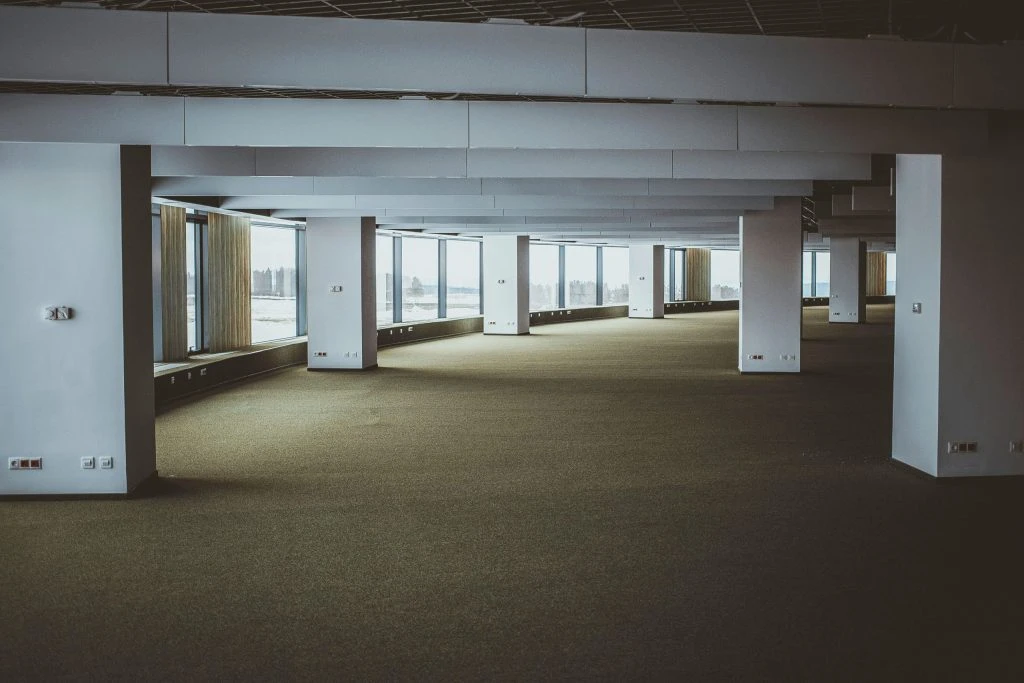
When you lease traditional office space, you get an empty building which you must then outfit with your own equipment and office furniture. Traditional office spaces typically come with long-term leases of at least 3-5 years, and sometimes up to 10 years.
As a tenant, you’ll pay a monthly rate to a landlord for leasing the building. In addition, you’ll be responsible for additional costs such as internet, utilities, maintenance, and any upgrades to the building. Plus, you’ll have significant initial fees to outfit the space with everything you need – office equipment, furnishings, and other amenities.
There are a few major benefits to traditional office setups. For one, you get to be in charge of customizing the space according to your preferences and the changing needs of the company. You can transform it to fit your business requirements and suit your brand’s look.
Additionally, a traditional office tends to cost less over time than a serviced office, even though you have the extra costs upfront for outfitting the space.
Traditional offices are often a good choice for businesses that value a stable, private space with a long-term contract.
What is a Serviced Office Lease?
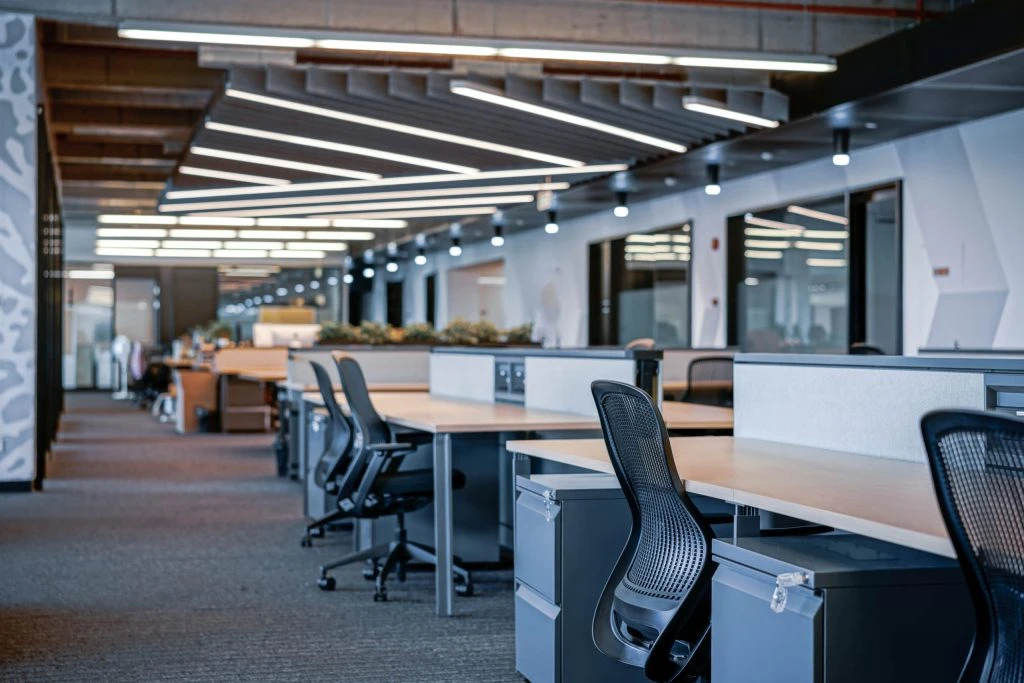
A serviced office is an office space that comes already outfitted with furniture, equipment, and other amenities you need in order to get down to business right away. While they offer private office space, they’re usually located within a building that has other offices, often with shared amenities and meeting rooms.
A serviced office lease is an inclusive lease type. As the tenant, you’ll have one monthly payment which encompasses rent, amenities, office maintenance, and utilities. This monthly fee includes everything from high-speed internet and trash services to printers to coffee mugs. Some serviced offices even include administrative support, reception services, and mail handling. These amenities give businesses a professional image toward clients and customers without a lot of upfront investments.
They usually have flexible lease terms and short-term leases, with some even offering terms as little as one month.
The short-term lease option, flexibility, and ready-to-start outfitting of these office buildings makes them an excellent choice for startups, changing small businesses, and those who require immediate use.
Each of these options has its own pros and cons. Let’s take a look at the benefits and downsides of each opportunity.
Pros and Cons of a Traditional Office
Pros
- A traditional office comes with more upfront costs, but this also means that you have complete control over how you outfit the building. You can choose your furniture, layout, number of desks, and other equipment. With a traditional lease, you have a blank canvas that you can use to create your own design and establish brand identity.
- Cost-effective solution. Understandably, the monthly rate of leasing a traditional office is less than that of a serviced office. So, although there’s more of an upfront cost with this type of office lease, a business looking for a long-term solution will save money over time.
- Traditional offices are typically long-term commitments (generally 3-10 years) compared with serviced offices. This provides stability, and is a great option for large companies and those who don’t plan to move or make significant changes in the near future.
- Option to sublease. Unexpected changes sometimes arise. A traditional office often gives lessees the option to sublease if they cannot finish the term for one reason or another.
Cons
- More work up front. It takes both time and money to set up a traditional office, which means that as the tenant, you probably can’t just start into regular business operations the day after moving in.
- Longer lease periods. Traditional offices typically come with at least a 3-year lease commitment. For small businesses and startups, this option isn’t always ideal.
- Additional costs. Utility bills, maintenance costs, and the cost of other amenities can fluctuate depending on usage and changing rates. As the tenant, you’ll need to be prepared for these additional costs on top of the monthly lease fee.
Pros and Cons of a Serviced Office
Pros
- Quick start-up time. A serviced office has everything set up and ready, from desks and furniture to shared kitchen space and perhaps even a gym or game room. For a new business without a lot of capital and assets, the serviced office model provides the opportunity to jump in and get to work right away, without spending a lot of time and money setting up.
- Range of amenities. Serviced offices vary in the amenities they offer. While some may simply be outfitted with furnishings and necessary equipment, others offer a range of services such as mail sorting, printing services, cleaning and maintenance, and administrative services.
- Flexible terms. Usually, serviced offices have flexible terms, which give room for the changing needs of startups and small businesses. In many cases, they’re also housed within shared, common spaces, which provide flexibility for tenants who may need to scale up or down.
- One monthly fee. The lease fee is all inclusive, taking into account not only the monthly rent but also utilities, amenities, and maintenance.
Cons
- Higher cost. Since serviced offices come with a range of amenities and equipment, they incur a higher monthly cost. While these features can be well worth it to small businesses, larger and more stable businesses may not appreciate the higher cost month after month.
- Limited modifications. In these offices, everything from furniture to interior designing is already in place. This leaves little room for a tenant to customize features to fit a specific brand look.
- Shared spaces. Serviced offices typically have shared common areas and meeting rooms. For businesses who need dedicated conference rooms or private space, this can be a downside.
Frequently Asked Questions on Traditional Office Vs. Serviced Office
What's the Difference Between a Serviced Office and a Coworking Space?
A serviced office is a private office space that hosts a business and is managed by a provider. On the other hand, coworking space is a communal space that offers individual desks or community spaces to freelancers, remote workers, and small teams.
A serviced office is used exclusively by a team and is designed for independent business operations rather than a handful of individual members. It offers private offices and a professional environment while still giving the benefit of short-term leases.
Coworking space is generally made up of flexible workspaces that often have open layouts or shared desk setups. They're designed for fostering community and collaboration and have shared amenities among members, such as printing services, WiFi, and communal areas. Coworking spaces often have flexible subscriptions or pay-as-you-go options.
How Long Is a Typical Lease Term for a Serviced Office?
While traditional offices have longer lease terms, serviced offices usually offer flexible terms that can range from 3 months to 5 years. Some even offer shorter terms beginning at one or two months.
Where Can I Find Serviced Office Space Near Charlotte?
In North Carolina, the central Charlotte area is a hub for ideal serviced office spaces for businesses who are ready to get to work. Much of the available spaces are located near the Uptown area.
NoDa, SouthPark, Pineville, and University City are all popular locations for this type of workspace.
Let Regent CRE Guide You On Your Search for the Perfect Office Space
At Regent Commercial Real Estate, we’ve spent over a decade becoming intimately acquainted with the real estate market around the greater Charlotte area. And our work is never done.
As the market changes, our team is laser focused on staying ahead of the curve. From exploring new property opportunities to conducting detailed financial analyses to providing expert negotiation, we’re fully engaged with the ever-shifting market trends around metro Charlotte.
From the northern cities around Lake Norman down to Fort Mill and Indian Land, and from Concord and Kannapolis to Belmont and Gastonia, it’s our pleasure to serve our greater Charlotte community.
With nearly 1000 successful sales and lease transactions under our belts, we’re here to help you find a space that fits your needs. Whether you’re on the hunt for a traditional office or a serviced office lease, you can count on our team to find the perfect office space solution for your business.
Learn more about office space near Charlotte, or contact us today to get started.
Share This Story, Choose Your Platform!
About the Author: Brian Smith, SIOR | CCIM | MBA

Related Posts




What our clients are saying


Unlock Exclusive Commercial
Property Listings