Find Your Flex Space in Charlotte, NC With an Experienced Professional
Finding the right flex space to lease can quickly become an arduous chore, with numerous options and long, confusing negotiations. Regent CRE has successfully closed over 500 flex space transactions in every corner of the Charlotte Metro area.
When you partner with Regent CRE, you can expect:
- A Tailored List of Potential Properties: We’ll find a list of the best properties for you using our comprehensive database search tools.
- Experienced Negotiation: Our experience and knowledge mean you get the best deal.
- Closing Support: More than just finding your property, we’ll stick with you and offer advice as you move toward your new space.
- More Time: Let us do the heavy lifting of the leasing process while you focus on your business.
- Optimized Budget: Maximize your dollars by hiring an experienced professional to secure your lease.
We have the time and knowledge to put your needs first. Get started with your free market report today. Don’t see your ideal property? Give us a call – we’ll help you find it.
Find Flex Space
Find the Perfect Flex Space in Charlotte, NC
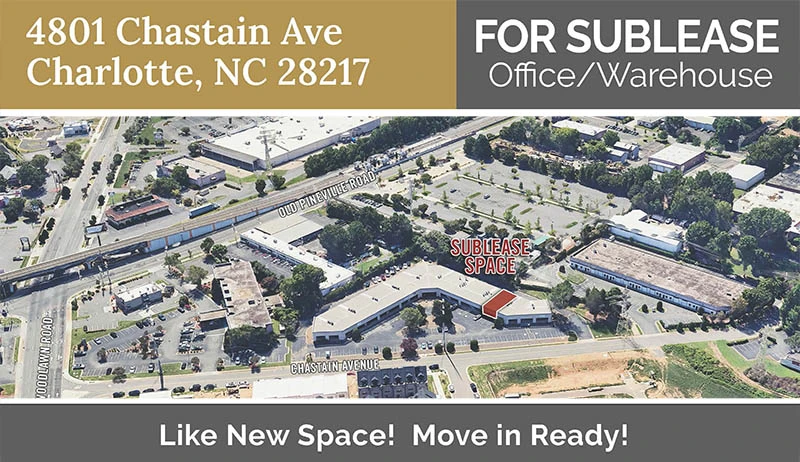
1,535 SF Office/Warehouse Sublease in LoSo – Suite 185, 4801 Chastain Ave, Charlotte NC 28217
Price on call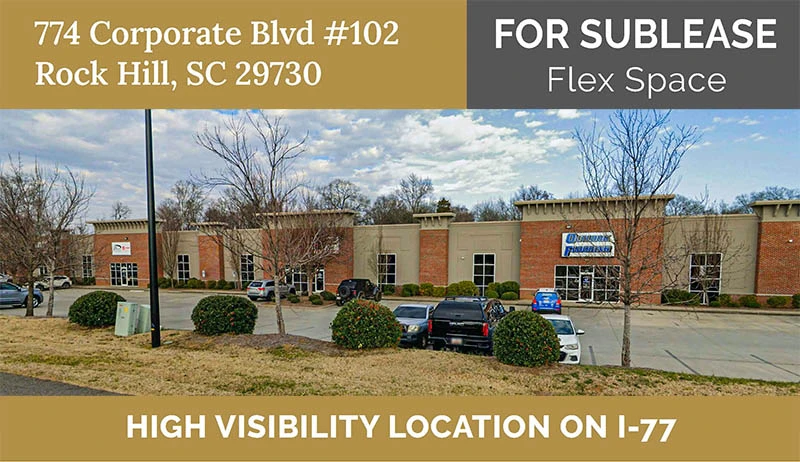
3,622 SF of Flex Space for Sublease in Rock Hill, SC at 774 Corporate Blvd, Suite 102 | High Visibility on I-77
Price on call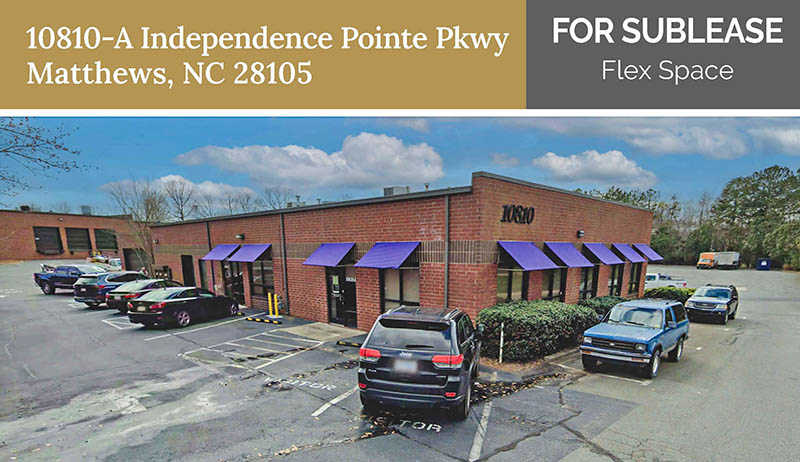
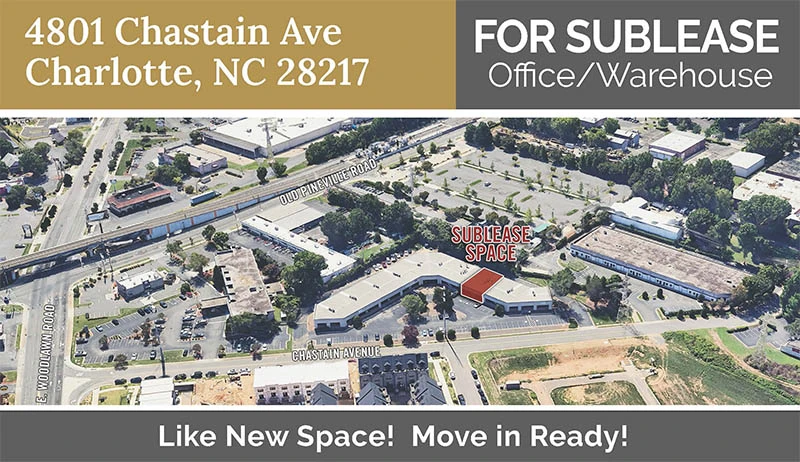
2,935 SF Office & Warehouse Sublease at 4801 Chastain Ave – Prime LoSo Charlotte Location
Price on call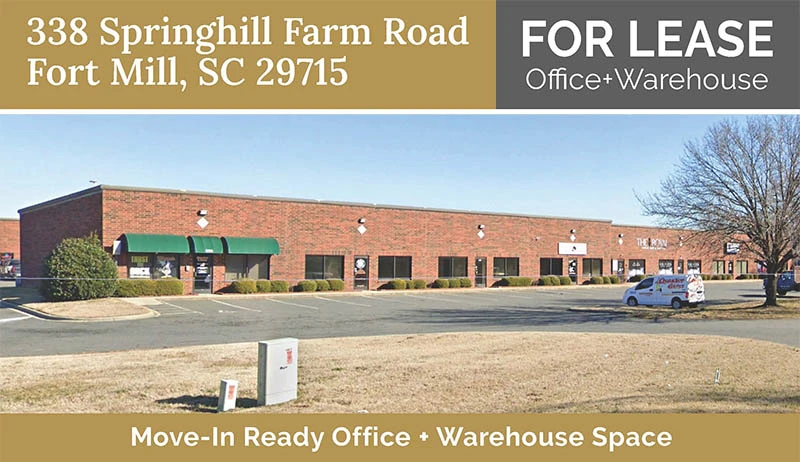
Versatile Office and Warehouse Space for Lease at 338 Springhill Farm Road, Fort Mill, SC 29715
Price on call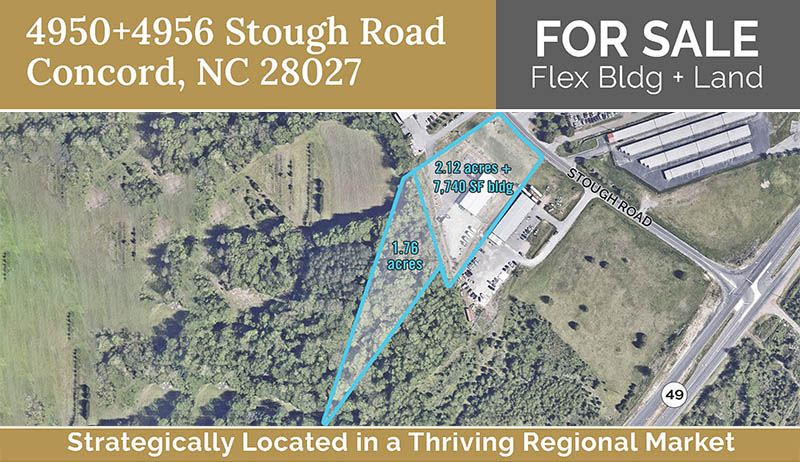
4950+4956 Stough Road – Concord, NC 28027: Flexible Office & Warehouse Property for Sale
Price on call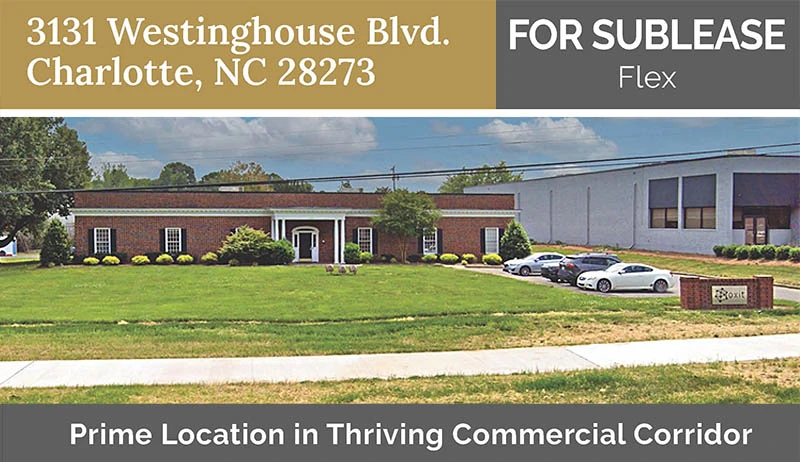
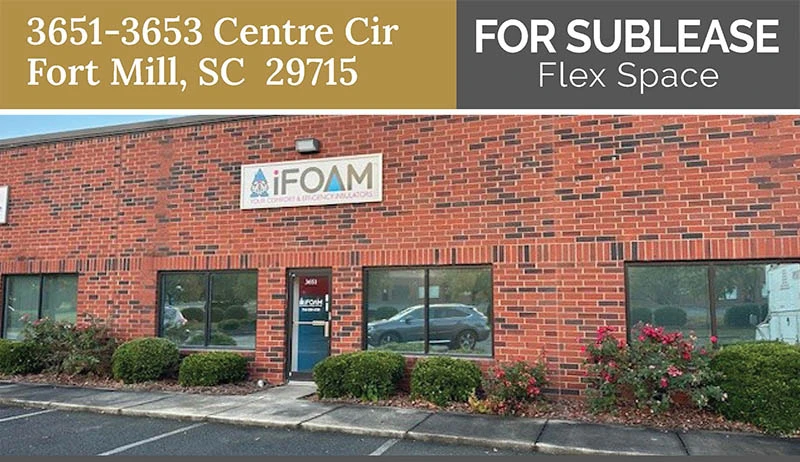
Flex Space Real Estate in the Charlotte Metropolitan Area
Charlotte’s thriving economy, web of convenient highways and interstates, and diverse opportunity for real estate makes it an excellent city to search for your next flex space.
Our team at Regent is here to help our clients sift through the maze of the local market to find the ideal property.
The greater Charlotte area is known for its southern charm, warm weather, and beautiful views. But Charlotte is also a flourishing district that presents many opportunities for real estate investment, small businesses, and enterprise expansion.
The city of Charlotte is home to over 870,000 residents, along with numerous museums, the Bank of America headquarters, professional sports teams, sprawling parks, and more. It’s also a hub for transportation, with the Charlotte Douglas International Airport running just west of the city, and the Norfolk Southern Rail Intermodal Yard coming in right next to the airport.
These features, along with the affordable cost of living, inviting restaurants, unique shopping experiences, and opportunity to get out in nature make the greater Charlotte area a sought-after place to live and a fast-growing metropolis.
Charlotte’s features make it not only an excellent place to live, but also a great place to grow your business. At Regent Commercial Real Estate, over 50% of our closings are for flex properties.
Charlotte and its surrounding neighborhoods are packed with opportunities to find the right property for you. And for service-oriented businesses, Charlotte’s highly efficient interstate systems make it easy to settle in to your space while still enjoying quick and convenient access to a wide client base.
What is flex space?
Flex space is a term used to describe a building that has both warehouse space and office space inside. As its name implies, this type of real estate is typically a flexible space that can be used for many different purposes. Flex space is most commonly occupied by service-oriented business.
However, it’s becoming more and more commonly used by a wide range of businesses of all sizes across many different industries, including e-commerce fulfillment centers, wholesale suppliers, logistics companies, photography studios, printing businesses, engineering firms, yoga studios, catering companies, and much more.
There are a wide range of options for flex space real estate sprawled across all corners of the Charlotte area. It’s a popular type of real estate because of its multifaceted uses and its adaptable nature. Still, as market demand increases, vacancy rates are also tightening, making it more important than ever to partner with a local broker to ensure you have access to all of the available properties across the greater Charlotte market.
As you wade through dozens of current listings in order to find your ideal space in a strategic location, locating just the right property can be overwhelming. Thankfully, with Regent Commercial Real Estate, it doesn’t have to be. Our expert team has over 500 successful flex space closings under our belts. We stand out from the crowd by prioritizing the success of our clients more than simply closing a deal.
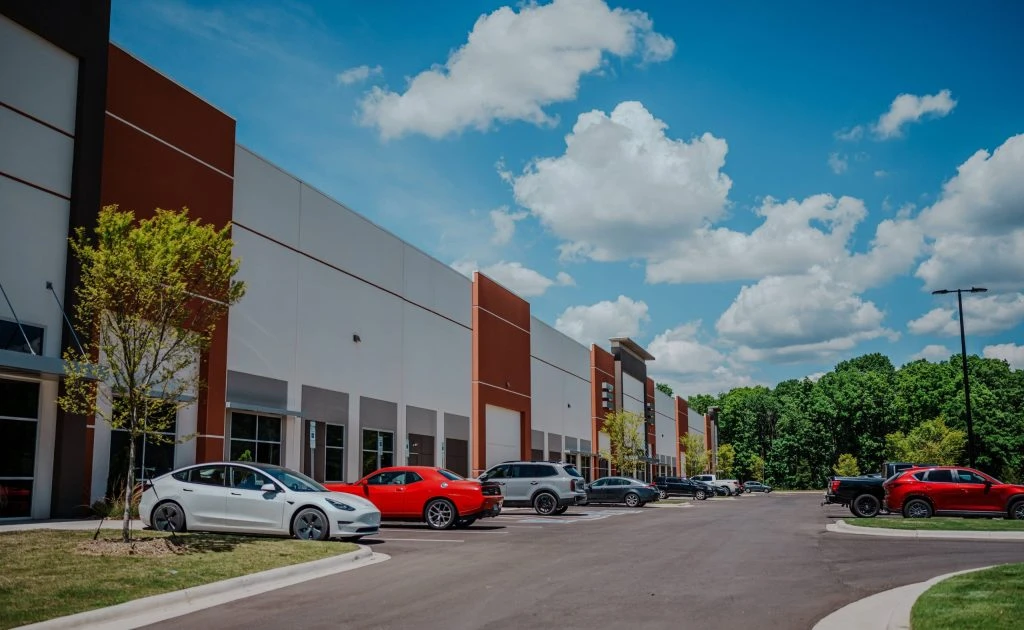
Flex Space in Charlotte
Charlotte is one of the top markets for flex space, and at Regent CRE, the flex space option tends to be the most popular type of property that our clients are seeking. For many, flex buildings provide the best fit, and more and more businesses are turning to this adaptable option.
This building type provides affordable commercial work spaces across a range of industry sectors, offering cost-effective rental rates, shorter lease terms, and versatile layouts and expansion options for growing and changing businesses.
In the metro Charlotte area, this type of space is bolstered by a vast network of accessible highways and interstates, convenient public transportation options, unique locations, and a thriving economy.
What type of businesses use flex space?
Flex space is most often used by service-oriented businesses, but demand is widening as more and more businesses notice the many benefits that flex spaces provide.
Why are service-oriented businesses so attracted to this office + warehouse combination? Well, for businesses providing a hands-on service, the mix of a warehouse-type industrial space and an office portion is exactly what they need. There’s room to store products and equipment, build or paint, and there’s flexible office space for the administrative work or sales side of the business.
Some flex buildings might also have meeting rooms or collaboration areas for employees to gather in. Plus, many have customer-facing entrances and welcoming areas for those businesses who invite customers into the space.
In addition to the practicality of the space, service businesses also enjoy taking advantage of the lower rates per square foot, convenient locations (often on major highways or interstates), adaptability, and shorter leases that these buildings typically offer.
Examples of types of service-oriented businesses who use flex space include:
- Painters
- Plumbers
- Electricians
- Tile installers
- General contractors
- Tech companies
- Roofers
- Cleaning companies
- Auto repair shops
- Pest control companies
In other words, any business who’s providing a service to the public could be a potential candidate for flex space.
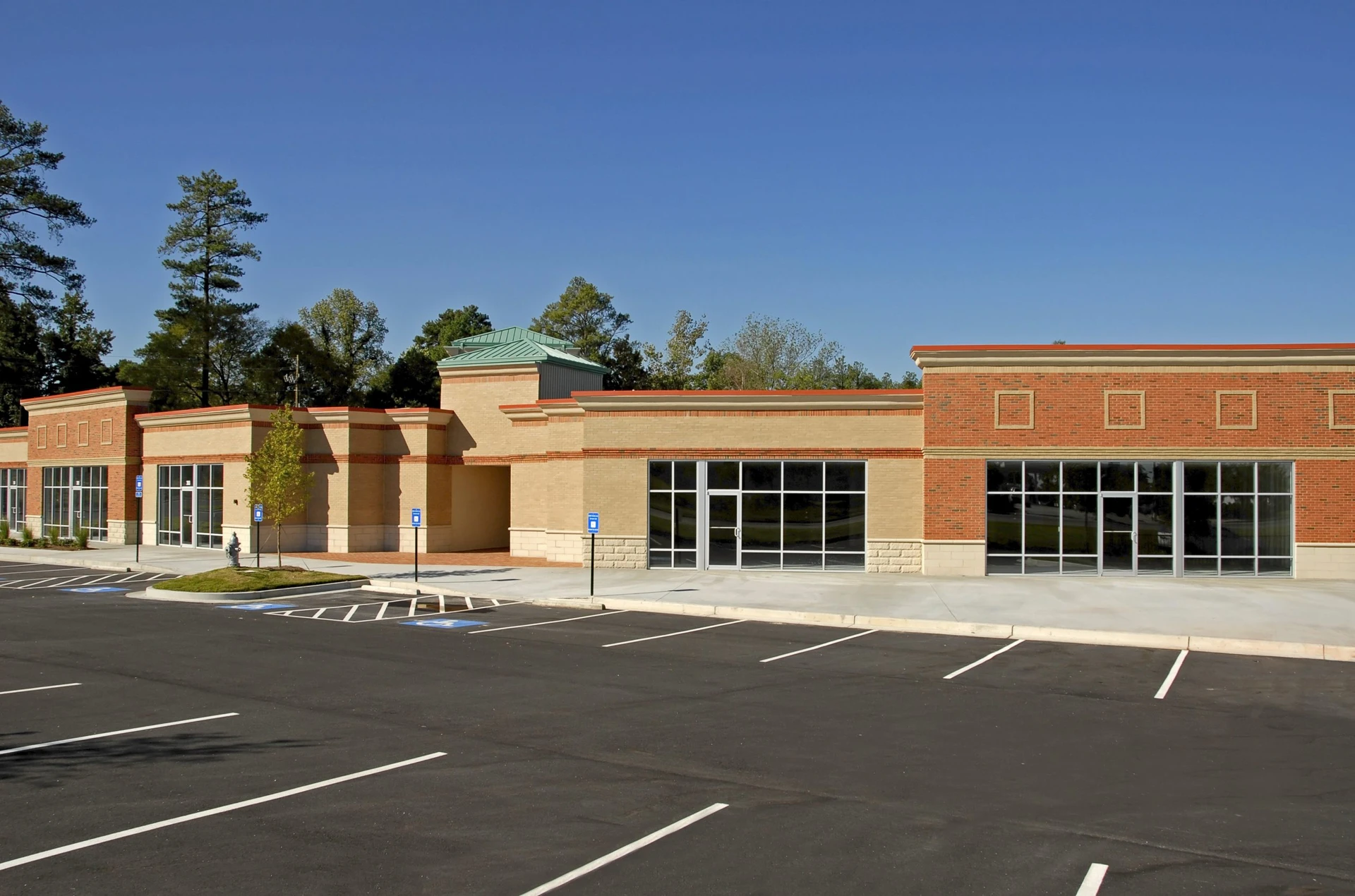
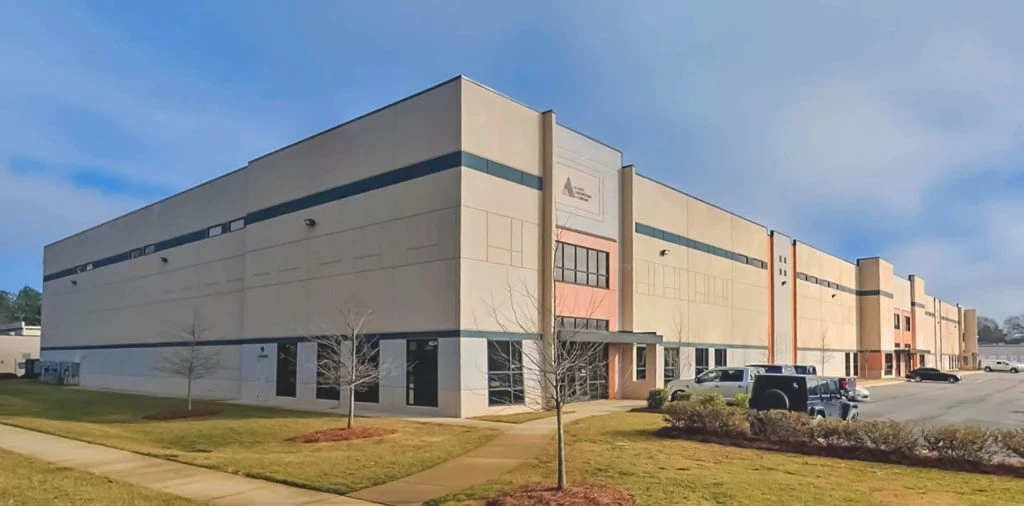
In addition to service-oriented businesses, flex space is also becoming a popular option for distribution and warehousing businesses, repair companies, production and creative businesses, research and development firms, fitness and recreation centers, food and beverage operations, and art and specialty trades. Specific examples include:
- E-commerce fulfillment centers
- Logistics and freight companies
- Mobile workforces
- IT and tech service companies
- Printing and signage businesses
- Marketing companies
- Biotech and pharmaceutical startups
- Engineering firms
- Gyms and CrossFit studios
- Meal prep and delivery services
- Food distribution companies
- Cabinetry shops
- Specialty trade showrooms
Check out more businesses who benefit from using flex space.
What’s the difference between flex space and other industrial spaces?
How is flex space different from warehouse space or general industrial properties? The main difference between these options is that flex space usually has a heavier component of office space. Typically, 50% or more of the building is filled with offices.
And because more of the square footage is taken up by offices, usually, the warehouse portion of the building is rather small compared to regular warehouse real estate properties.
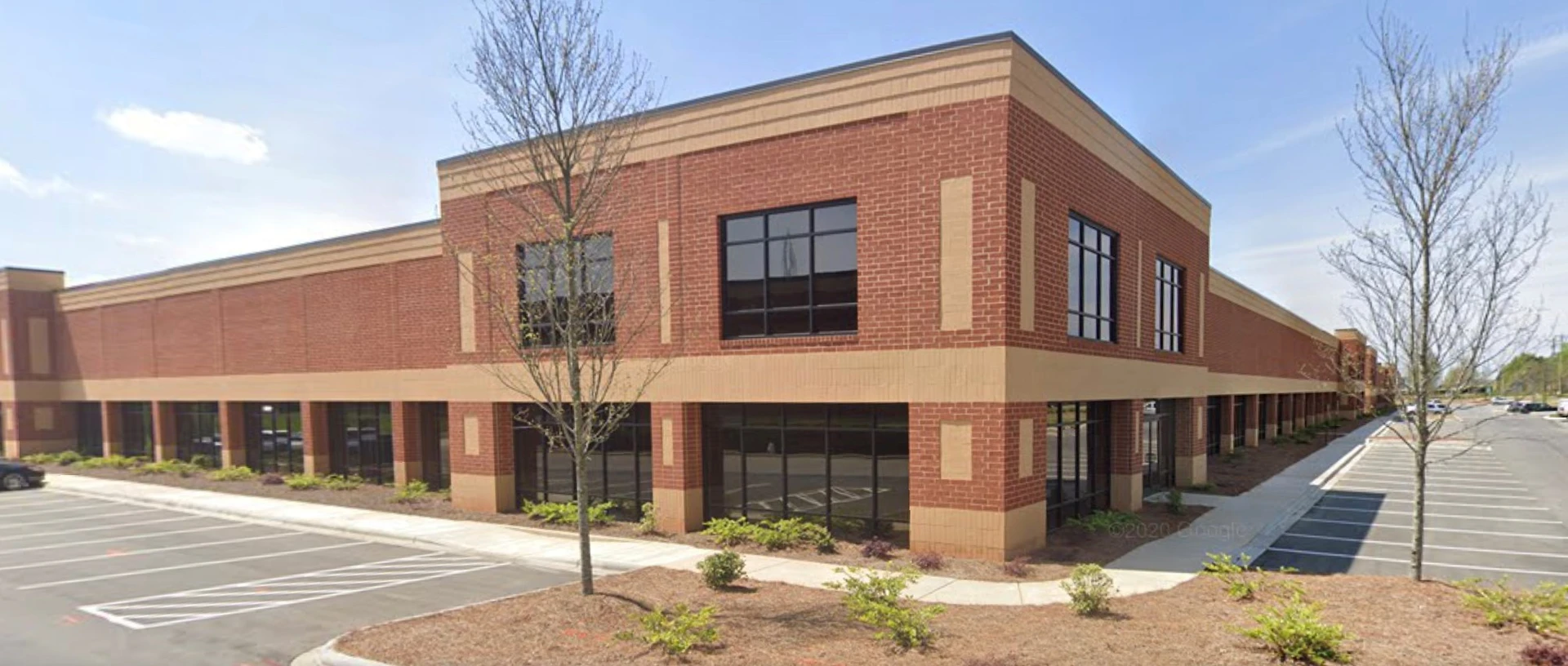
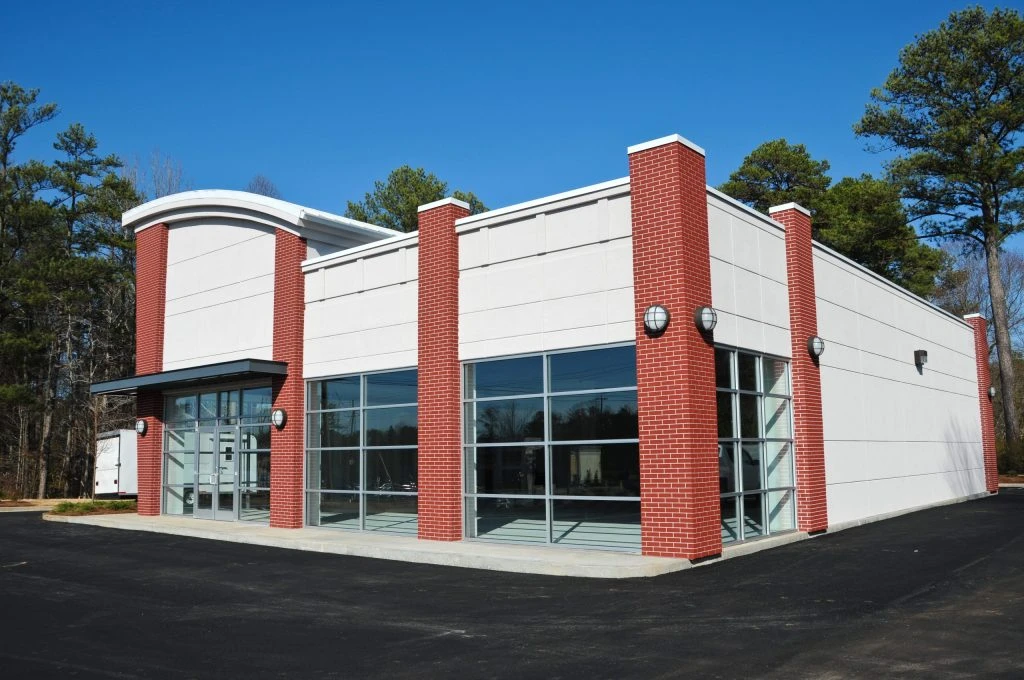
The layouts of flex buildings can be varied, of course, but they’re commonly structured with a customer-facing front side, offices, and then a warehouse in the back, often with a roll up door. (Dock doors are not as common for flex space as for warehouse or industrial space.)
In addition, even more than other industrial or warehouse spaces, flex spaces are quite often located near interstates, highways, and other major roads. This is because, for service-oriented businesses, it’s highly important to be able to have quick and convenient access to clients and to deliver services to a wider range of customers in a timely manner. The wider the trade area, the more opportunities for more business. The close proximity to major roads also makes it easier to attract employees for the business.
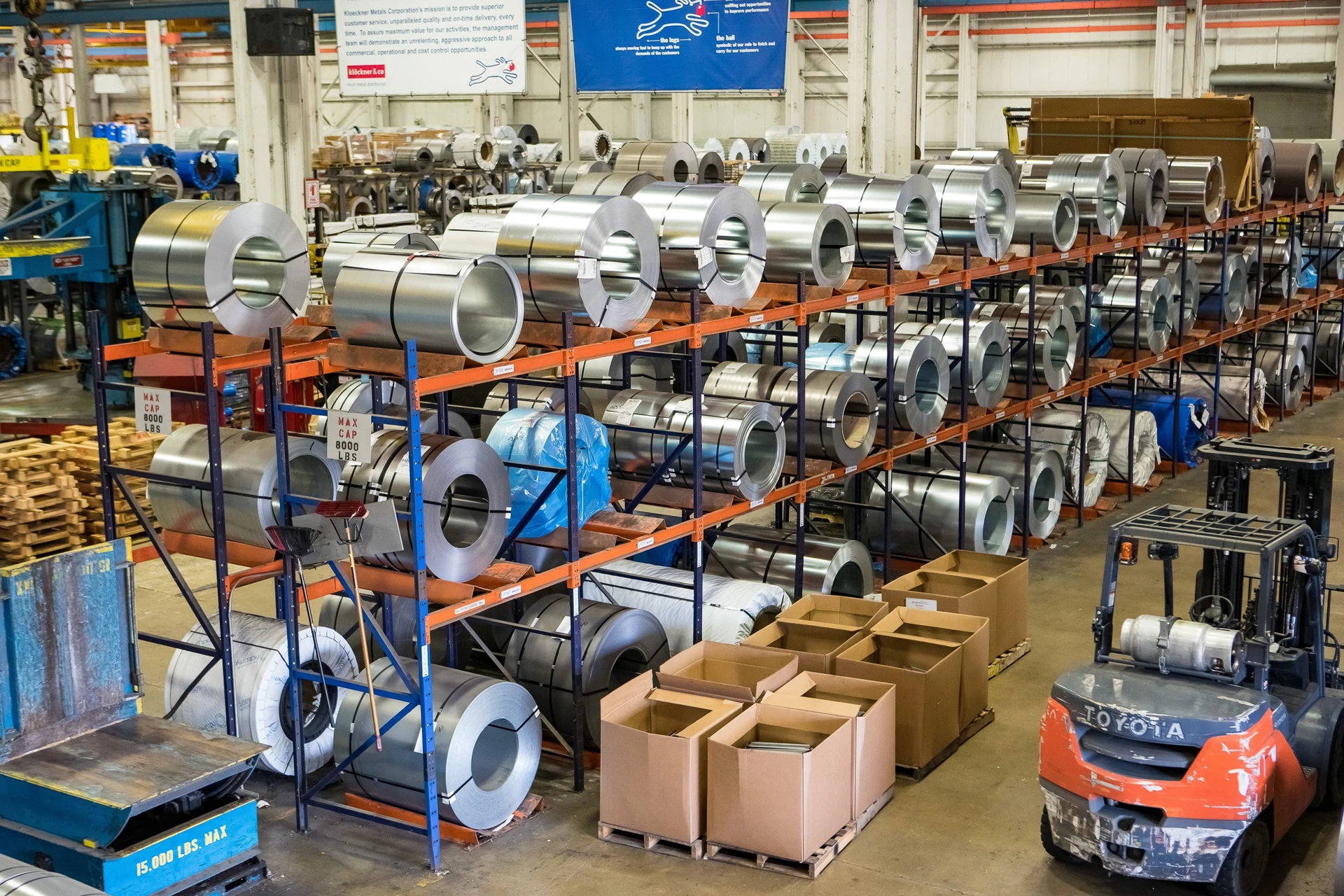
Benefits of flex space
What are some of the main benefits of choosing flex space?
- Adaptability. This is one of the biggest reasons why so many businesses choose to lease flex space. Because of the office/warehouse mixture of square footage, flex space provides the ability for businesses to make the space work for them. Flex space is also a great choice for investors, because it can attract so many different types of lessees and can often host more than one tenant at once.
- Flexible layouts. Beyond just offering both warehouse and office space, flex listings tend to offer more flexible layouts than traditional warehouse and office buildings. They can include coworking areas, rearrangeable desks or private offices, and creative workspaces. In many cases, they’re even shared by multiple tenants, providing more options for employees to adjust within the space, as well as greater cost savings.
- Cost-effectiveness. Flex space typically costs less than pure office space. This can be a major benefit to businesses who need some type of working area for administrative and sales teams, but don’t need a fancy office that has all the latest features and costs more. In many cases, flex space office workers only work part time, or may spend time in other portions of the building as well as at a desk.
- Convenience. Flex spaces are often located close to major highways and interstates. For service-oriented businesses, this means quick access to a larger client base. It also means that both employees and customers (if applicable) can quickly and easily access the space.
- Shorter lease options. While traditional office space leases often span anywhere from 3-10 years, flex spaces generally offer much shorter lease terms, which is just one more way that they give tenants flexibility. Flex space leases can be just a year or two, or even considerably less. Some landlords even offer the possibility of leasing from month-to-month or quarter to quarter.
Disadvantages of flex space
Flex space has some disadvantages, too. Here are some aspects to consider:
- Lower-quality offices. Although this type of real estate costs less than traditional office space, there can also be downsides to the available space. Due to the nature of the buildings, they usually don’t have as many windows, which can be discouraging for employee morale. And in some buildings, a more open office floor plan may make it difficult to concentrate or maintain privacy for staff while working.
- Shared space challenges. While the flexible layout options of these spaces is often a positive feature, the more open floor plans and reduced number of private working areas that tend to be common in flex spaces can sometimes lead to productivity challenges. While creative minds may actually be more productive in these types of spaces, other personality types of styles of work can struggle without dedicated, private desk space. This can especially be challenging when employees only work certain hours or when hybrid work models are in play. In some cases, it can take more careful management and organization to ensure that all of your employees have the personal space, work tools, and (in some cases) privacy they need in order to effectively complete their tasks.
- Maintenance. Flex space can sometimes incur higher maintenance costs because of the mix of office and warehouse space. Both aspects need to be kept up-to-date and serviced. This might include HVAC systems, wiring, office logistics, sprinkler systems, equipment inspections, and more.
- Zoning restrictions. It’s important to check on the zoning for a possible flex listing before you decide whether or not it will be a good option for your business. In some municipalities, there are restrictions on certain types of manufacturing, retail operating, and other services. At Regent, our team will get to know your needs and work with you to make sure we find the right space with zoning that works for you.

What our clients are saying


Flex Space Features – What You Need to Know
What else is important to know about the features of flex space real estate? Here are some commonalities within these types of properties, as well as some considerations you should think about when looking for a space.


Office space features in flex properties
Most flex properties have a significant amount of office space in the building. In fact, often, more than half of the square footage of the building is taken up by offices. These can be more open rooms, private office space for administrative staff and sales staff, or in some cases, executive office suites. Some buildings even have a variety of adaptable rooms, such as virtual offices, conference rooms, and creative office space available.
However, the downside of these working options is that usually, flex office space is not as desired as other office buildings. This is because flex spaces are not usually surrounded by windows on every side. Many have windows in the front, but then industrial brick walls with no windows in the back of the building.
And as you go deeper and further back into the building, there are even less windows. Flex buildings are usually single-story, which can allow less natural sunlight into the building compared to taller office structures, where most rooms have outside walls and windows.
Since most people prefer to have some natural light during the day, these office spaces aren’t as highly coveted. However, in many flex spaces, the office staff isn’t always working full time. For some service-oriented businesses, the administrative staff is just coming and going and doesn’t necessarily need a fancy space.
While the downside is less natural light, there are some benefits of working in a flex space office. These include:
- Front door access. Typically, these buildings offer drive-up access in highly accessible parking lots. Employees don’t have to worry about finding parking or going through an elevator to get up to the fifth floor.
- Restrooms are self contained. Employees get to enjoy easy access to the restrooms, which are usually within the space.
- Attached warehouse. For businesses who use warehouse space, employees benefit from a convenient warehouse space that’s right inside the building.
Zoning types in flex space
Flex space is usually zoned as light industrial instead of heavy industrial. The specific zoning restrictions depend on local zoning regulations. However, in general, flex zoning is less intense than other zoning options.
This is because usage for these properties is generally lighter. There isn’t heavy noise pollution, strong smells, smoke, or waste (as in a recycling center) to worry about for most businesses who use flex space.


Parking trends in flex real estate
Parking can vary when it comes to this type of real estate, but typically, flex space doesn’t require abundant parking for trucks (or a truck court area) in the same way that warehouse space does.
While distribution buildings often need enough space for 53′ trailers, flex spaces typically just host smaller vehicles, like FedEx and UPS trucks.
Because they don’t require as much parking lot space, flex spaces also don’t typically need as much acreage as, say, an industrial park.
Cost of flex space vs. traditional office space
How does the cost of flex real estate compare to traditional office real estate? In our experience, it’s typically about 50% cheaper than your traditional office space. Because of this pricing difference, a lot of businesses choose flex in order to save some money – and who can blame them?
However, when you go with this less expensive option, it is also important to be aware that flex space does tend to have some drawbacks, such as less natural light and possibly lower-quality work spaces, as we discussed in the office space section above. At Regent, we work with our clients to make sure that we understand your needs in order to help you find the best potential options for your business.
As you look around the Charlotte Metro area for flex space, you’ll also notice that the further away you get from the city, generally, the more affordable the space.
You can almost think of flex real estate like a single-story home. Because flex spaces are usually just one story, they take up more land than other types of buildings. This is why it’s easier to build in more rural areas. For two or more story buildings, you get at least twice as much square footage in the same footprint. But for flex space, when the space is simply horizontal, you need more acreage.
In the Charlotte Metro area, prices can fluctuate significantly based on the neighborhood you choose, access to interstates and highways, size of the building, year built, and other features.
Currently, the median listing price of flex space for sale in the greater Charlotte area is $223/sf, and the average rental rate for flex properties is $15/sf/yr.


Building class options for flex space
Industrial buildings are broken into three building classes: Class A, Class B, and Class C. What do these classes mean?
A Class A rating is reserved for the newest, most up-to-date real estate. Class A buildings can also be freshly updated, grandiose buildings with the newest innovations. These buildings have state-of-the-art features, updated HVAC systems and sprinkler systems, high level security, and more. Class A buildings are also usually located in easy-to-access locations.
Class B buildings are a step down from Class A. These options are usually well-managed and in working order. They might be in well-trafficked areas, but not necessarily the most popular areas of town. These buildings tend to have fewer amenities than Class A buildings and are a bit older, but are still in good working condition.
Class C buildings are generally in less populated areas. These buildings are older and usually need some work. They tend to be a good investment opportunity for real estate buyers who have some cash or elbow grease to put into the property. In some cases, they can also be newer buildings that are built with the least expensive materials, like sheet metal.
In the metro Charlotte area, most flex spaces fall into the Class B category. However, there are some newer, Class A buildings, like the new Greenberg Gibbons Airport Flex Drive properties. And there are also some older, Class C buildings as well.
Lease or buy? Options for your flex real estate move
A major consideration you need to take into account is whether you want to lease or buy your flex space. In the Charlotte area, the majority of the flex space available is up for lease, but there are options for properties that are for sale, too. It’s also possible to buy a one-off unit of a flex condo, though this is not an especially popular option in the Charlotte market.
So what are the pros and cons of leasing versus buying?
Pros and cons of leasing:
- Pro: Less initial investment.
- Pro: Ease of moving on if you need to upgrade (or downgrade).
- Pro: Less responsibility for the property. Oftentimes, the landlord takes care of maintenance tasks and outdoor property management.
- Con: Leasing doesn’t build equity.
- Con: Most property decisions will need to be run by a landlord first.
- Con: No control over possible rental price increases.
Pros and cons of buying:
- Pro: Builds equity.
- Pro: Gives you control over building upgrades or expansions without having to run decisions by a landlord.
- Pro: Ability to rent out portions of the space if desired.
- Con: Significant initial investment.
- Con: Usually more of a long-term commitment, with more steps and hassle to move on if you outgrow the property.
- Con: More upkeep and maintenance responsibilities.


Other common features of flex buildings
In the Charlotte area, most flex spaces are typically one-story buildings, with the average size being about 5,000 – 10,000 square feet. Businesses who need more space than this typically end up searching for office buildings instead of flex (office + warehouse) options.
As you’ll notice in our neighborhood analysis of available spaces below, there’s a variety of different types of buildings with different flex features in the greater Charlotte area. On average, though, your standard flex space is going to look fairly similar in most cases. Most of these buildings have a little bit of office in the front and a warehouse in the back, often with a grade-level drive-in door.
Why Choose Flex Over Office + Warehouse? The Benefits of Working Under One Roof
While not every business can make it work to condense their office and warehouse properties into one flex building, for many, this option provides numerous benefits, leading to cut costs, increased productivity, and better collaboration.
Here are 5 ways that your business might benefit from switching to a flex lease:
- Minimized cost. Flex buildings around metro Charlotte tend to cost about 50% less per square foot than office buildings. For businesses who don’t need a pristine, top-of-the-line office area, flex space can generate significant savings per square foot. In addition, renting only one building instead of two means only one lease and one bill for maintenance and utilities, which often winds up reducing overall operations costs.
- Shorter leases. Flex properties typically offer shorter leases than other types of buildings, which is often better for companies who need more flexibility or plan to experience growth in the near future.
- Flexible layouts. Flex spaces are generally more adaptable, offering flexible layouts that move with the shifting needs of the company. Adjustable floor plans make room for collaboration areas, rearrangeable desks, and in many cases, even the opportunity to share the space with other tenants, further lowering the cost.
- Collaboration. Having administrative and warehouse staff under one roof makes it easy for departments to collaborate. In addition, employees who may be switching back and forth between tasks can easily move from the office to the warehouse if needed.
- Climate control. While traditional warehouses don’t usually have air conditioning, flex warehouses often have more amenities and may be better suited for more than just storing products.
While this option doesn’t work for every company, for many, having all of the business operations in one flex property can have significant benefits. However, there can be a few downsides of moving into one space. These include:
- Lower-quality office space. Flex office spaces typically have less windows and are usually more open than traditional offices. While this can work very well for collaboration space or for employees who aren’t in the office 40 hours per week, it can be difficult for full-time employees who need focused work space.
- Smaller warehouses. In most cases, flex warehouses aren’t equipped with numerous dock doors, high power, or large parking lots like traditional warehouses are. For companies who need high clear heights, significant parking space, or large overhead doors, a flex property might not do the trick.
- High-traffic locations. While easily accessible locations are great for many flex users, for some warehouses, it’s not necessary to be on the main roads. In some cases, having both an office and a warehouse building provides the opportunity to find locations that are better-optimized to the needs of the business.
Find out more about choosing between one flex building or an office + warehouse.
The Increasing Draw to Flex Space Across the United States
As more and more businesses turn to flex space to meet their business needs, the demand for flex space has increased not just in Charlotte, but across the country. Companies are finding that the flexibility of this type of space meets the needs of modern businesses, allowing the possibility to save on monthly rent while navigating the complexities of hybrid and remote work, part time employees, and creative workspaces.
And as businesses fight inflation and the ever-evolving needs of the market, flexible workspaces also provide the wiggle room that companies need for possible expansions, layout readjustments, downsizing, or moving to a new location.
Flex spaces are often occupied by multiple tenants, which contributes to their ability to keep costs low. Flex is sometimes referred to as “the multi-family of industrial” because of its nature of providing space for more than one tenant at once.
Since the Covid pandemic, we’ve seen a major trend as traditional office space use has diminished and the demand for flex space has increased. Both investors and business owners have capitalized on this trajectory.
One study showed that since the Covid pandemic, the demand for flex space is up by 58%. And in the first quarter of 2024, demand for flex space in the U.S. increased 6% quarter-over-quarter (QOQ).


How the rise in small businesses has contributed to more flex space users
In the last 10 years, but especially since the 2020 Covid pandemic, small businesses have dominated the market in terms of job creation. In fact, the Bureau of Labor Statistics found that 55% of the total net job creation from 2013-2023 was due to small businesses.
While the definition of a “small” business can vary significantly, a 2021 survey found that out of the 6 million small businesses in the United States with employees, a whopping 49% have just one to four workers. Going up from there, only 1% of small businesses have between 100-499 employees.
No matter what way you look at it, small businesses provide jobs for roughly half the U.S. workforce. The powerful economic force of job creation through small business is not only an impactful fuel for the overall economy, but it’s also a significant factor that has led to the rise in demand for flex space.
Flex space is an excellent way for small business owners to transition from a home business to a small shop space. It also provides the opportunity for lower lease rates and flexible use options, which is ideal for smaller endeavors and startups.
What other factors have contributed to an increase in flex space?
What else is contributing to the rise in flex space users?
Retail tenants are becoming significant in the pool of flex users. As retailers rely less on drive-by customers, they’ve found it useful to shift to more economical spaces that aren’t necessarily located on the most highly-trafficked streets. Plus, flex is usually cheaper than leasing retail space, allowing these users to cut down on their costs and fight inflation.
In the retail sphere, e-commerce has also skyrocketed, which has massively contributed to e-commerce companies needing flexible spaces to occupy.
Another area in which we’ve seen major increases since the Covid pandemic is in the use of commercial kitchens. Companies such as Hello Fresh, Home Chef, Family Menu, and other meal subscription programs have gained significant traction, and many of these companies have found flex space to be the option of choice for their home bases.


Why amenities matter in flex space
Over the past few years, the drive for flex space has not only provided new possibilities for both business owners and investors, but it’s also transformed the outlook of landlords as they consider the best ways to attract and keep tenants in high-quality spaces. In the modern workforce, a clean, available space is no longer enough to keep employees engaged and productive. Now, across industries, we’re seeing the demand for creative, versatile spaces that feature a variety of amenities.
Some popular amenities that you may find in flex space options include:
- Sustainability features
- Comfortable break rooms
- Dependable public WiFi
- High-level security systems
- Showroom glass
- Covered parking
- Fitness centers
- Green space and outdoor workspaces
- Natural lighting
- Ergonomic furniture
- Modern technology solutions
- On-site food options
- Outdoor buildings and storage
- A/C in warehouses
As you search for your next flex property, don’t be afraid to ask about the available amenities that are included with any spaces that you’re considering. Understanding exactly what’s offered in a space will help you balance cost effectiveness and find the best fit for your employees and overall business goals.
Best Locations for Flex Space Near Charlotte, NC
How do you choose a location for your building? Here are some considerations to take into account when deciding where you should start looking for flex space.
- Flex space requires more land. Because flex properties are usually one-story buildings, they require more land than other types of infrastructure, such as office buildings. Since flex space is built horizontally instead of vertically, it takes more acreage and therefore the land usually costs more. Because of this, flex space in more rural areas tends to be most affordable. In highly concentrated areas such as Uptown, Charlotte, you won’t find much for this type of real estate.
- Consider your service area. For service-oriented companies, it can be vital to be located close to highways and interstates in order to be able to travel to more customers more quickly. Since flex space is largely used by service businesses, it tends to be in higher-growth areas where contractors and other service-providing businesses are in demand. Real estate agents joke that flex space is the apartment complex without the kids in the pool.
- Think about your employees. It’s not only important to be near your client base, but it’s wise to think about proximity to your employees, too. Consider where your employees live and what their commute will look like with the lease of a new building.
Some of the most popular flex space neighborhoods in the Charlotte metro area include Airport, Lake Norman, Concord, and Kannapolis.

Flex Space in the Charlotte MSA Neighborhoods

1. Flex Space in Uptown Charlotte/Central Business District (CBD)
The heart of Charlotte and the city center is called Uptown. It’s also referred to as the Central Business District and Center City. This urban area of the Queen City is busy and full of shops, stores, restaurants, and office space.
Uptown is filled with plenty to do – including museums, parks, the Bank of America Stadium, the NASCAR Hall of Fame, and much more. It’s divided into four quadrants, which are split up by the intersections of the main roads that run through the city – Trade Street and Tryon Street.
When it comes to flex space in Uptown Charlotte, there really isn’t much. Instead, the real estate in this area is predominantly office and retail.
2. Flex Space in South End and Midtown
As you move toward the south side of the city, into South End and Midtown, you’ll find more flex space options available. Currently, much of the infrastructure in this area is being converted into retail and traditional office space. This is largely because these types of spaces can charge higher rental rates. Still, flex space options do exist here!
Rental rates for flex space in this area average around $18/sf/yr, with most spaces offering around 2,000-3,000 square feet. And if you’re looking to buy instead, you’ll likely be paying around $320/sf. Buying options in this area include larger buildings, up to 30,000 square feet. There are options for both Class B and Class C buildings in these cities.
The options in this area feature ample room for customization and a variety of building types. From stand-alone homes in cozy neighborhoods to large, customizable spaces with loading docks and plenty of warehouse square footage, our clients enjoy a variety of real estate options in this part of the city.

3. Flex Space in Ballantyne and Blakeney
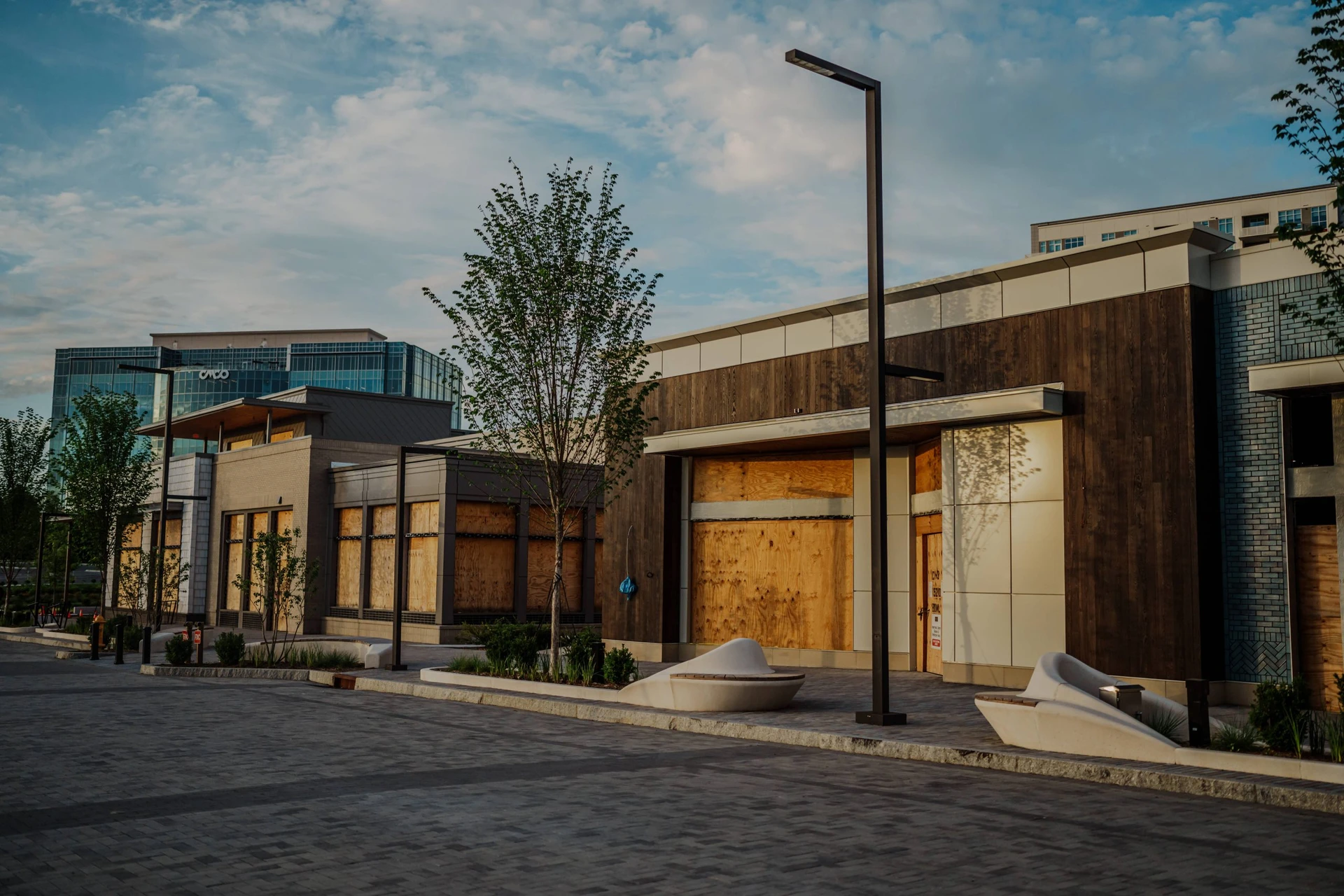
Ballantyne and Blakeney are more affluent parts of the Charlotte Metro area. These cities are on the southern border of North Carolina, right next to South Carolina. Because this is a weather community, most of the real estate in Ballantyne and Blakeney is either office or retail.
Residents of this area enjoy plenty of shopping and dining options, good schools, a low crime rate, and an outdoor mall. It’s more suited to white-collar work than blue-collar service businesses.
If you want to find flex space close to this area, Indian Land, Matthews, and Indian Trail offer good options.
4. Flex Space in Airport Neighborhood
Charlotte is home to one of the busiest airports in North America, the Charlotte Douglas International Airport. In fact, CLT Douglas is actually ranked in the top 10 most connected airports in the world, and is a major hub for American Airlines (the second-largest hub in the U.S.).
The airport Neighborhood, located just 15 minutes west of downtown (called Uptown) Charlotte, is a popular place for numerous different types of real estate and businesses, and flex space is no exception.
In this heavy flex area, the options are almost unlimited. With the many different building types and the number of options available, there’s something for everyone in this convenient, high-traffic neighborhood. Westinghouse Boulevard and Stuart Andrew Boulevard are two of the most popular streets for flex space options in this area.
And although this sub-market of Charlotte is highly popular, it’s also affordable. Rental rates average around $17/sf/yr in the airport neighborhood.
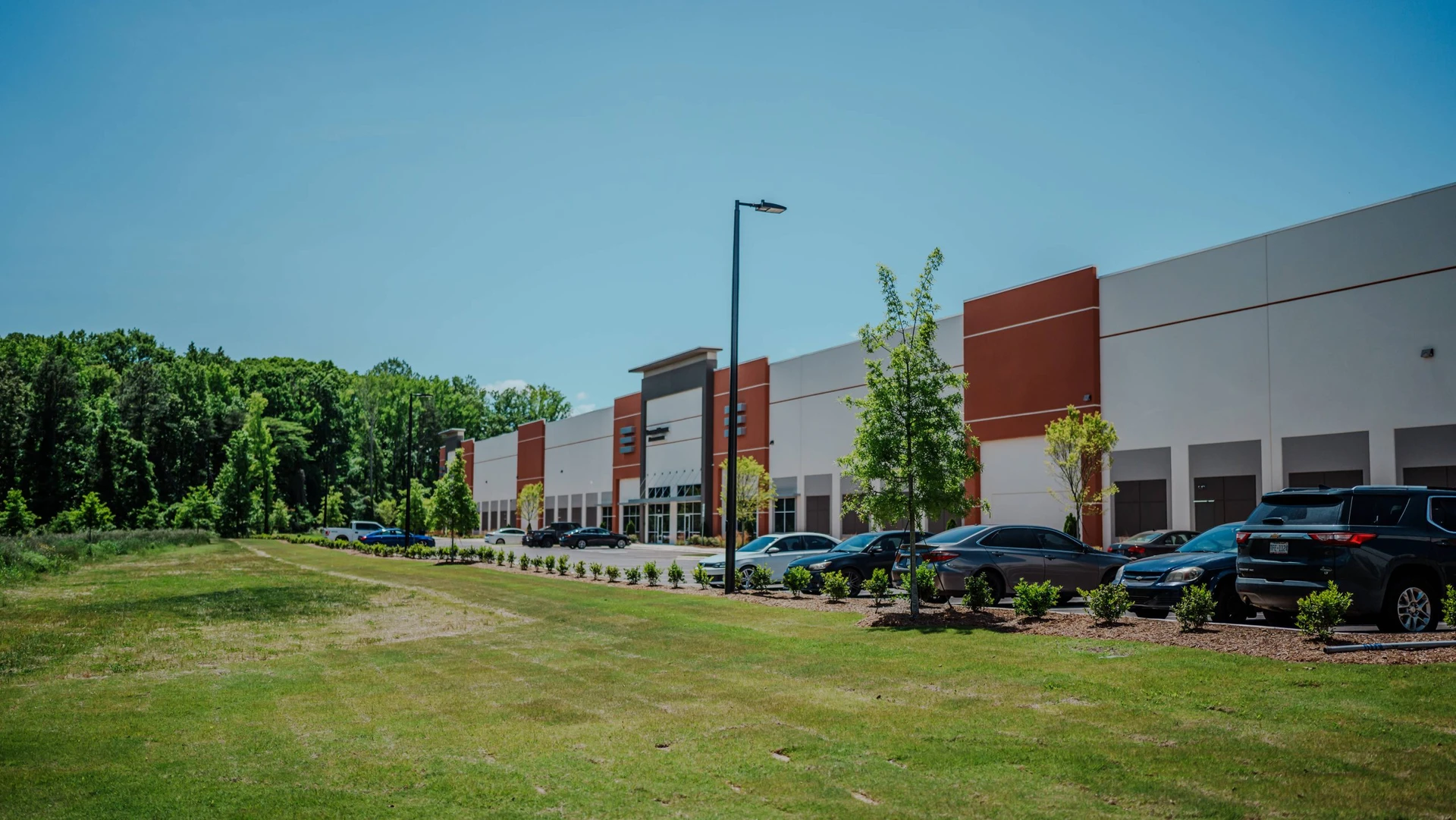
Airport Flex Drive flex space development
Airport Flex Drive – located off Horseshoe Lane and West Boulevard – is home to some high-class, recent flex space developments. While a large majority of flex space around the metro Charlotte area is older (most was built in the 1990s or before), this new development offers many superior features. Concrete tilt-up construction, more square footage, more glass, and heavier landscaping all put this real estate option a cut above everything else that’s currently on the market. Of course, higher rental rates are also attached to these properties.
These brand new, top-quality developments were built by Greenberg Gibbons.
5. Flex Space in SouthPark
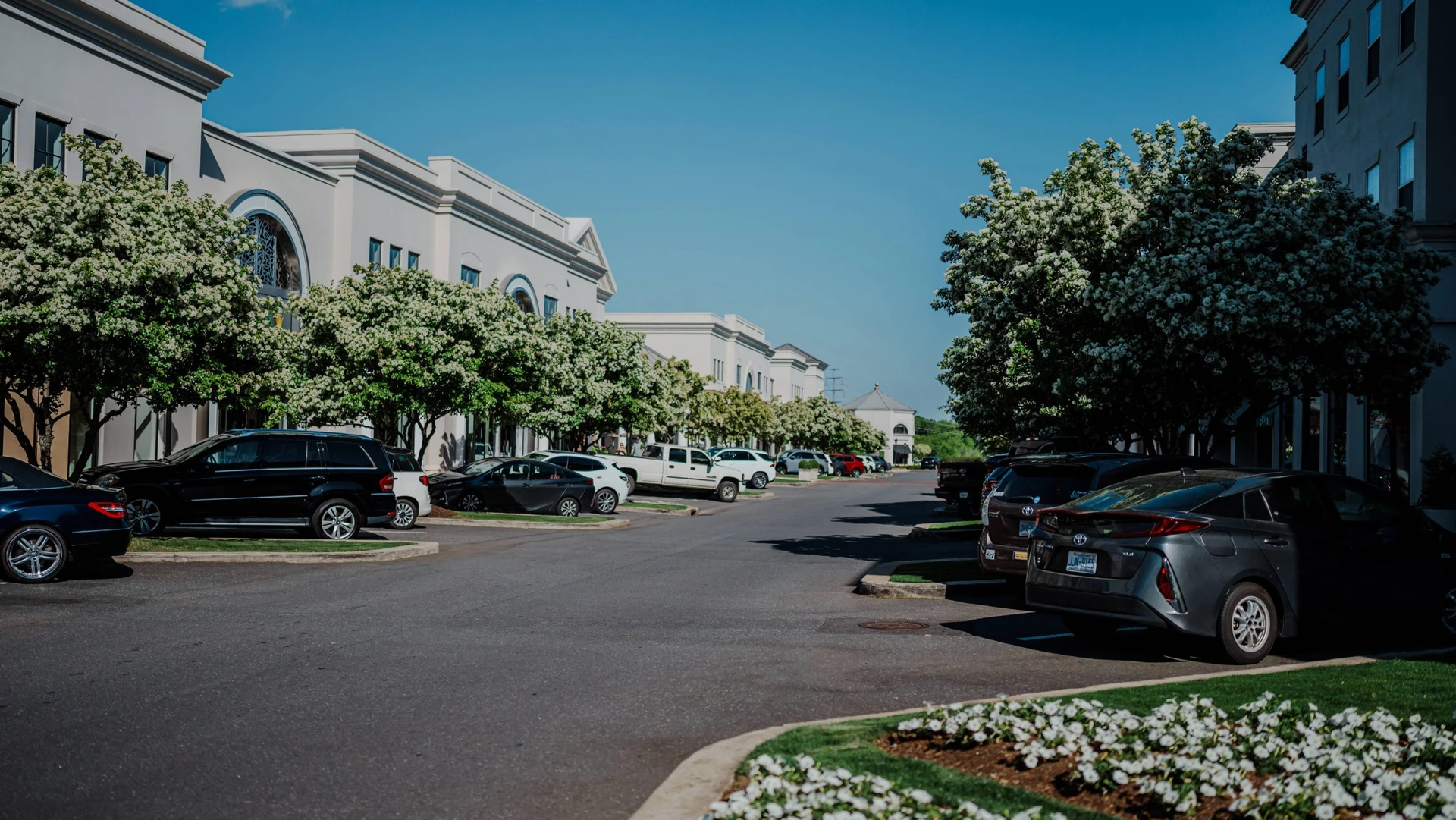
SouthPark is another wealthier neighborhood of the metro Charlotte area, and offers more residential, retail, and office space than industrial and flex space options.
A lot of young professionals and wealthier families enjoy the SouthPark area for its delicious dining experiences, shopping choices (including the SouthPark Mall), and entertainment options.
SouthPark is located about 6 miles south of Uptown, Charlotte.
6. Flex Space in the Lake Norman Area: Davidson, Cornelius, Huntersville, Mooresville, and Denver
The Lake Norman area is a sought-after place to live and is another one of the wealthier regions of Charlotte. Many people love these cities for the beautiful lake access they provide and the stunning North Carolina views.
There are a number of businesspeople in this area who live on the lake and prefer not to commute into Charlotte and deal with the traffic. This has provided ample opportunity for flex space real estate to take root in these cities. Many people especially enjoy the geographic proximity of the flex space on the north side of this area.
And because the Lake Norman area provides ample opportunity for a healthy work-life balance, it tends to attract the types of businesses and employees who appreciate the flex space model. This area not only offers quick access to the lake, but also numerous shopping and dining opportunities that provide unique spaces for business meetings, as well as convenient options for shopping or grabbing a meal before or after work hours.
There are a number of business park spaces for sale in this neighborhood, with around 10,000 square feet being a common overall size. These flex spaces run at an average cost of $215/sf.
There are also plenty of rental flex properties for sale in this region of North Carolina, which rent for around $15/sf/yr. The main concentration of these listings is in Mooresville.
Whether you’re looking for a unique, repurposed building, a flex space with a classic warehouse, or a strip mall storefront, there are numerous options in these beautiful Carolina cities.
7. Flex Space in Fort Mill, Indian Land and Rock Hill
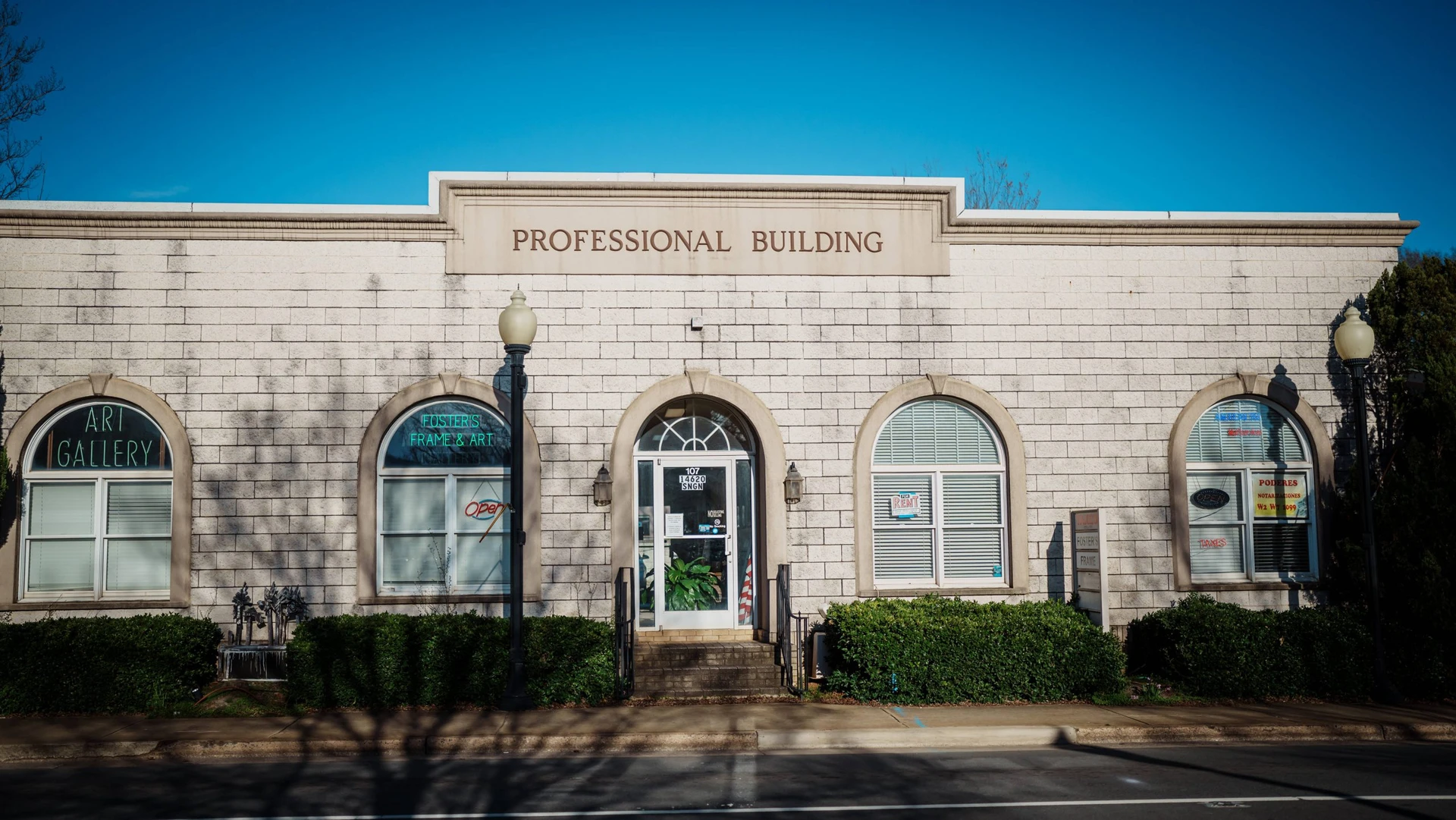
These South Carolina cities are home to lots of manufacturing and are close to the I-77 interstate. Fort Mill, Indian Land, and Rock Hill do have flex space available, with rental rates averaging around $13/sf/yr. The available properties in these cities are on the smaller side, about 1,000-2,000 square feet. There are also build-to-suit opportunities here.
Many service businesses enjoy this area for its convenience and quick access to the interstate.
8. Flex Space in Matthews and Indian Trail
Matthews and Indian Trail, both southeast of Uptown, Charlotte, are thriving neighborhoods with growing communities and plenty of natural beauty. They’re popular for service businesses because of their convenient access to I-485 and U.S. Route 74.
This area has options for spacious properties with a bit of acreage, and many of them also boast highway frontage for easy advertising. If you’re looking to buy flex space in these cities, you can expect to pay around $200/sf.
Rental properties are also available in Matthews and Indian Trail. Different features of these available buildings include recent renovations, drive-in doors, and convenient parking. The average cost for renting flex space in these cities is $20/sf/yr.
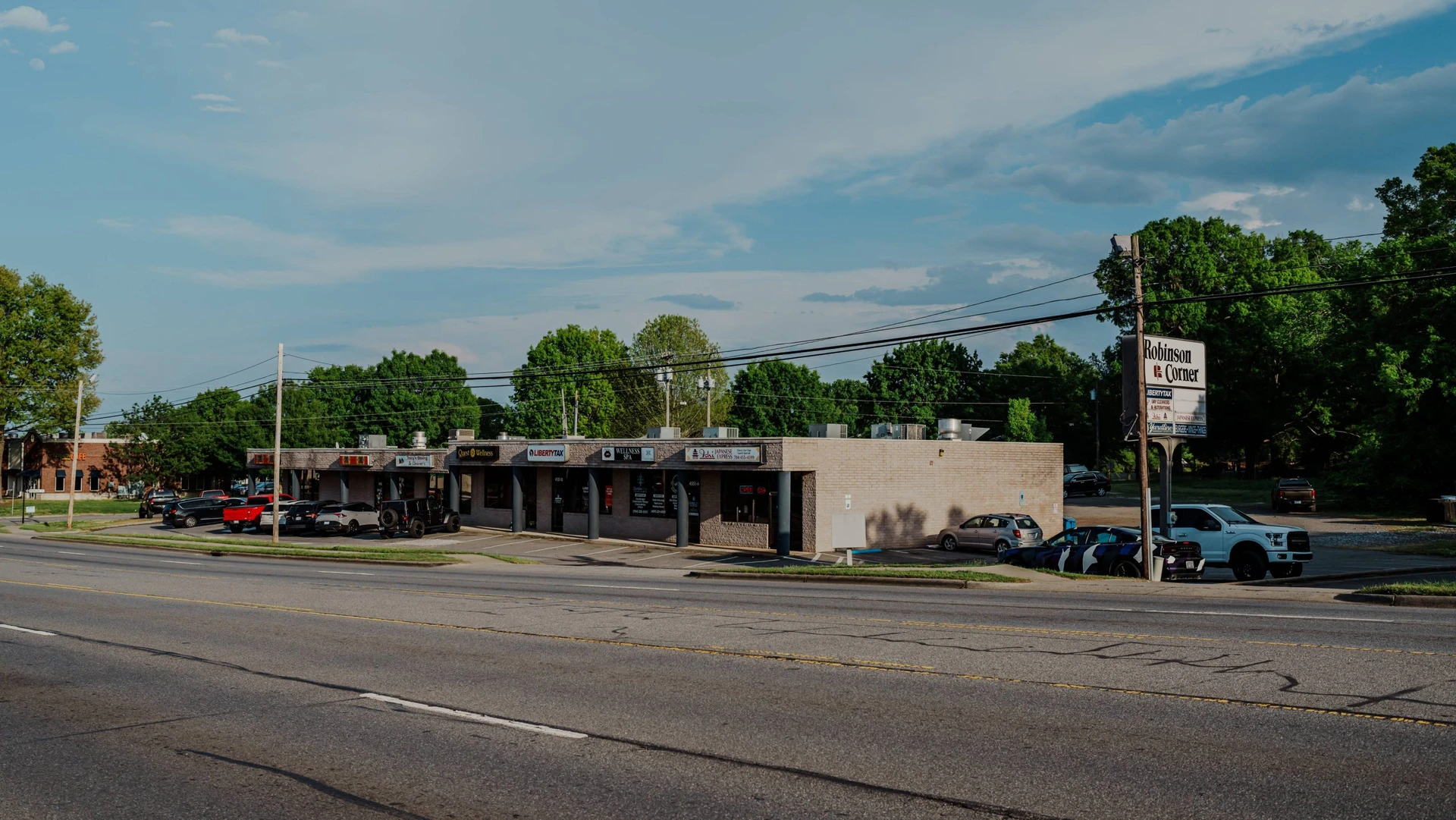
9. Flex Space in Harrisburg, Concord, Kannapolis, Salisbury, and Mint Hill
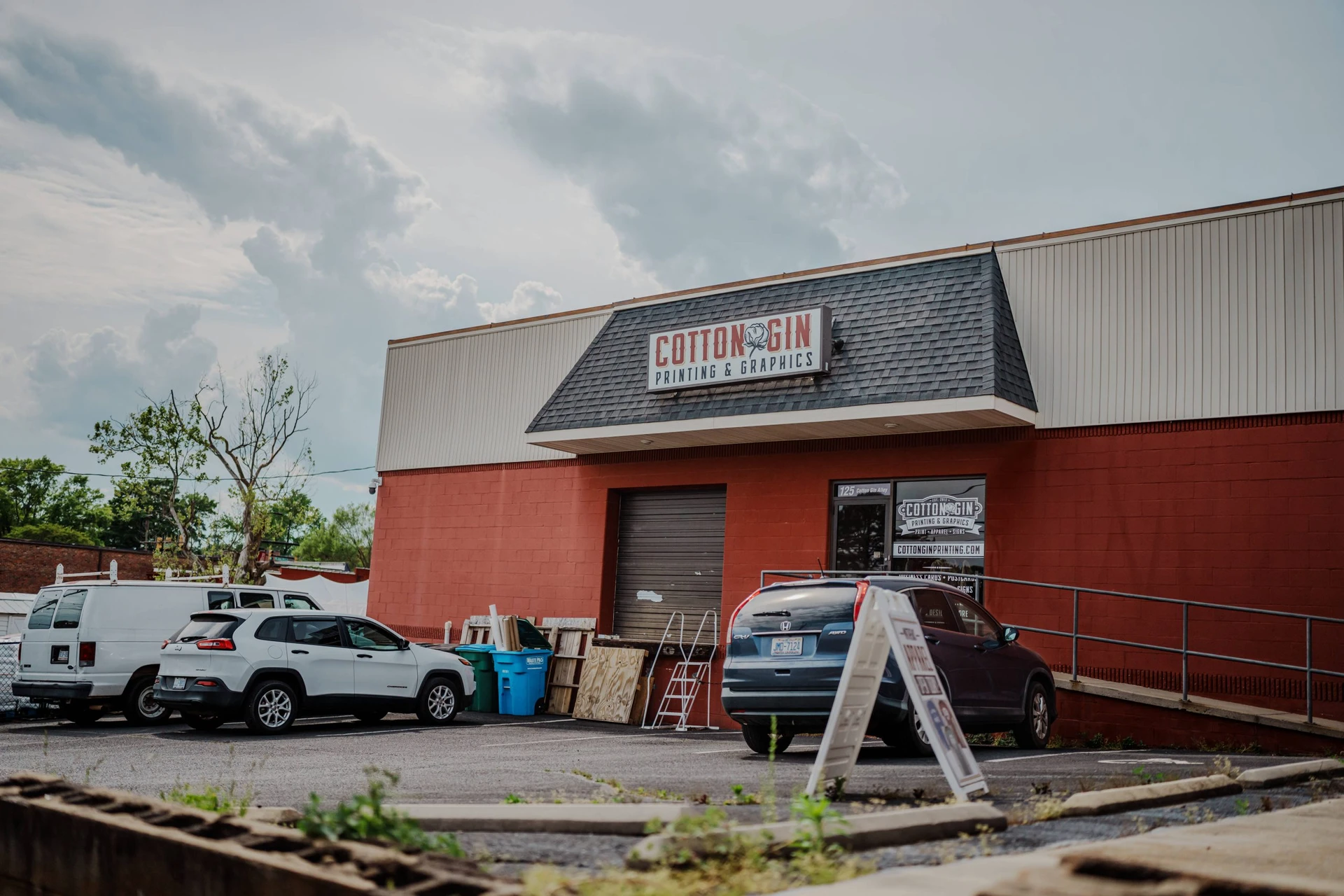
Harrisburg, Concord, Kannapolis, Salisbury, and Mint Hill are east side cities that give businesses and customers convenient access to the I-485/I-85 corridor. Because I-85 goes all the way south into Alabama and all the way north to Washington D.C, many distribution-type businesses are located in this area. These communities are a bit more rural than other areas of Charlotte, and thus offer affordable real estate options.
For flex space, rentals average at $13/sf/yr in these cities. And out of these neighborhoods, Concord offers the most available property options.
10. Flex Space in Belmont and Gastonia
Belmont and Gastonia are good locations for flex space. Not only are they a little bit more rural compared to other Charlotte-area cities, but they’re also close to the I-85 corridor and U.S. Route 74. Between these areas, flex space is more common in Gastonia compared to Belmont.
This area features both unique, repurposed buildings as well as more classic flex spaces. Rental rates vary here, from inexpensive properties at $8/sf/yr, all the way up to more premier buildings that rent for $25/sf/yr. The average cost for flex rentals in these cities is $14/sf/yr, and the average rate for properties for sale is $79/sf.
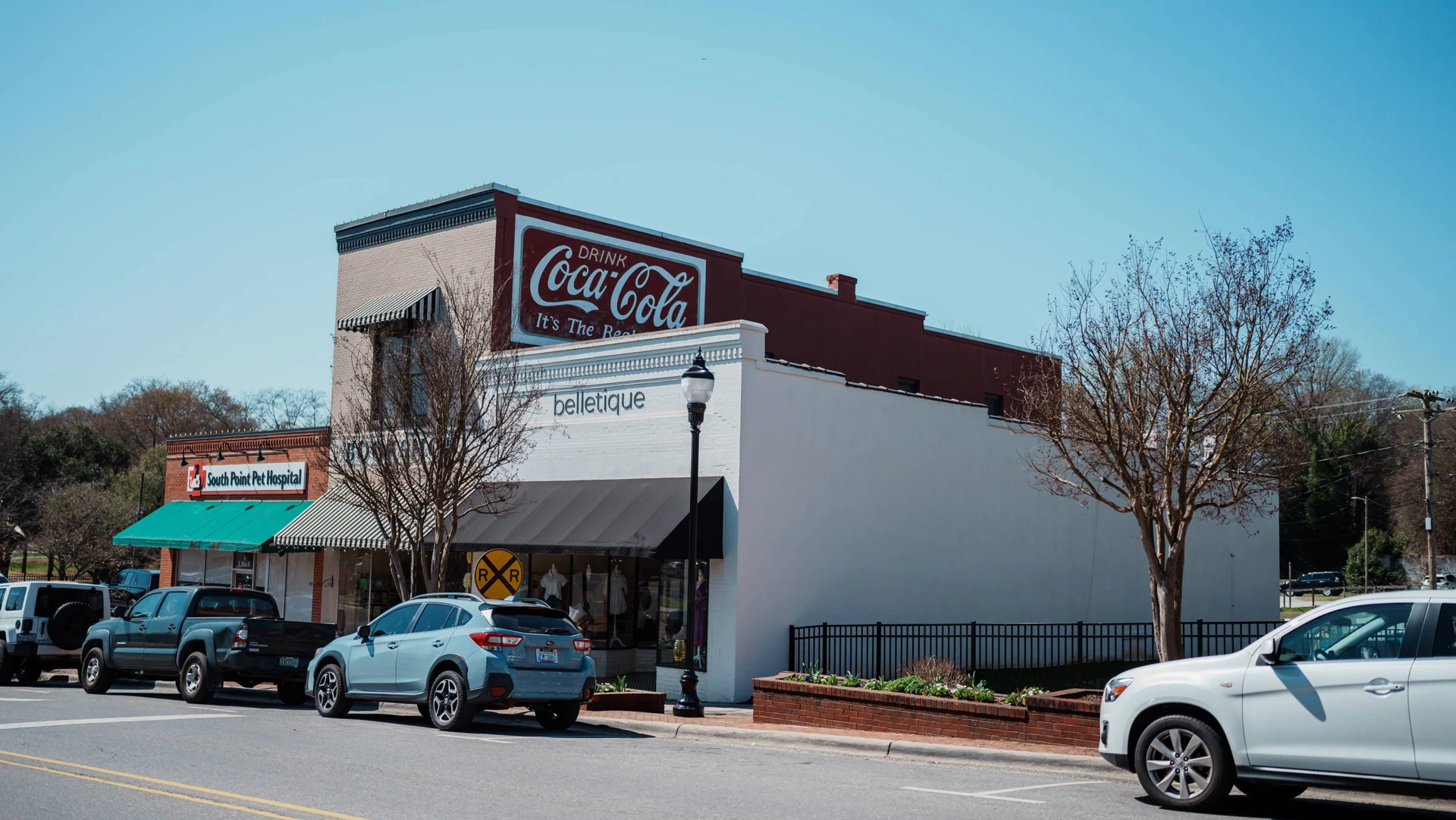
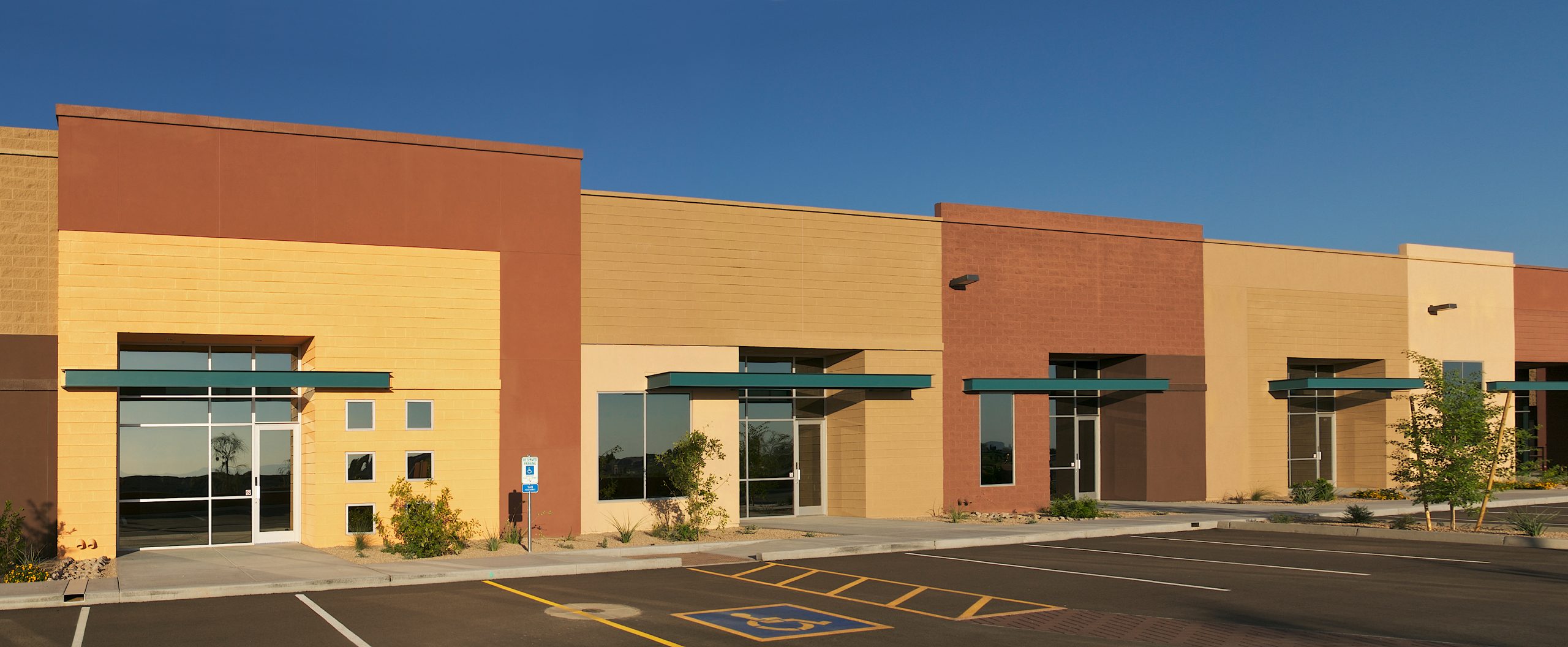
11. Flex Space in Steele Creek (Westinghouse Boulevard)
Steele Creek is parted by Westinghouse Boulevard, its main industrial corridor that runs through the center of the city. This city is located in Mecklenburg County, on the southwest side of Charlotte. Although it’s not necessarily the most popular place for flex space real estate, you will find some properties in Steele Creek.
Steele Creek is better known for distribution space than flex properties. But even more, Steele Creek is one of the more popular neighborhoods for families to enjoy warm community and the southern charm of the metro Charlotte area. With its parks, great schools, and even a waterpark and an amusement park, this suburban area is one of the best places to experience the friendly locality of the Carolinas.
12. Flex Space in Pineville
Pineville is located on the edge of the North Carolina border, pressed right up against South Carolina. This North Carolina city is located along I-485 and I-77, so it provides a quick route to numerous metro-Charlotte cities, and immediate access into South Carolina.
While Pineville has flex space, industrial space, and office space, it’s even better known for its suburban feel and welcoming atmosphere to families and young professionals. It’s a safe, quiet area that has a small-town feel with many convenient benefits of a bigger city.


13. Flex Space in Plaza Midwood
Plaza Midwood is located just north east of the center of Uptown, Charlotte. It’s known for its bustling atmosphere and trendy restaurants and entertainment options.
When it comes to real estate, this Charlotte neighborhood is best known for its retail and office space, and it attracts many young business professionals.
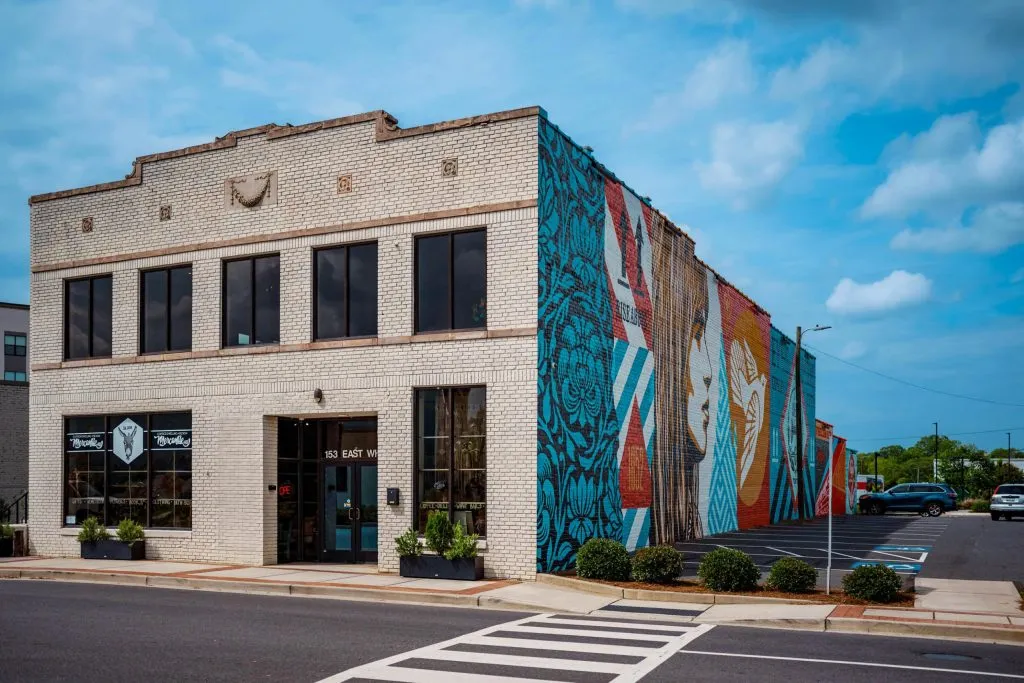
Plaza Midwood does, however, have some available space for flex users, with properties listed in a wide variety of sizes in the city. From small properties to larger, multi-use spaces, Plaza Midwood boasts an interesting variety of options for those who want to be close to the center of town. Many of these are Class C, older buildings, and some have been renovated for reuse.
Flex properties for sale in Plaza Midwood cost about $283/sf, while available flex spaces for rent cost $16/sf/yr on average.
14. Flex Space in NoDa
NoDa is another area that’s very close to the center of Uptown, Charlotte. It has some older flex space, but a lot of its buildings have already been converted into breweries, bars, and restaurants through adaptive reuse.
NoDa is short for North Davidson Street, which is the main street that runs through Uptown. More than flex space, real estate investors enjoy this north Charlotte area for its office, restaurant, and retail spaces.
There are a few flex properties available in this area, however, with rental properties averaging around $16/sf/yr, and for sale properties running at about $283/sf.

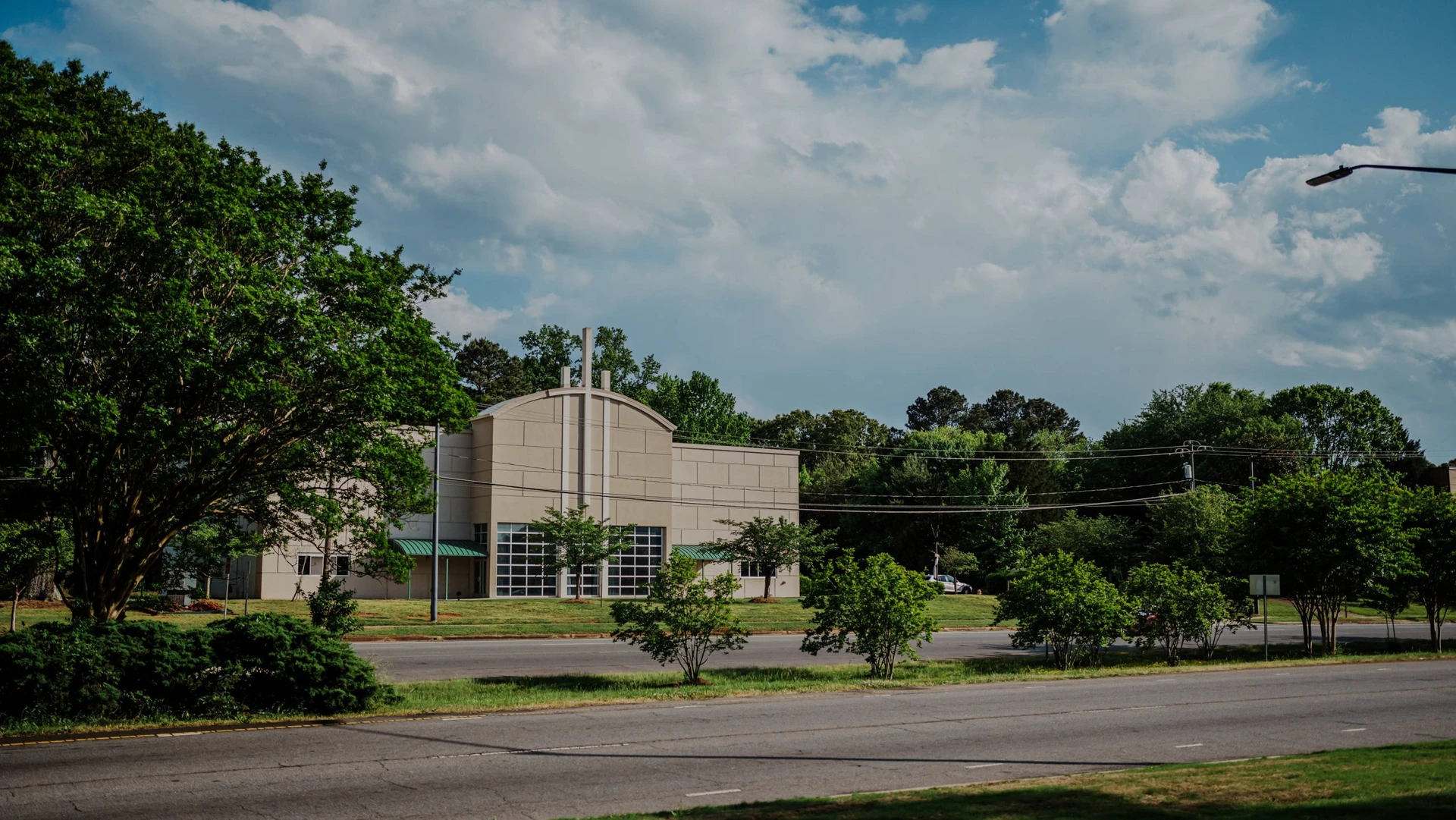
15. Flex Space in University City
This neighborhood is home to the University of North Carolina at Charlotte (UNCC). Because of all of the students and young professionals in this area, it’s best known for its office listings and flex space listings versus warehouse or industrial.
The University City neighborhood has a variety of different types of flex space listings. From older buildings with warehouses and a smaller interior co-working space, to newly-renovated larger office parks, the University neighborhood boasts a diversity of adaptable spaces for those who want a workspace or dedicated desk in this neighborhood, close to UNCC and the I-85 corridor.
For those looking to rent flex space in this section of North Carolina, you can expect to pay an average of $20/sf/yr.
16. Flex Space in Monroe
Monroe is a sprawling city that’s southeast of Charlotte in Union County. This convenient area is located close to Route 74 and is popular for manufacturing and industrial usage.
Available flex properties in this area include build-to-suit options and storefront-style buildings. Some properties also benefit from clear highway access right along Route 74.
Flex space for rent in Monroe typically costs about $18/sf/yr. And if you’re looking to buy in this area, you can expect properties to run at around $190/sf.
17. Flex Space in Hickory, Conover, Newton, and Lincolnton
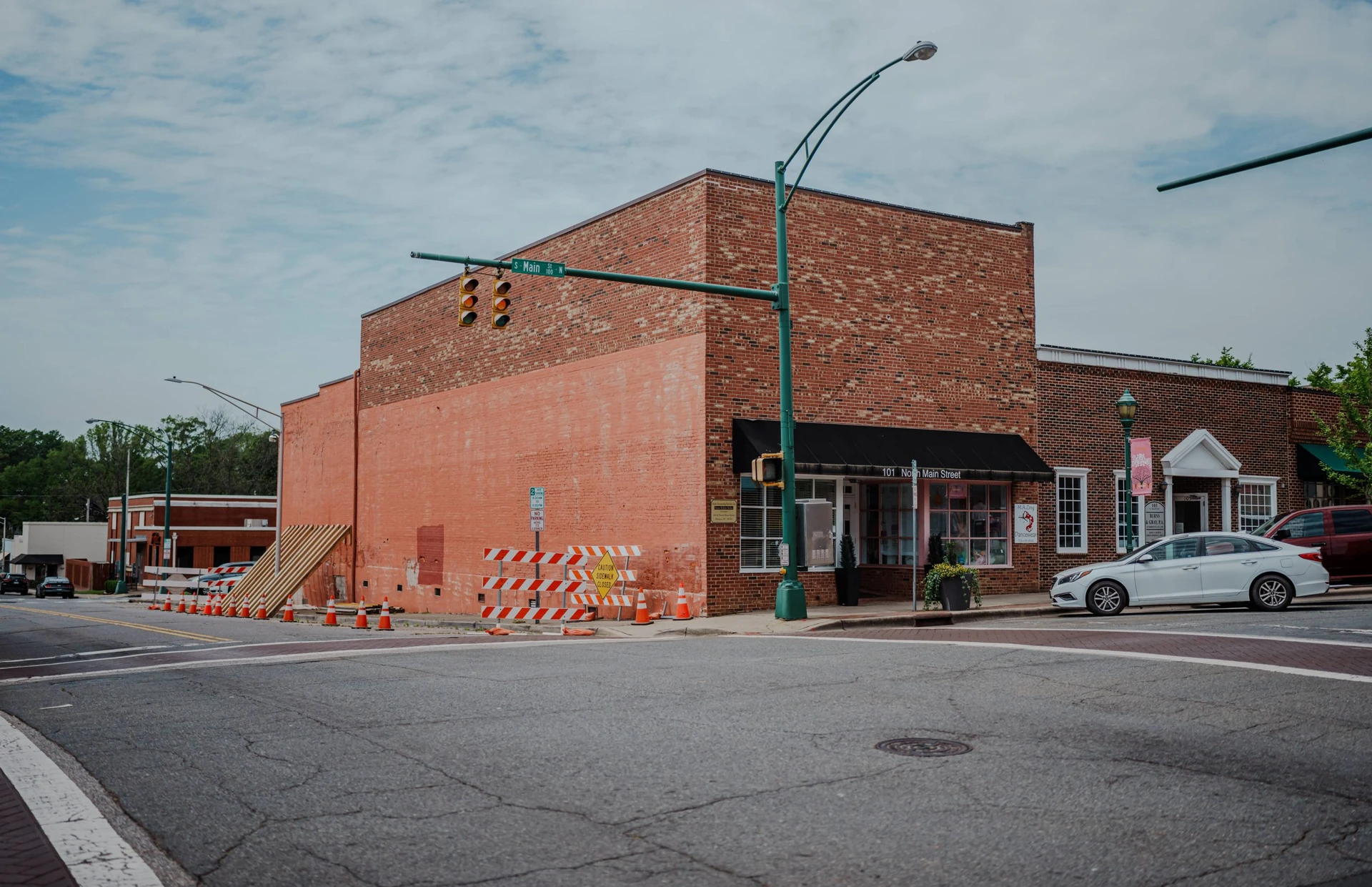
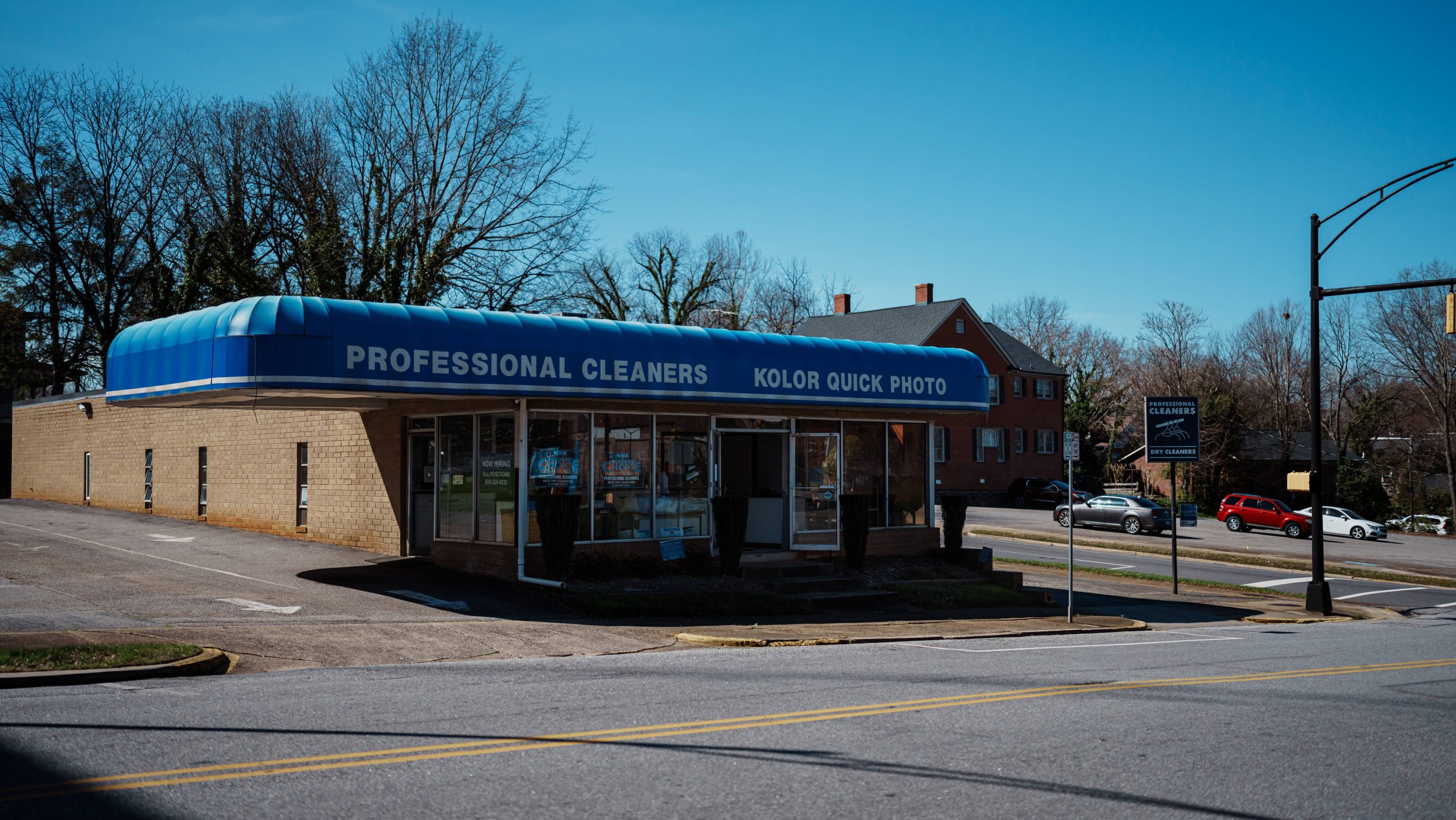
Hickory, Conover, Newton, and Lincolnton are home to bigger, factory-type buildings. This part of the state used to be a furniture capital of the U.S., so there was lots of textile and manufacturing work going on in these large, older buildings. And because this isn’t a high-growth area, there’s less flex space here than in other neighborhoods.
This part of the state used to be the furniture capital of the U.S., so there was lots of textile and manufacturing work going on in these large, older buildings. And because this isn’t a high-growth area, there’s less flex space here than in other neighborhoods.
Still, you can find some flex properties both for sale and for rent in these cities, and it’s quite an affordable place to shop for this type of real estate. These cities offer a mix of different types of spaces. Whether you’re looking for a larger warehouse space with a dock door, or a newer building with private offices, you may be able to meet your business needs at an affordable rate in these neighborhoods.
Flex properties for sale in this region cost around $60/sf, while properties for rent average at only $9/sf/yr.
18. Flex Space in Statesville
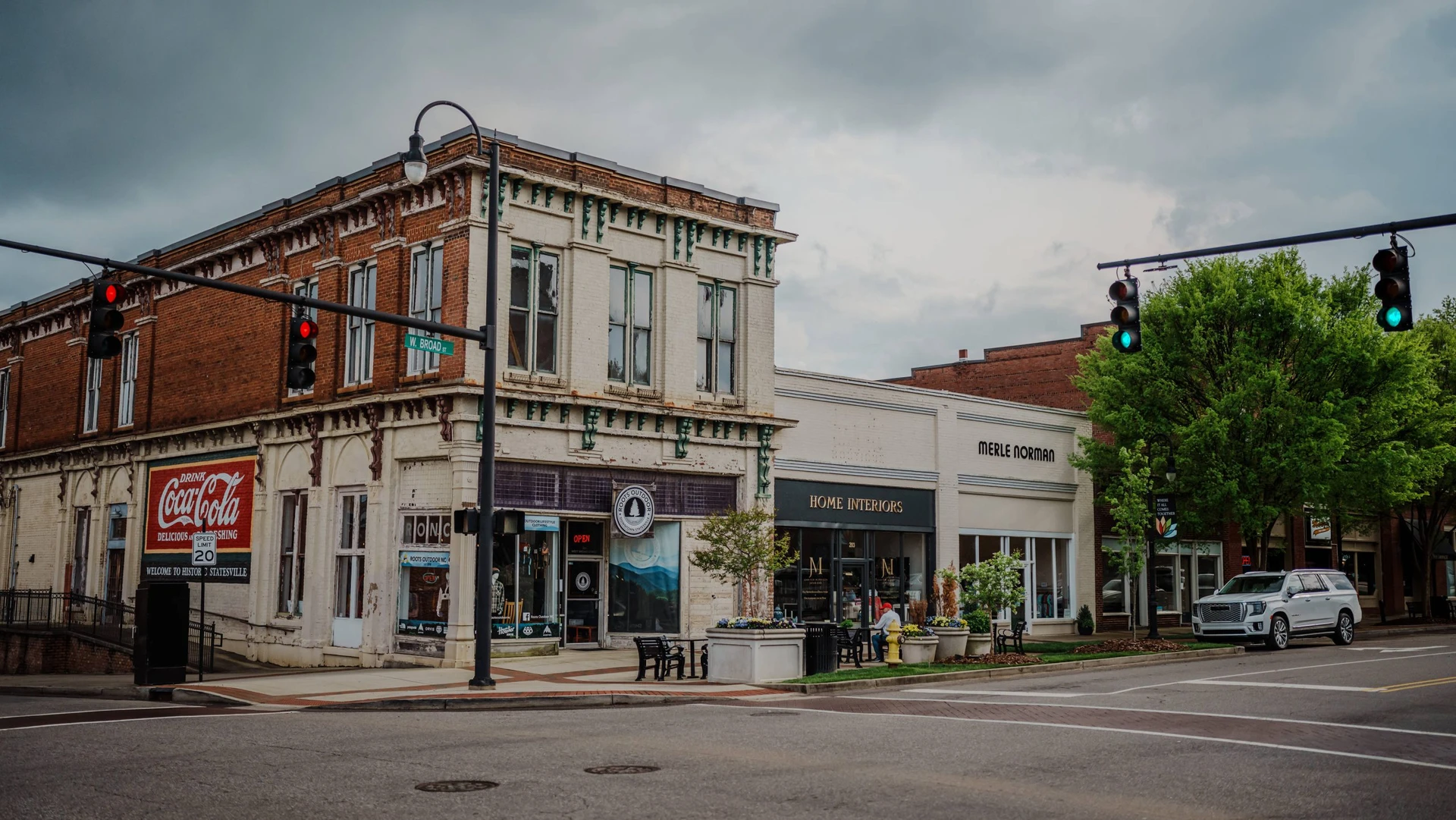
Statesville is located right on the I-77/I-40 corridor and offers quick and easy access for service-oriented businesses. And because it’s more rural than other cities, it tends to have slightly less expensive rental rates compared to other neighborhoods. Although it’s generally more of a distribution market, there is some flex space to be found in Statesville, too.
For sale flex properties in this area are mainly Class C buildings and cost around $130/sf.
For rental properties, Statesville offers both older and brand new buildings. Size options in this area can range from smaller, 2,000 square foot portions all the way up to large, 160,000 square foot full buildings. Rentals are quite affordable in this area, averaging $7/sf/yr.

19. Flex Space in Charlotte North – I-85/I-77 Corridor
Charlotte North area is well sought-after, since it’s right on the I-85/I-77 corridor. Located just north of Charlotte, this convenient hub is popular for flex space due to the proximity of the interstates.
There are a number of rental properties available in this area that offer a convenient combination of office space and warehouse space, including some with a higher clear height. This area also has some unique office space property with large windows and a rural feel.
Properties for sale in the Charlotte North community average higher, around $473/sf. For lease properties cost, on average, $15/sf/yr.
FAQs About Charlotte Flex Space
What is the average price of flex space in Charlotte?
Currently, flex space in Charlotte rents for an average of $15/sf/yr. For real estate investors, you'll pay around $223/sf for flex properties in the greater Charlotte area.
The actual cost of your next flex property depends on a number of factors. These can include:
- Precise location
- Building class and features
- Year built
- Access to main roads and interstates
- Highway frontage
- Size of the building
- Square footage of office space
What is the meaning of flex space?
Flex space is a building that can be adapted for numerous uses. It generally includes a mix of office space and warehouse space. Some include optional retail square footage as well. The standard flex space around Charlotte will have an office toward the front of the building and a warehouse situated in the back.
Other commonalities of your average flex space include at least one grade-level drive-in door, easy front door access, smaller parking lots (compared to industrial lots), and self-contained restrooms.
Is flex space a good investment?
Flex space, more than industrial, office, or retail space, can cater to a wide variety of businesses and potential tenants. Because flex space usually includes both office and warehouse space, it's adaptable for a number of uses. This adaptability means that it's easier to find tenants to fill your flex property.
In addition to its variability of uses, flex space usually maintains its value well. Investing in flex space is a great way to add to your real estate portfolio with an equity-building property that provides abundant opportunities for possible tenants.
Who uses flex space?
The most popular type of tenant that we see in flex properties is service-oriented businesses. Contractors, landscaping companies, transportation services, painters, plumbers, tech companies, roofers, security companies, electricians, flooring companies, and cleaning companies are just a few types of service businesses who occupy these properties.
In recent years, however, more and more companies are taking advantage of the many benefits that flex space offers. Distribution and warehousing businesses, mobile workforces, creative businesses, R&D firms, fitness centers, food and beverage suppliers, and trade companies are all tapping into the lower cost, flexibility, shorter leases, and prime locations that are typically found within the flex space realm.
Is flex space becoming more popular?
Flex space continues to be a popular solution for many businesses. Since Covid, even more businesses have turned to flex space because of the warehouse option that it offers. Many businesses who used to have retail storefronts have closed their doors and moved to shipping products instead. While some of these were due to necessity during Covid, other businesses have simply made this change in order to save money. The office + warehouse combination that flex space offers provides an excellent solution for these businesses.
In addition to more retail stores turning to selling online and shipping their products, service-oriented businesses, who are major flex space users, also continue to thrive.
Find Your Next Flex Space With Regent Commercial Real Estate
At Regent Commercial Real Estate, our many years of experience in the Charlotte area and attention to clients’ needs are just two reasons why our clients come back again and again for their real estate investments.
With nearly 1000 lease and sales transactions – including 500+ flex space deals – we have the expertise to not only find you your ideal property, but to walk you through the whole process. A successful deal doesn’t end when you choose your property. Our process starts with a market analysis, and then we’ll stay with you through each step of exploring properties, negotiating the lease, and working through the details of getting you moved into your property.
Understanding lease agreements can be complicated. Usually, they’re dozens of pages long and include wording that you may have never even heard before. But with the right tenant representative, you’ll save time, have access to more properties, and get expert negotiation – all with no extra fees. We are CCIM– and SIOR-certified, and have the knowledge to give you the highest level of support and expertise throughout your transition.
At Regent Commercial Real Estate, we’re here to guide you through a smooth lease or purchase experience. As local experts in flex space leasing, we’ve closed deals for every spectrum of the service industry – from escape rooms to doggy daycares. No matter what type of property you’re searching for, we’ll take the time to understand your needs and deliver the best solution.
Ready to find your next flex space? Give us a call. We look forward to partnering with you for your real estate success.