Warehouse Space Planning – How to Maximize Efficiency and Prepare for Future Growth
The right warehouse building provides the infrastructure and storage space needed for operational efficiency. But planning for current operations isn’t enough – at least not without an eye toward the future. When leasing industrial space, you need an effective warehouse layout for today’s business needs, but one that also won’t limit your future needs in the next 2-5 years.
Planning for sustainable growth is a critical component in leasing warehouse space, and with careful planning, it will give your company a competitive edge even in a crowded real estate market.
When considering a lease, it’s vital to analyze certain components that will allow you to expand within the space in order to avoid an unnecessary move and company upheaval should the business expand. Many tenants make the common mistakes of leasing only for their current square footage needs, overlooking ceiling height or power requirements for future automation, ignoring lease flexibility clauses, or choosing cheaper rent over scalability. Unfortunately, these mistakes can lead to hemorrhaging money at worst or causing operational disruptions and missed growth opportunities at best.
Planning for growth allows you to choose a warehouse that can evolve with your business needs and won’t limit you in the near future. Seeking out scalable features, flexible lease terms, an adaptable layout, and an effective location will allow you to plan for growth capacity and future agility in your next lease.
Why Planning for Growth Matters
The average industrial tenant renews or expands their lease every 5 years, more or less. And every time a business nears the end of a lease term, there’s potential for disruption.
Simply renewing a lease in itself can cause significant disruptions to warehouse operations if not managed proactively. Operational uncertainty, disputes over new rental rates, potential for failed negotiations, and adjustment to new lease terms all pose challenges to daily operations when they’re not planned for ahead of time.
However, while a lease renewal can cause some interference in efficient operations, having to find an entirely new facility can cause major upheaval, halting progress and slicing through margins, cash flow, and carefully planned budgets.
Strategic foresight in an initial warehouse lease plays a crucial role in maximizing cost savings and minimizing disruption in the long run. Space constraints, a lack of proper infrastructure, limited dock capacity, inadequate storage systems, and narrow power capability confine a business and make it difficult – if not impossible – to keep up with rising customer demand.
For logistics and e-commerce companies especially, a well-thought-out warehouse layout and plan for future operations can negate the need to halt progress every 5-10 years in order to find a new lease that allows for proper business growth.
Planning for future efficiency doesn’t have to mean leasing a building with double the amount of current storage capacity you actually need. Instead, effective warehouse capacity planning involves a data-driven approach that takes into account scalability, future reconfiguration, technology readiness, and the ever-changing local market. Negotiating flexibility into the lease terms is also key for minimizing the need for a move in the near future.
The Hidden Costs of Outgrowing Warehouse Facility
Is moving on to a new facility really that big of a deal? While growth and market changes sometimes necessitate moving on to a new building, the costs of outgrowing a facility are real. Many tenants aren’t prepared for the hidden costs of moving, such as:
- Downtime. Lost productivity during the transition period translates to diminished cash flow.
- Double rent. Overlapping lease payments mean double rent if move-in and move-out dates don’t sync.
- IT expenses. Many businesses don’t consider expenses for disconnecting, transporting, and reinstalling equipment.
- Temporary storage fees. If items can’t be moved directly into the new space, temporary storage fees can add up.
- Cleaning and repairs. A move often requires extra costs for cleaning, repairing, or restoring the old facility.
- Utility deposits and setup fees. Rent isn’t the only cost associated with starting a new lease. Utility costs and setup fees should be considered as well.
- Lost or damaged inventory. It’s not uncommon for inventory, equipment, or materials to become lost or damaged during a move.
- New marketing materials. Updated signage and other marketing materials as well as informing customers and vendors of an address change adds to the cost of moving.
Warehouse Features That Support Scalability
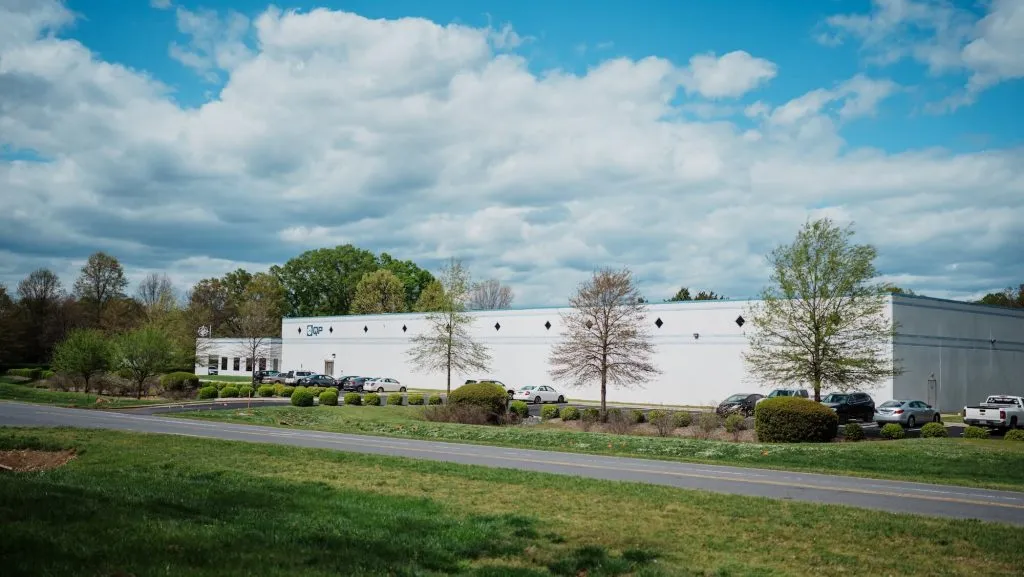
Finding a warehouse that supports scalability is one of the number one ways to prepare for growth when choosing a lease. As you examine potential warehouses to lease, keep your eyes open to these top features that will support growth and allow you to stay in one building for longer.
- Ceiling height and cubic capacity. While square footage is the most commonly advertised detail in property listings, cubic capacity is what truly unlocks the fullest potential for space utilization and high inventory levels. Greater cubic capacity enables future racking and vertical storage solutions, supporting the most efficient use of the entire building footprint.
- Column spacing. Many modern warehouse designs have more floor space between vertical supports for maximum space efficiency, providing larger aisle widths and more area for high-density racking. While 25′-50′ column spacing is somewhat average, wider spacings make it easier to construct mezzanine floors, install wider racking, and create an efficient warehouse layout that allows for maximum capacity.
- Dock capacity and truck court size. Too large of a physical warehouse footprint generates unneeded operational costs. At the same time, too small a truck court or too few loading docks can severely limit growth and business success, especially for a logistics facility or warehouse distribution center. A sufficient amount of dock doors and available space for parking allows for efficient logistics, reduced bottlenecks, and possibly even warehouse expansion.
- Utility and power capacity. While not always immediately physically obvious, limited power capacity can drastically limit future growth in a warehouse. Generous electrical power capabilities in warehouse facilities allows for future installation of conveyor systems, robotics, high-capacity chargers for material handling equipment, and other innovative solutions, keeping the building ready for operational upgrades.
- Technology infrastructure. Features such as robust electrical systems, advanced networking, comprehensive Wi-Fi and wireless coverage, IoT-ready sensor infrastructure, scalable automation and robotics interfaces, and advanced warehouse management systems (WMS) lay the groundwork for smart warehouse technology, real-time inventory tracking, and seamless integration as operations expand.
Lease Terms That Enable Growth
In addition to physical and technological features that support efficient warehouse space utilization, effectively negotiating certain lease terms can provide room for changes in the business with minimal disruption to productivity. Working with a competent tenant representative is the best way to secure preferential lease terms that provide flexibility and reduce income loss.
Negotiating flexibility into your lease is often cheaper than relocating later. Lease terms to consider include:
- Expansion rights. The option to lease additional, adjacent space in the same facility gives breathing room for the business if operations are expected to grow. Negotiating a pre-set rate or priority option to take over next-door units reduces the risk of having to relocate as order volumes and company needs change.
- Early termination or relocation clauses. Requesting flexible provisions allows for the ability to exit the lease early or relocate if necessary, but with pre-defined penalties and conditions. This provides the opportunity to effectively plan in case the needs of the business shift, while also minimizing the unexpected costs associated with having to break a lease.
- Right of First Refusal (ROFR). A right of first refusal in a contract gives your business the first chance to match any third-party offer on a nearby space before your landlord leases it to someone else. This makes it possible to easily obtain expansion opportunities if it seems fit for your business – without competing on the open market.
- Sublease rights. It’s wise to ensure that your lease agreement allows you to sublease all or part of the space if you need to scale down, merge, or temporarily reduce your footprint. Negotiating sublease rights provides a safety net, offsetting the cost of having to pay for a temporarily unused space.
- Short vs. long-term leases. While long-term commitments provide stability and can secure lower rates, shorter leases offer operational agility, allowing you to adapt as the market or your requirements change. There’s no one best option, but the needs and trajectory of your business will influence which option is best for your lease.
Layout and Operational Adaptability
The layout of a warehouse building is another factor that plays a significant role in warehouse space optimization and the ability to avoid having to find a new warehouse to lease in the next 5-10 years. When considering a warehouse lease, evaluate it for the following features to decide whether it will be a scalable building as you plan for future growth.
- Well-designed layouts that can evolve with demand. Forward-thinking warehouse designs with flexible layouts anticipate changes in operations, such as separating dedicated zones for cross-docking to speed up inbound/outbound transfers, or reserving space for future automation technologies. Adjustable aisle widths, modular work stations and packing zones, and dynamic zoning areas are other features that allow for adaptation to the specific needs of the business and improve overall efficiency.
- Storage areas for peak periods or seasonal surges. Designated, easily reconfigurable areas leave room for overflow inventory during seasonal spikes and allow for smooth daily operations during temporary peaks. These spaces provide easy access and can use mobile or demountable racking. They may also double as staging areas in order to prevent congestion throughout the building.
- Modular racking for vertical expansion and demountable offices. Modular racking systems allow for increased vertical space without extensive reconstructions. Demountable offices are another feature that provide flexibility when and if it makes sense to move or reconfigure administrative spaces as business needs evolve.
- Reserved space for future technology integration. No matter how well warehouse processes are working now, efficient warehouse management means being open to future technologies if they make sense for the business. Having allocated space for future technologies leaves this option open. Specifically, this may mean infrastructure for conveyor belts or autonomous mobile robots (AMRs).
How to Evaluate the Market and Location for Growth
It can be tempting to focus on a warehouse building without fully evaluating the surrounding market to see how it will impact the company’s future. It’s important to look beyond the building when making an informed decision about a location. Ask questions like:
- Are there neighboring lots of expansion parcels available? The ability to expand or add a new location in close proximity to the current one can streamline operations, make collaboration easier between departments, and limit travel time between facilities.
- Is the labor market scalable? Is there local availability for skilled warehouse staff? The ability to find a competent workforce within close proximity not only allows operations to continue forward, but also reduces turnover and therefore lowers labor costs, while also improving productivity.
- How is the local transportation infrastructure evolving? Consider the quality and capacity of highways, interstates, ports, rail access, and last-mile delivery routes near the warehouse site. Expanding transportation networks reduce shipping times and costs and improve reliability. Future infrastructure projects and new logistics hubs can enhance scalability and provide a competitive edge as operations grow.
FAQs About Planning for Growth When Leasing Warehouse Space
How do you choose warehouse space that will work long term?
To optimize your lease for as long as possible, when choosing a warehouse, consider the following:
- Look for scalable features. Consider cubic capacity and column spacing for efficient storage for growing inventory, sufficient parking and dock doors, ample power capacity, and infrastructure for future technologies.
- Negotiate flexible lease terms, such as ROFR, expansion rights, early termination clauses, and sublease rights.
- Choose an adaptable layout. Separation in dedicated zones, adjustable aisle widths, modular work stations, extra storage areas for seasonal surges, and space for future technology can extend the usage of your building.
- Consider location strategy. Carefully consider client base, evolving transportation infrastructure, available neighboring lots for potential expansion, and workforce dependability.
How long is an average industrial building lease?
5 years is average for an industrial lease, although this time frame can vary. Since renewing a lease can cause significant disruption in a business’s daily operations and productivity, careful planning at the start of the lease and negotiating lease term flexibility can help to extend a lease term and minimize operational disruption.
How do you calculate warehouse spatial needs?
Keep in mind that only a part of the building can be used for storage depending on the type of products stored. As a general guide:
- 40%-50% storage space for perishable goods and rotating items.
- 60%-70% storage space for a company with only a few dozen products.
- Up to 80% of the space for warehouses storing only a handful of items that only get moved a few times a year.
Understanding warehouse capacity (the amount of space available for storing products) is vital in determining your warehouse space needs.
Lease a Warehouse That Allows for Future Growth
When leasing a warehouse, proper future growth planning allows for operational resilience even in a competitive market. In Charlotte, NC, the warehouse sector is thriving, bolstered by its strategic location, strong transportation infrastructure, skilled workforce, and industrial growth.
If you’re looking for a Charlotte warehouse space that leaves room for the company’s future, our team is here to help. Our extensive market knowledge paired with a genuine interest in each of our clients energizes us to find solutions that work for your business not just now, but 5, 10, or 15 years down the road.
Ready to get started? Get a customized list of potential properties, or contact us today.
Share This Story, Choose Your Platform!
About the Author: Brian Smith, SIOR | CCIM | MBA

Related Posts



What our clients are saying


Unlock Exclusive Commercial
Property Listings