Quick & Easy Leasing for Industrial Spaces in Charlotte, NC
Securing the perfect industrial space can be complex, with time-consuming searches and intricate negotiations. Regent CRE simplifies your journey with our proven systems, expert market knowledge, and vast network. Our team finds the ideal space within your budget quickly and at no additional cost to you.
Benefits of Partnering With Regent CRE:
- Simplify Your Property Search: We quickly identify industrial spaces and curate a short list based on your specific needs.
- Expert Negotiation Tactics: Leverage our market knowledge to negotiate favorable lease terms and secure your space at the best price.
- Closing Assistance: Move from search to signature swiftly to ensure your business starts generating revenue.
- Save Time: Minimize the hours spent searching and negotiating, freeing you up to focus on other aspects of your business.
- Maximize Your Budget: Make the most of your financial resources by securing a lease that aligns with your budget.
Partner with a commercial realtor who prioritizes your success. Download your free market report today. If you can’t find what you need, we’ll help you find it.
Find Industrial Space
Find the Perfect Industrial Space in Charlotte, NC
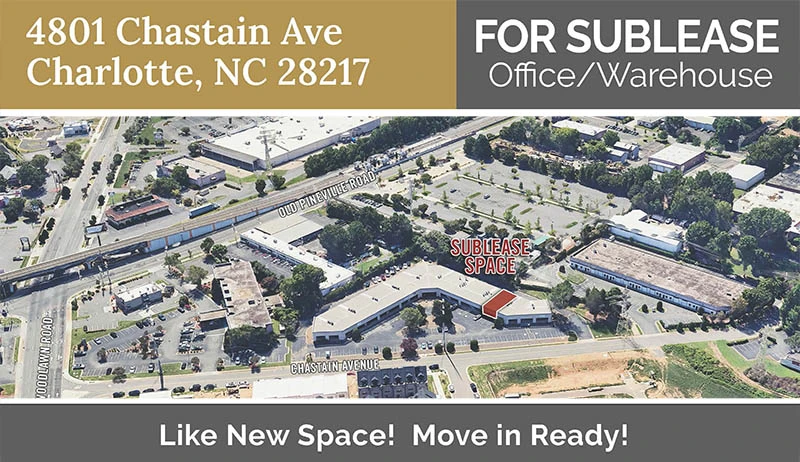
1,535 SF Office/Warehouse Sublease in LoSo – Suite 185, 4801 Chastain Ave, Charlotte NC 28217
Price on call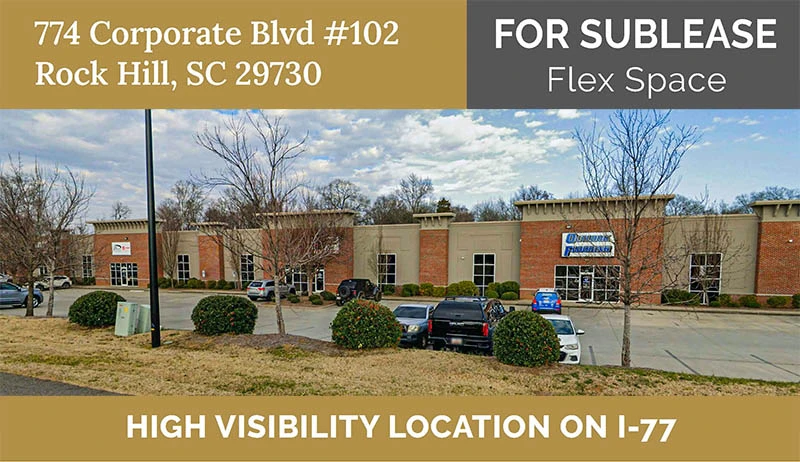
3,622 SF of Flex Space for Sublease in Rock Hill, SC at 774 Corporate Blvd, Suite 102 | High Visibility on I-77
Price on call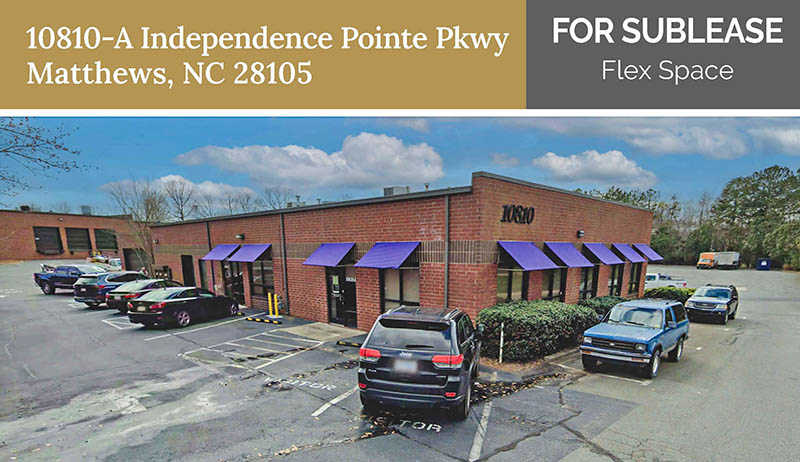
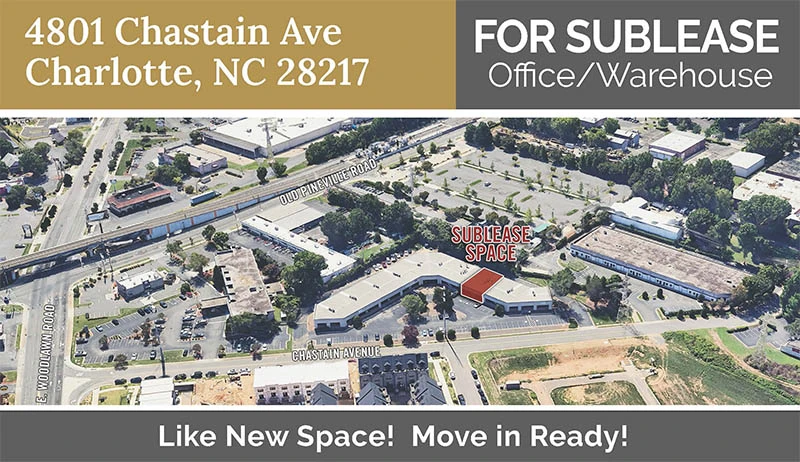
2,935 SF Office & Warehouse Sublease at 4801 Chastain Ave – Prime LoSo Charlotte Location
Price on call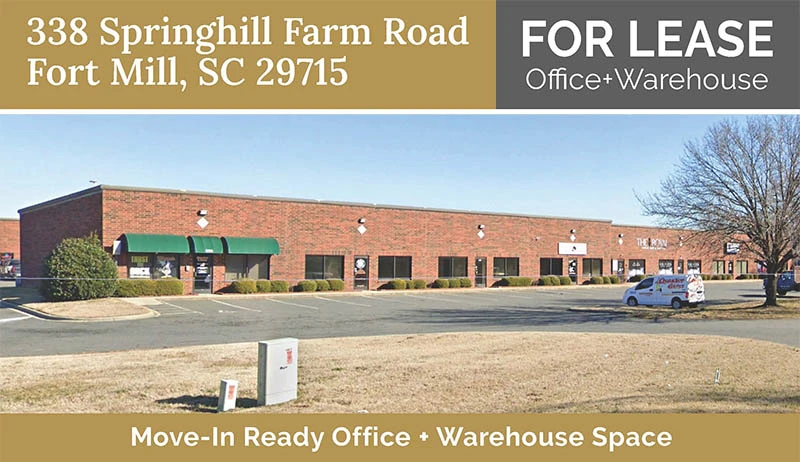
Versatile Office and Warehouse Space for Lease at 338 Springhill Farm Road, Fort Mill, SC 29715
Price on call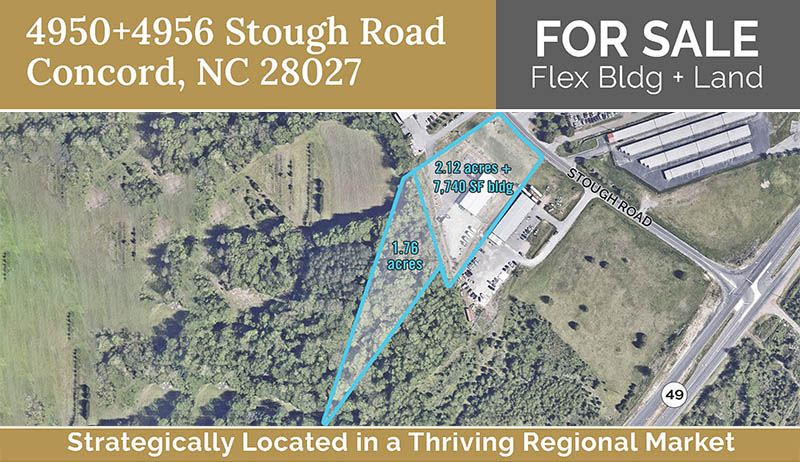
4950+4956 Stough Road – Concord, NC 28027: Flexible Office & Warehouse Property for Sale
Price on call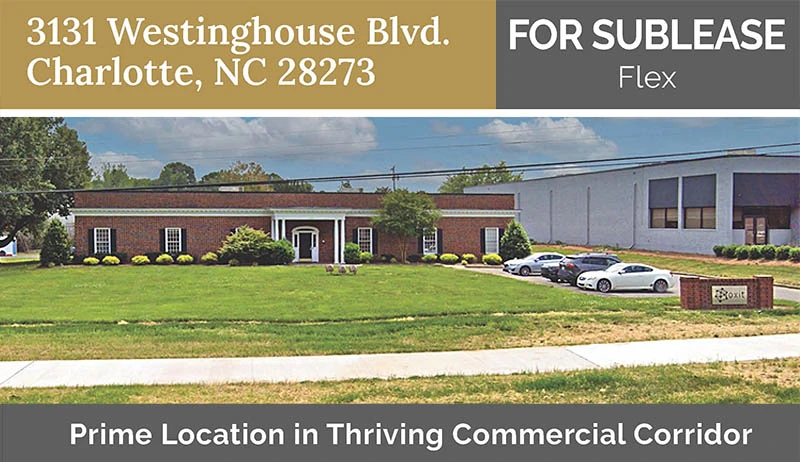
Why Lease/Buy Industrial Space in Charlotte?
The Charlotte market holds numerous opportunities for industrial businesses. From scalable warehouse space to heavy manufacturing to properties with convenient customer access – and even the popular industrial outdoor storage (IOS) option – the submarkets of Charlotte provide a plethora of real estate choices for growing businesses and industrial commerce.
North Carolina’s industrial market is largely concentrated around the major ring roads and the airport area, with the Norfolk Southern Rail Intermodal Yard conveniently transporting products in and out, providing easy access for many of the local industrial businesses.
But these common areas don’t rule out real estate in the many nearby hubs of both North and South Carolina. From Statesville, Hickory, and Salisbury on the northern side of Charlotte down to Rock Hill, South Carolina, our team at Regent Commercial Real Estate understands the unique complexities of each submarket of the Charlotte MSA.
Here are 5 reasons why more and more industrial businesses are making their home in the Charlotte neighborhoods:
- Strategic location. The intersection of several major highways—including I-85, I-485, and I-77—makes the greater Charlotte area one of the top markets for businesses transporting product across the country. With I-85 and I-77 each running over 600 miles in length, Charlotte offers quick access for trucks heading in and out.
- Population growth. A 2024 census found Charlotte ranked in the top 10 largest gaining cities for population growth. Charlotte currently has a population of over 900,000 and is growing at a rate of 1.28% annually. As a result, Charlotte’s labor force is also increasing rapidly.
- High-quality listings. Charlotte’s industrial sector is brimming with opportunities for corporate businesses and startups. From new developments with ESFR sprinkler systems and large truck courts to older warehouse buildings, the metro area has opportunities for every business.
- Transportation options. In addition to Charlotte’s network of highways, its also features easy access to both the Charlotte Douglas International Airport and the Concord-Padgett Regional Airport, as well as the Norfolk Southern Rail Intermodal Yard, giving businesses multiple options for efficiently transporting product.
- Resilient economy. In addition to its fast growth, Charlotte’s diverse economy also creates a resilient landscape for businesses across industries. Technology, finance, healthcare, and manufacturing are all strong sectors in the metro area, making it an attractive destination for individuals and businesses looking for investment opportunities or rentals.
With nearly 1,000 successful commercial real estate transactions completed, we’re committed to using our knowledge and experience to not only find our customers their ideal industrial space, but also to successfully negotiate the deal for their perfect commercial real estate option.
Industrial Space Considerations
Before you start searching for industrial properties, you’ll need to think carefully through your business needs for industrial real estate. When it comes to industrial space listings, there are numerous factors to keep in mind. Some of the considerations to take into account include:
- Location. This is often driven by where employees and management live, as well as the customer base, if applicable.
- Buy or lease? There are pros and cons to each option.
- Size. There are lots of factors to take into account here, such as the type of business, how much (if any) office space is needed, whether it’s a well-established or growing business, and more.
- Industrial features. These may include loading abilities, power and electrical, IOS (industrial outdoor storage), and more.
- Zoning. Is it zoned correctly for your business? Industrial zoning is broken into light industrial and heavy industrial.
- Budget. The type of space you need (for example, purely warehouse compared to warehouse with office space) will greatly affect the price range, in addition to other common factors such as square feet, cubic feet, and location.
- Customer accessibility. Will customers need to access your industrial building? How convenient does your location need to be? Do you need extra parking space?
- Building class. Commercial property types are often referred to as either Class A, Class B, or Class C.
At Regent Commercial Real Estate, part of our process for finding real estate for our clients includes making sure that we have a good grasp on the needs of the business. This is highly important so that we can help narrow down the ideal commercial real estate spaces for you. To get an insider’s view about how our process of matching clients with their ideal commercial real estate property works, check out Robert’s case study at the end of this article.


Location
As you start the search for your perfect industrial space in the Charlotte Metro area, location is one of the first factors you’ll want to consider. Charlotte and its surrounding cities are bursting with opportunities for finding your next industrial space. From prime locations near the Charlotte Douglas International Airport and the Charlotte Regional Intermodal Facility, to lower-cost properties further off the interstate, Charlotte and its surrounding cities have something for everyone near this growing metropolis.
When it comes to industrial space, location is quite often driven by its proximity to those who will be using it. As a CEO or lease signer, you may want to consider these questions:
- Where do most of my employees (or my ideal future employees) live?
- How close do I want this space to be to my home?
- Where do our clients and customers live?
- How important is transportation?
- Do I want to find property near the airport or intermodal yard?
- Where are the nearest interstates?
- Do I prefer to be on the north, south, east, or west side of Charlotte? Or doesn’t it matter?
Best Charlotte Neighborhoods for Leasing Industrial Property
For easy access to the Charlotte Douglas International Airport and the intermodal yard, consider the Airport neighborhood or Steele Creek. These industrial hubs near the center of the city boast numerous opportunities for prime real estate spaces, while still offering modest prices for businesses looking to lease or buy.
These central locations also offer access to Charlotte’s major transportation networks via the Charlotte Area Transit System (CATS). Employees of these areas benefit from multiple public transportation options including the LYNX Blue Line light rail trains, an extensive network of buses, and the CityLYNX Gold Line street car.
Companies looking for open space for new builds or for industrial outdoor storage (IOS) space might consider exploring Concord. This area, just 20 minutes north east of Charlotte, is a gold mine for those seeking available land and excellent highway access. Concord is also home to the Concord-Padgett Regional Airport, which offers affordable flights for both passenger and commercial services.
Huntersville is another industrial engine for those looking for plenty of space and affordable land. Located 15 miles north of Uptown, this expansive area near Lake Norman boasts a large industrial community while it still has options for new builds.
Find out more about the best Charlotte neighborhoods for leasing industrial property.

Buy or lease
Another important consideration is whether you should lease or buy industrial space.
The main benefit to buying is the flexibility that it offers in terms of what you can do with your space. When you buy real estate, you can make improvements, expansions, and other decisions without having to check in with a landlord first. The downside of buying is that there’s much more responsibility, and you must be responsible not only for the cost, but for all the upkeep that comes with owning a building.
Leasing offers a lower commitment, with monthly payments and the ability to move on more easily if you outgrow the property or just need something different. This can be a good option for a growing business who’s not ready to make a big financial commitment or knows that they may need to expand sooner than later. Downsides of leasing are that you’re not building equity, and you’ll need to run most decisions by a landlord first.
Size
Next, consider the size of building you’ll need. When it comes to industrial space, size is more than just square footage. While the square footage decision is highly important, you also need to consider many other aspects of your business.
First of all, what type of business do you have? Manufacturing (fabrication, assembly, building things, etc.), or warehousing and distribution (storing product and shipping it out)?
Does the height of the building (also referred to as cubic square feet) matter to you for storage?
What do you need the space to do? Are you largely just storing product? Will you need a larger property size for trucks or industrial outside storage? What about parking spaces?
Do you need office space or an office suite? If so, how many people will be in the office?
Or do you just need a cold, dark place to store a product?
All of these questions play a role in determining the size of the space you’ll need.


Industrial Features
In addition to location and size, there are a number of features that industrial real estate buyers need to take into consideration.
Loading
Will you be loading product in and out of the warehouse? If so, how many doors do you need?
Do you need dock high doors, which are typically 4 feet off the ground so that the tractor trailers can back right in?
Or do you need drive-in doors, which are typically ramped or at the grade level of the road so that you can drive vehicles in?
Do you need an extra large drive-in door for semi trucks? Or just simple dock doors that you can use to back things up and move on?
How many trucks will be coming and going on any given day? This will determine the size truck court you may need.
Knowing what type of loading docks and features you need will help you narrow down your choice of industrial real estate.
Power/Electrical
Power and electrical can be easy to overlook sometimes, but it’s an important part of the property to take into consideration.
The type of business you’re operating will determine how much power you need. For example, manufacturing companies may need 2,000 amps of power. On the other hand, if you’re just storing items on racks, you may only need 200-400 amps of power (which is normal for that type of space).
A heavy manufacturing facility and business who simply needs to run the air conditioning, lights, and some computers will have major differences in the power voltage they need.


Other Amenities
In addition to industrial-specific amenities, employers are having to become more purposeful about providing employees with other amenities that give staff a better work-life balance and improve employee retention. Since the Covid pandemic, retaining a healthy workforce has become more difficult, especially for blue collar industries.
Some amenities to consider include:
- Transportation options
- Comfortable break rooms
- High-tech security
- Reliable Wi-Fi
- Gym or fitness centers
- Convenient retail and dining opportunities
IOS – Industrial Outdoor Storage
Industrial Outdoor Storage (or IOS) is a type of commercial industrial property that’s becoming more and more popular in recent years. In short, an IOS is zoned for industrial use and offers the opportunity for property tenants to store large items and vehicles outside. These can include tractor trailers and other vehicles, material and equipment, containers, and more.
IOS properties typically have a small building (for office use or small tool and parts storage) on a gigantic yard – often 2-10 acres. This allows them to store all (or nearly all) of their product outside. (Keep in mind, heavy industrial zoning is typically necessary for this type of property.) According to GreenStreet, “The building to land ratio, or FAR, is generally less than 20%.”
Industrial zoning often means that the business can use the property in a more risky manner, such as storing flammable and hazardous products. In many cases, the yards are fenced and screened, and surveillance cameras and security systems are also common.
For many tenants, IOS offers a lower-cost option compared to indoor warehouse space, and it can also be more adaptable to the changing needs of the business.

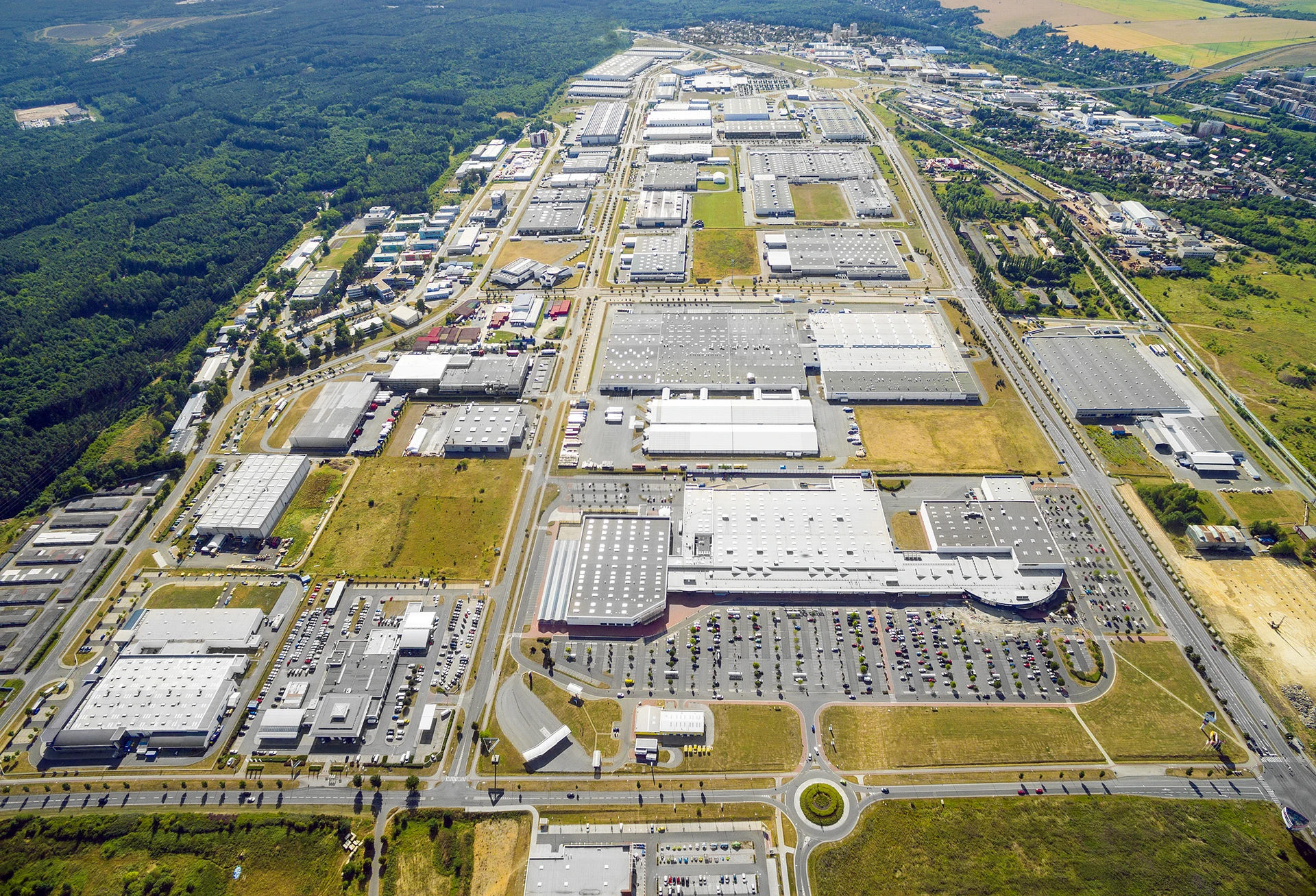
Industrial Zoning Regulations
For industrial properties, zoning is broken down into light industrial and heavy industrial.
Properties labeled light industrial are typically used for producing products that are closer to the consumer level. In other words, these businesses generally make the products that consumers buy. Examples of light industrial properties include electronics factories, printing shops, auto repair garages, and small-scale construction shops.
On the other hand, heavy industrial properties usually use heavier and more complex machinery to make complex products. They are often used for power production, construction of large buildings, and chemical plants. These properties take into account the smoke, smell, and noise pollution that may travel to surrounding areas.
Commercial Zoning Laws
Commercial zoning laws vary by state and area, and affect a lot of factors when it comes to industrial usage. These can include:
- Permitted uses
- Lot coverage
- Floor area ratio
- Signage and parking requirements
- Pollution
- Building height, density, and design
- Access requirements
- Waste management
- And more
It’s very difficult and not always possible to get a property re-zoned, so it’s highly important to make sure your property is zoned correctly before starting a lease or purchasing a building.


Budget
Budget, of course, plays a vital role in the choosing of an industrial property.
When considering budget, it’s important to remember that the amount of office space directly correlates with the cost per month. The more a building is like a pure warehouse, the less expensive it will be. The more it’s like an office building that happens to have a warehouse, the more expensive it will be.
Location and amount of maintenance needed are other major factors that can impact the price of an industrial property.
Charlotte’s Most Affordable Neighborhoods for Industrial Real Estate
When it comes to industrial real estate market conditions, some of the most affordable neighborhoods around the greater Charlotte area include:
- Statesville
- Hickory
- Conover
- Newton
- Lincolnton
- Harrisburg
- Concord
- Kannapolis
- Salisbury
- Mint Hill
- Fort Mill
- Indian Land
- Rock Hill
Properties in these areas typically cost $11/sf/yr or less to lease.
Below, we’ll break down the average cost of leasing or buying in each of the major neighborhoods around Charlotte, from the most affordable options to the newest developments in prime locations.


Customer Accessibility
Next, you need to consider whether or not your property needs to be accessible to customers. In other words, are customers coming to you? Do you need something that has some presentation value to it, or even a section of retail space? For businesses who often welcome customers and need easily accessible locations with reception areas, flex space is also becoming a more popular option.
Or, do customers never come directly to your property? In this case, you may just want the cheapest property you can find that aligns with your other needs.
If customers will be coming to you, you’ll probably want to find a property that’s in close proximity to your largest customer base. In addition, consider how many parking spaces you will need.
Building Class
Lastly, commercial spaces are generally categorized into three building classes – Class A, Class B, and Class C.
Class A
Class A is the highest-quality building type. Oftentimes, these are brand new buildings with state-of-the-art systems and infrastructures. They may have ESFR sprinkler systems to allow for storage of products at higher heights, the newest HVAC systems, and parking garages. Class A industrial buildings are primarily located in popular locations and attract committed tenants.
Class B
Class B basically houses anything between Class A and Class C. These are usually well-maintained buildings that don’t have all the new features or fancy amenities that Class A buildings have. They’re generally not new buildings, but they’re still high-functioning spaces that tend to give the tenant excellent value. Class B properties are often a top choice for investors.
Class C
Class C buildings are usually older properties (generally 15-20 years old or more) that need maintenance work and are usually not located in popular areas. In some cases, they can also be newer buildings that are built with the cheapest materials, such as sheet metal. They can often be renovated by high-risk investors who are willing to put in the work and/or cash.

What our clients are saying


Types of Industrial Buildings
As you can see, industrial buildings boast many different features that need to be taken into consideration when choosing a building. Industrial properties can be utilized for many different types of businesses and functions. Often, when the term “industrial space” is used more as an overarching term, encompassing different categories of buildings that are designed for industrial use. Some of the most common types of properties that fall into these categories include:
- Warehouses
- Manufacturing buildings
- Distribution centers
- Cold storage buildings
- Data centers
- Industrial flex
- Industrial outdoor storage

Warehouses
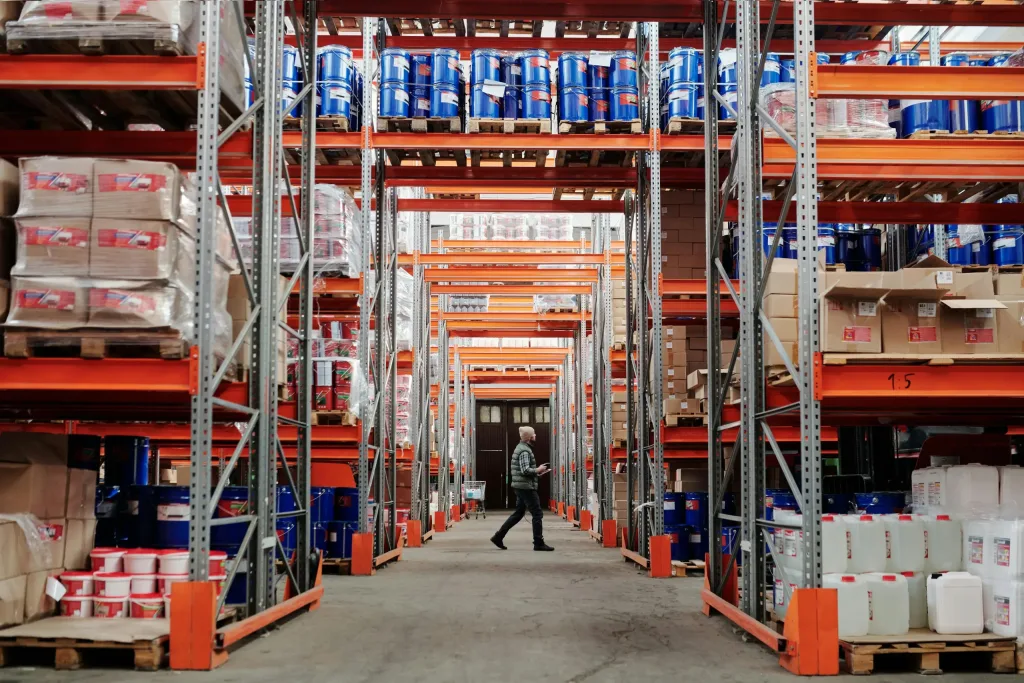
Warehouse space is a type of industrial commercial real estate that’s most commonly used for storing products for longer periods of time. Warehouses can hold inventory, mechanical parts, medical record data files, and other raw materials.
Typically, warehouses are at least 20,000 square feet with a couple of dock high doors. They don’t need an excessive amount of doors, loading docks, or parking, since products tend to be sitting in these buildings for quite awhile rather than constantly moving.
Manufacturing Buildings
Manufacturing buildings are usually dedicated to a particular function. They’re often used in industries such as steel production, automobile manufacturing, textiles, and much more. Around the greater Charlotte area, there are a lot of older manufacturing buildings that were used for furniture making.
Manufacturing buildings typically have heavy power requirements, high-quality ventilation systems, large loading docks, and other features that make them conducive to specialized use.

Distribution Centers
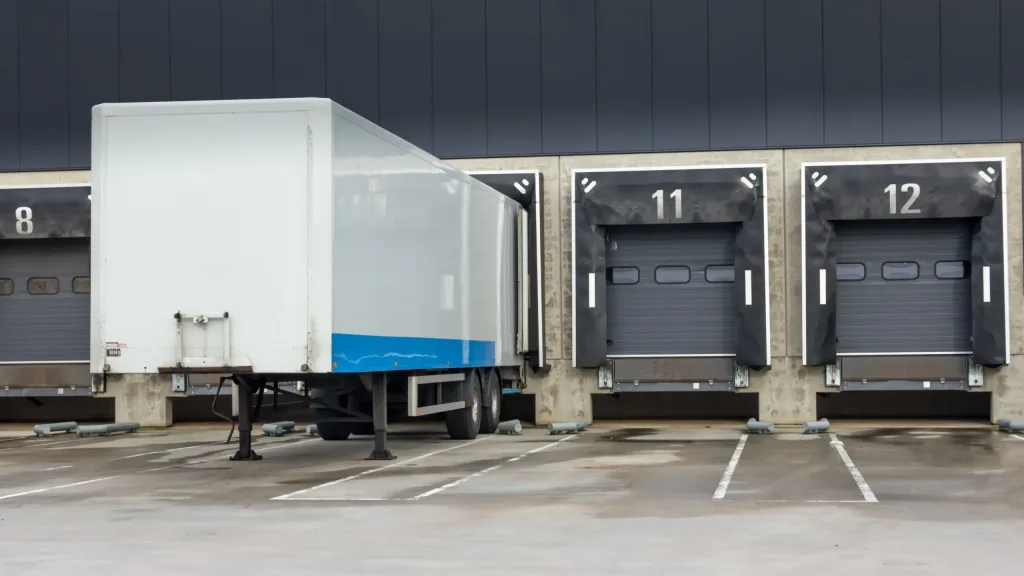
Distribution centers, or distribution center warehouses, are usually responsible for processing and fulfillment in addition to holding products. This includes e-commerce sales.
They often have a small office component (often around 5%-10% of the total square footage) in the building. These buildings are typically receiving products and shipping orders out.
For this reason, it’s important for distribution centers to have easy interstate access, multiple loading docks, and updated technology for stocking and storing items.
Cold Storage Buildings
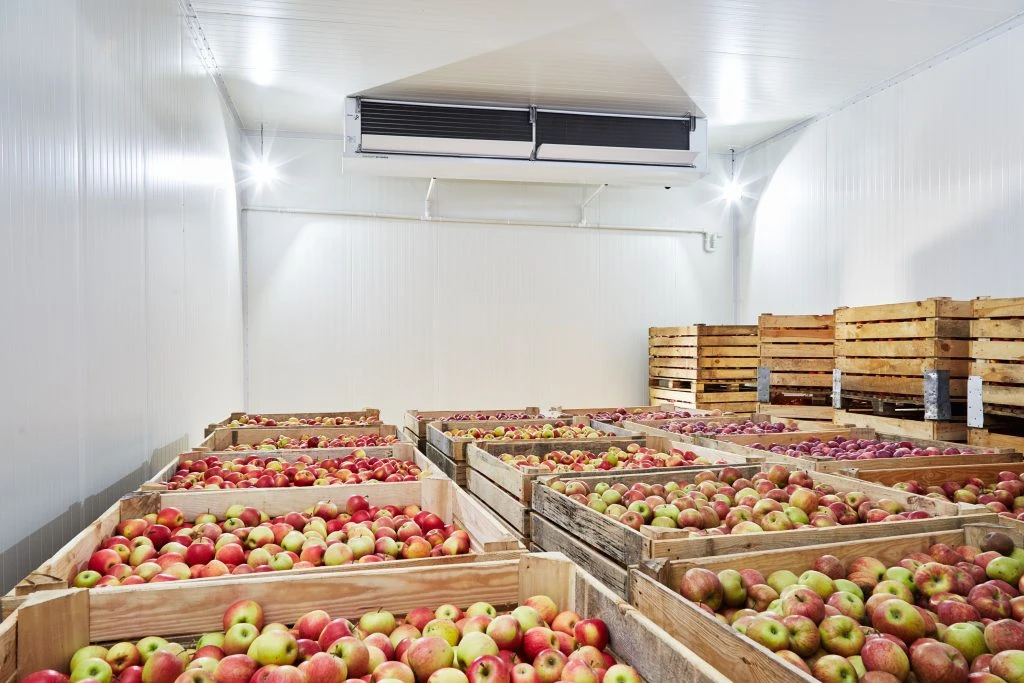
Cold storage facilities – as their name implies – are temperature controlled buildings dedicated to storing products such as food, pharmaceuticals, and biological materials.
These buildings have sealed doors and docks and often have specialized foundations to keep them from cracking amidst the cold temperatures.
Cold storage warehouses are specially equipped with reliable power supply infrastructure, easy access for trucking, and specific controlled temperature areas for the type of products being stored.

Data Centers
Data centers are buildings that store computer machinery and technology. These types of buildings have high power requirements with backup generators, top-notch security systems, extensive cabling, and supplemental HVAC systems for cooling the computers.
While these types of buildings have extensive infrastructure, they usually have very few people working inside.
Data centers – or server buildings – are usually located near at least two power stations and to ensure the data’s safety in case of a power failure. Near Charlotte, some of the largest data centers are located near the Black Mountain area.
Industrial Flex Buildings
Flex space is a type of industrial use building that integrates industrial or warehousing square footage with a significant office space component. These types of buildings are usually somewhat adaptable, allowing them to cater to a wide range of businesses as well as to the changing needs of evolving companies.
Typically, the warehouse portion of the building is small compared to other industrial buildings, since around 50% of the building is usually taken up by office space. The layout usually features the office on the front side to be customer facing, while the warehouse is in the back. Roll up doors are more common than dock doors in this type of space.
Lately, flex space usually offers prime access to transportation hubs and interstates.
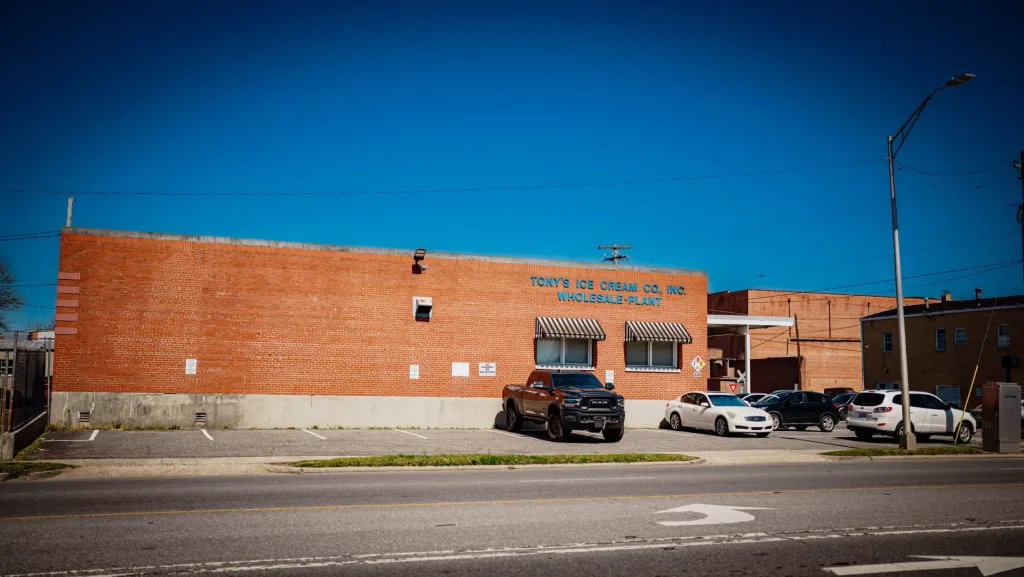
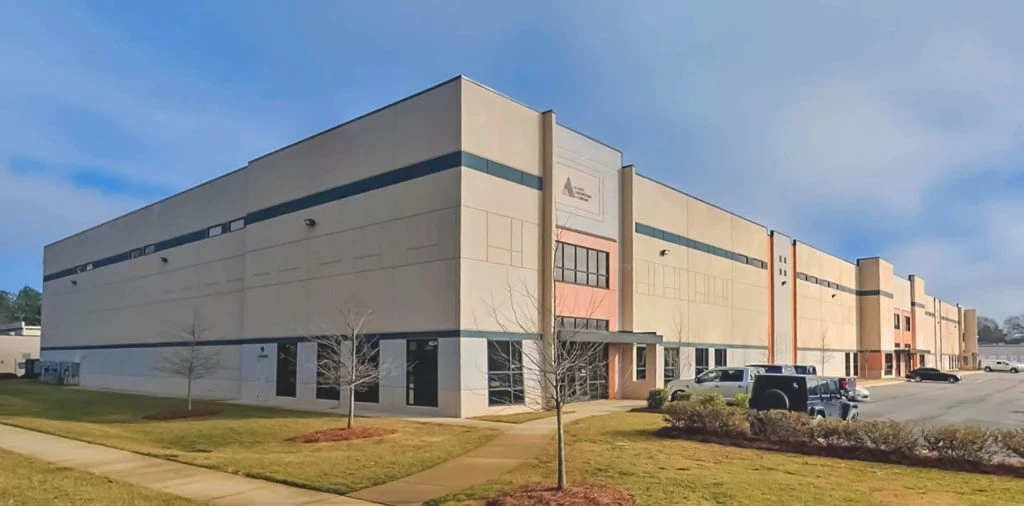
Flex space is continuing to rise in popularity, especially for service-based businesses, e-commerce companies, research & development firms, and art and specialty trade users. These industries benefit from the cost savings, adaptability, opportunity for collaboration, and shorter lease terms that flex space offers.
Some of the most common types of flex space users include:
- General contractors
- HVAC companies
- Electricians
- Cleaning companies
- Pest control companies
- IT firms
- Event planners
- Printing businesses
- Photography studios
- Engineering firms
- Sports training facilities
- Yoga studios
- Catering companies
- Interior designers
- Custom furniture makers
- Cabinetry shops
- Wholesale distributors
- And many others
Industrial Outdoor Storage
As we touched on earlier, industrial outdoor storage (IOS) is an up-and-coming type of industrial space that continues to increase in demand and popularity. It’s designed for businesses who can store items outside rather than needing a significant amount of indoor square footage. Usually, these lots are at least an acre and have a small building, but their main use is for outdoor storage.
Since they don’t require nearly as much infrastructure, this option tends to be quite cost effective. Types of businesses that use IOS include building supply houses, equipment rental companies, and trailer and container storage, among others.


Navigating Industrial Property Lease Terms
The terms of your industrial lease should be taken into account when considering your budget as well as how the lease will affect your business for the long term. Before you choose an industrial property to lease, you’ll need to ask yourself questions including:
- What’s the monthly budget? This may also include questions such as:
- What’s our projected revenue growth?
- What other costs may we need to take into account? (Taxes, utilities, building updates, maintenance expenses, etc.)
- What’s the ideal lease term? Consider the following:
- Do we expect the company to grow or shift in the near future?
- How will changing market conditions affect the future of the company?
As you find a building and begin to navigate lease terms with the lessor (landlord), further questions will need to be asked. When discussing lease terms, it’s important to address the legal terminology along with other important points such as:
- The lease commencement date: Including initiation of payments, security deposits, and, if applicable, rent-free periods and other financial responsibilities of the lessee.
- Base rent: Over and above the foundational cost, this includes agreements such as additional charges and periodic escalations.
- Renewal options
- Early termination options
- Security deposit
- Subletting rights
- Common area maintenance (CAM) – if applicable
- Substitute premises clause
To learn more, check out these 5 Industrial Lease Clauses Tenants Need to Understand.


With all of these lease terms and clauses in mind (among others, potentially) and multiple lease types to understand, it’s vital to have an experienced tenant representative broker on your side who understands the ins and outs of lease terms and negotiations. When you sign to take on a lease, you want to be sure that it will suit your business and propel you forward rather than give you unwanted surprises a few months down the road.
When you partner with Regent CRE, you get all of the benefits of an experienced tenant rep who has gone through the lease negotiation process hundreds of times before. When you’re ready to close on your new property, you can rest assured that you have an expert negotiator on your team. We’ll take care of the pages and pages of lease terms, ensuring that they benefit your business and that all of your questions are answered. Your job is to sit back and focus on what you do best – run your business!
A Jaunt Around Charlotte with Brian Smith
Each submarket of Charlotte has its own unique offerings when it comes to industrial space – and some have minimal industrial properties, or none at all. Before we jump into each of the unique neighborhoods of the Charlotte MSA, let’s take a quick jaunt around town with Brian Smith, SIOR- and CCIM-designated commercial real estate broker, and hear his insider’s perspective about the options for industrial real estate.
Here’s what Brian has to say about a journey around the greater Charlotte area, including some insider insights on the history and unique features of the area.


Let’s start with Uptown
It makes sense to start with Uptown. Uptown Charlotte isn’t going to have a lot of industrial space. Instead, what’s available within Uptown is more industrial flex space listings. None of them are in the 277 loop. And if they were, they’ve been converted into retail or restaurants.
Or, they’ve been torn down to build an office building.
Going around to South End, you’ll see a lot of warehouses that have been converted into different uses, such as for breweries. Some of these have also been torn down to build apartment buildings.
So as the land gets more valuable, it starts to convert to higher, denser uses, like office buildings, retail buildings, and apartment buildings. When this happens, industrial space gets pushed out further.
Industrial space around the major ring roads
Because of this, most of the industrial space in the market is going to be on the I-85 corridor, in the I-485 loop around the city, or the I-77 corridor up and down. Or, even outside the city around highway 74 and Independence Boulevard. In other words, it tends to be concentrated around major highways and ring roads.
The reason for this is that most of these real estate clients are service-oriented businesses like plumbers, electricians, and painters. In these industries, it’s all about how quickly they can get to the client base and to the interstate. A 1-minute drive to the interstate compared to a 10-minute drive can make a big difference in the amount of time you save getting to clients – it all adds up. In other words, for these tradesmen, their “trade area” (or service area) enlarges when they’re close to the major roads.

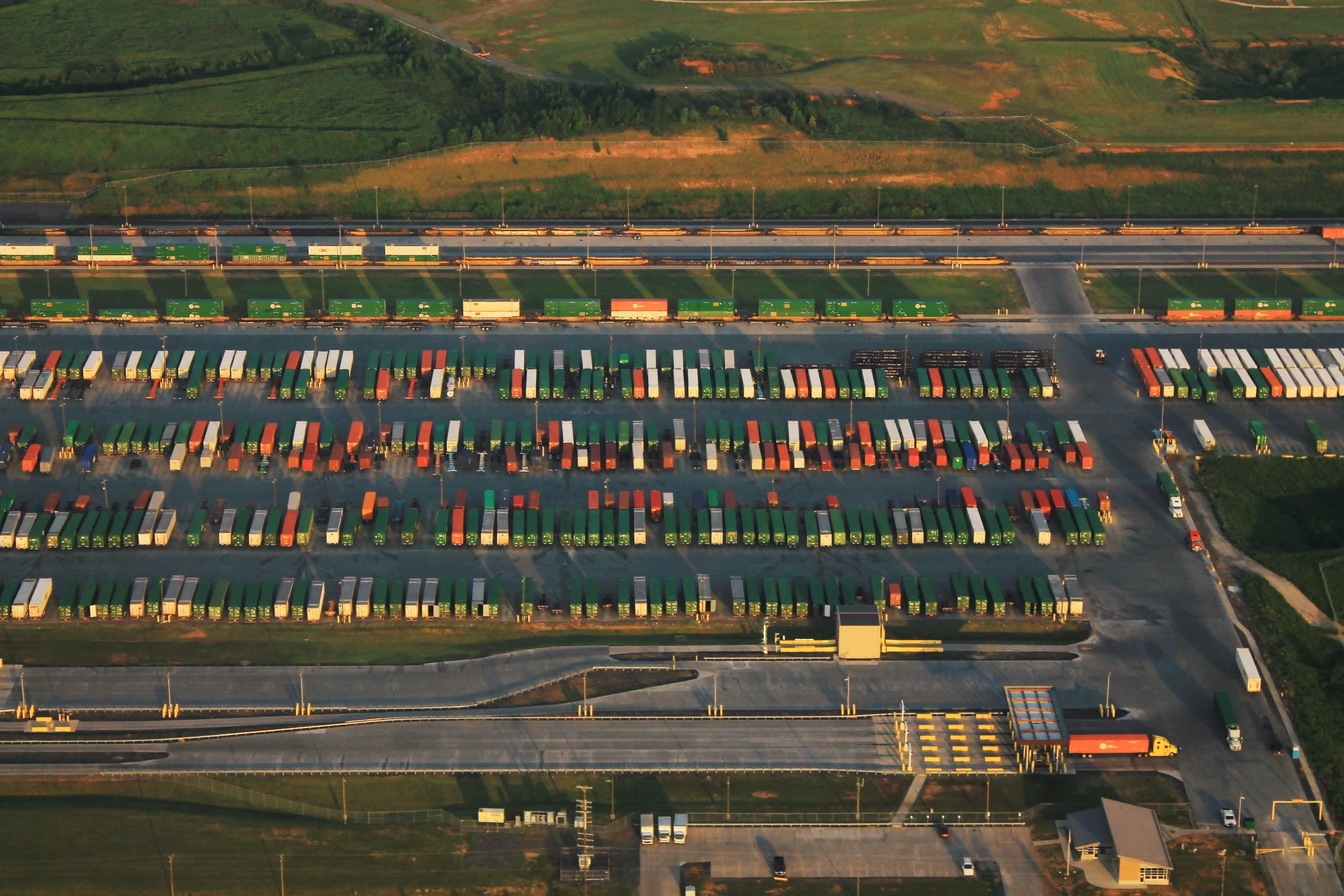
Norfolk Southern Rail Intermodal Yard in Charlotte, NC, Next to CLT Airport
Photo Credit: "Norfolk Southern Rail Service CLT" by formulanone, licensed under CC BY-SA 2.0
The biggest concentration of industrial space in North Carolina
Much of the industrial space in North Carolina is concentrated around the Charlotte Douglas International Airport. This makes the Airport Neighborhood sub-market the largest.
According to Stratos Jet Charters, this main airport is in the top 10 busiest airports in the U.S., transporting approximately 23.1 million passengers per year. The Norfolk Southern Rail Intermodal Yard also comes in right by the airport, making this area busy not only for transporting product, but also for business people who can easily fly in and out quickly.
Charlotte Regional Intermodal Facility
In 2014, the 200-acre Charlotte Regional Intermodal Facility was built right next to the Charlotte Douglas International Airport. Although the Norfolk Southern Rail was previously accessible to Charlotte from the older, 40-acre property located closer to downtown, this new intermodal facility in the Airport neighborhood was necessary for the expanding needs of the industrial community.
The addition of the 200-acre terminal has bolstered the industry and economy of the metro Charlotte area by connecting the industrial community with the opportunity to efficiently, reliably, and sustainably ship large loads across the country. Currently, the Norfolk Southern Rail operates across 22 states as well as the District of Columbia. Running a total of 19,500 miles, it connects 800 industrial sites, 175 warehouses, and 43 ports.
For industrial businesses around metro Charlotte, the area’s well-connected transportation infrastructure offers unparalleled convenience for transporting freight in nearly every category of industry.

Charlotte Regional Intermodal Facility – Commercial Real Estate Near the Rail

Charlotte, NC – Westinghouse Blvd Highway Exit
Photo Credit: "110130-012 Charlotte" by Mark Clifton, licensed under CC BY-SA 2.0 (cropped and color edited)
Westinghouse and Concord
On the south end of Charlotte, you’ll find Westinghouse Boulevard, which is another hub of industrial space.
Next we have the Concord area, which sort of blends together with Mint Hill and Harrisburg. Concord benefits from being on the I-85 corridor, as well as right off the I-485 corridor.
North submarket
North of the city of Charlotte on the I-85/I-77 corridor, especially where they intersect, you’ll find lots of industrial space. This is sometimes referred to as the North Submarket or Charlotte North.
Going north from there, you’ll push into Huntersville, which is also close to Cornelius and Mooresville. This area is well known for being the corporate headquarters of Lowe’s Home Improvement. Because of this, there are a lot of Lowe’s suppliers and vendors in this area.

Charlotte, NC North, Interstate 77 Exit
Photo Credit: "77 Charlotte, 20 Augusta, 20 Florence" by Taber Andrew Bain, licensed under CC BY 2.0 (cropped and color edited)

An Old Textile Building – Commercial Real Estate Development Opportunity
Photo Credit: "An old textile building." by Connie, licensed under CC BY-SA 2.0 (cropped and color edited)
Textile buildings in the west
As you head west, you’ll find the Hickory, Conover, Newton, and Lincolnton submarket. This is an old textile furniture area and used to be the furniture-making capital of America. Because of this, there are a lot of older, textile buildings around.
Living on the lake
Then, as you make your way into Lake Norman, you’ll find wealthier areas. Waterfront properties are scarce, and many people want to live on the water, so the wealthiest families usually end up in this area. There are some industrial buildings in this area.

Industrial Space in the Charlotte MSA Neighborhoods
Now, let’s take a closer look at what kind of industrial space is available and the average cost of buying or leasing property in each of these popular Charlotte MSA neighborhoods.


Industrial Space in Uptown Charlotte/Central Business District (CBD)
Uptown Charlotte, also called the Central Business district, is better known for its flex space and office space listings. As a hub of this bustling city, the Uptown area is full of opportunities for retail, restaurants, and office workers. Because this area is packed together tightly, industrial space has been pushed out to the outer portions of Charlotte.
Industrial Space in South End and Midtown
South End and Midtown are on the south side of the Central Business District. This search area doesn’t have a lot to offer in terms of industrial space, but there are a few properties available.
The industrial buildings for sale in this area mostly range from around 7,000 to 17,000 square feet. Their average price is approximately $327/sf. In this area, you’ll find Class B and Class C buildings.
You may also find a few industrial buildings for rent in the South End and Midtown submarket. These tend to be slightly smaller industrial spaces that rent out at around $17/sf/yr.

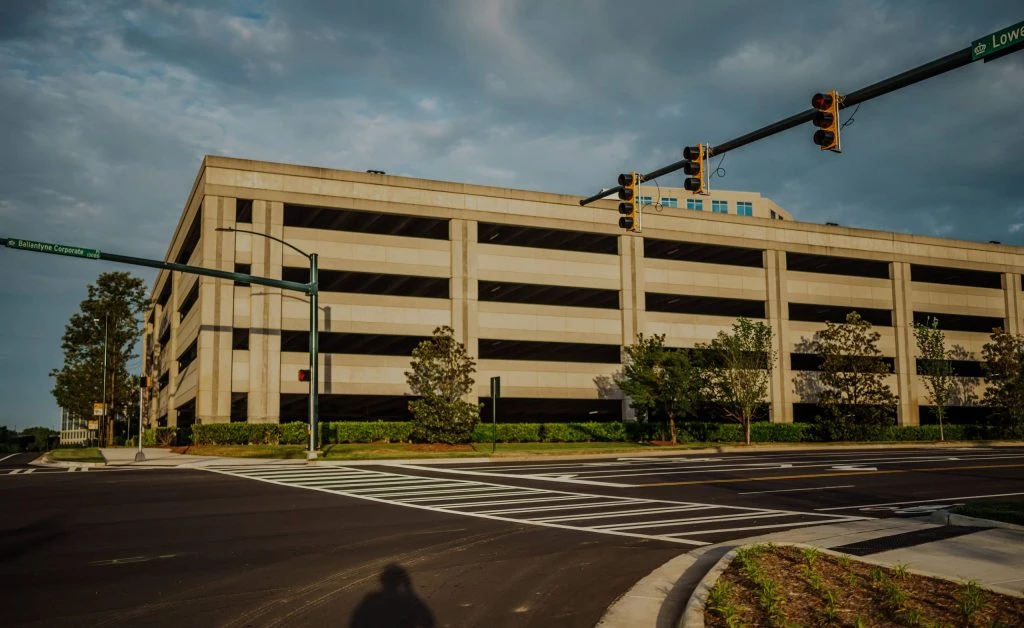
Options for Industrial Space in Ballantyne, NC
Industrial Space in Ballantyne and Blakeney
Ballantyne and Blakeney are located in the southern part of Charlotte, pressed right up against the South Carolina border. This area is home to many of the business professionals and decision makers, which means that industrial space is virtually non-existent in these towns.
For those looking to be close to these cities, the most popular option is to go over to Pineville, Fort Mill, Indian Land, or Matthews.
Industrial Space in Airport
Plenty of industrial real estate is concentrated in this Airport submarket of North Carolina. This is largely because of the popular Charlotte Douglas International Airport, which is a hub for distribution and business air travel.
Norfolk Southern Rail Intermodal Yard
Near the airport, you’ll also find the Norfolk Southern Rail Intermodal Yard. When product comes in through the port of Charleston, South Carolina, it’s often carried all the way up the rail to the airport. It’s then distributed by plane, rail, and truck.
Currently, this main airport is also in the midst of a massive expansion. This expansion involves the terminal lobby, renovated checkpoints, sky bridges, a large outdoor canopy, dining options, renovated baggage claims, and more. It’s scheduled to be completed in the fall of 2025.
Because many industrial companies use this airport for storage and distribution, it’s a popular area for industrial space, providing convenient access to transportation for these businesses.
In this area, industrial buildings that are for sale average at $301/sf. They range in size from around 2,000 square feet to around 23,000 square feet.
If you’re looking to rent industrial space in the Airport area, you can expect to pay approximately $16/sf/yr. There are numerous choices and different types of industrial buildings in this submarket of Charlotte, which range widely in size, building style, and building class.

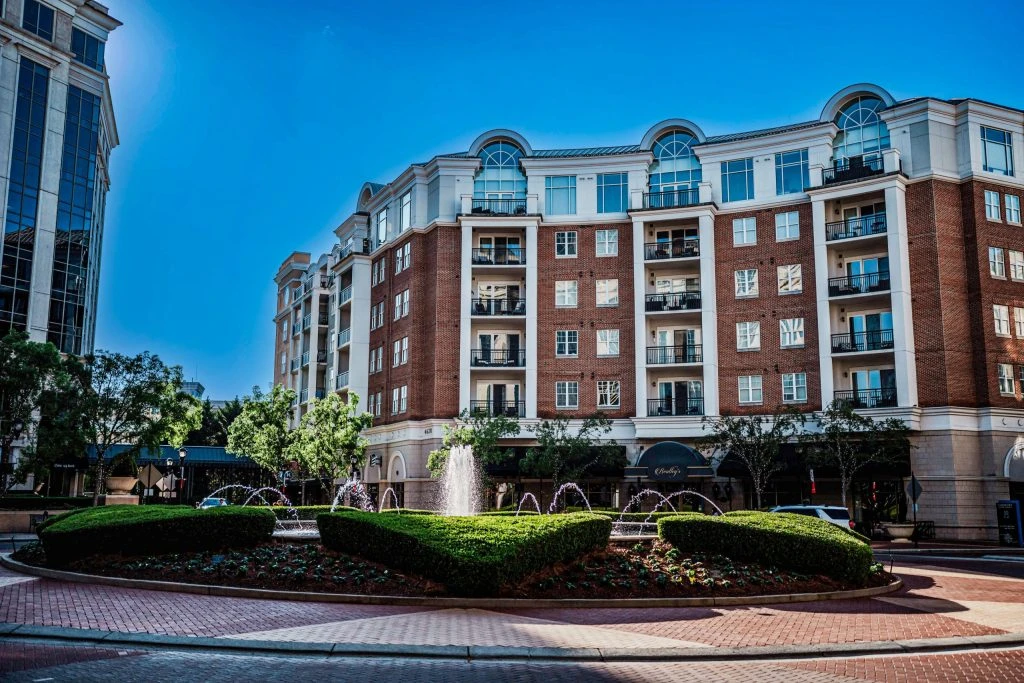
Industrial Space in SouthPark
The SouthPark area isn’t known for its industrial real estate. This area of North Carolina has a high concentration of wealth. It’s where many decision makers live. Because of this, SouthPark consists of nearly all residential, retail, and office space.
SouthPark also tends to attract young professionals with its high-class bars, large, upscale shopping mall, and various dining opportunities.
Industrial Space in the Lake Norman Area: Davidson, Cornelius, Huntersville, Mooresville, and Denver
The Lake Norman area is especially focused on the home improvement fields. Many of the vendors that are related to Lowe’s Home Improvement are located in this area. Its industrial space is also used by business people who live on the lake and would prefer not to commute into the heart of Charlotte and spend more time in traffic each day than they need to.
The price of industrial space in this area varies greatly. This is largely because the Lake Norman area has industrial real estate opportunities of all sizes and building classes. From real estate within larger business parks to beautiful, standalone buildings, there’s plenty of character in this area. On average, you can expect to pay about $218/sf when purchasing industrial space near Lake Norman.
If you’re looking to lease instead, industrial space for lease in these cities averages about $14/sf/yr. Most buildings range from about 2,000-8,000 square feet, although a few are larger.

Industrial Space in the Lake Norman Neighborhood of Charlotte
Industrial Space in Fort Mill, Indian Land and Rock Hill
When it comes to industrial space, this area in northern South Carolina is best known for its distribution centers and warehousing-type businesses. There’s also some manufacturing going on in this area. You’ll also find that businesses who are located closer to the I-77 interstate are usually making and shipping products out. As you move away from the interstate in this area, the industrial space is used more for pure manufacturing.
The I-77 corridor cuts right through Rock Hill and Fort Mill, making these areas a great location for easy highway access. Because of this, there’s more industrial space in these two cities than there is in Indian Land.
In these areas, you’ll find more industrial space available for lease than you will find for sale. While industrial space for sale runs around $89/sf, industrial space for leases averages at approximately $11/sf/yr.
When it comes to the type of industrial space listings you might see in Fort Mill, Indian Land, and Rock Hill, you can find all sorts of options, from 2,000 square foot flex space to 73,000 square foot buildings with numerous drive-in bays and exterior dock doors.
Industrial Space in Matthews and Indian Trail
This industrial area is located on the I-485 ring road. Its industrial space supplements the locations in SouthPark, Dilworth, Myers Park, and Uptown Charlotte. Tenants in this zone are often looking for warehouse space.
Industrial space that’s for sale in the Matthews and Indian Trail submarkets of Charlotte tend to run a bit lower than other nearby markets, at around $166/sf. Buildings in this area are mostly Class B and Class C, with a number of larger buildings of 20,000 square feet and more. If you’re looking to lease industrial space in the Matthews or Indian Trail submarket, you can expect to pay around $14/sf/yr.
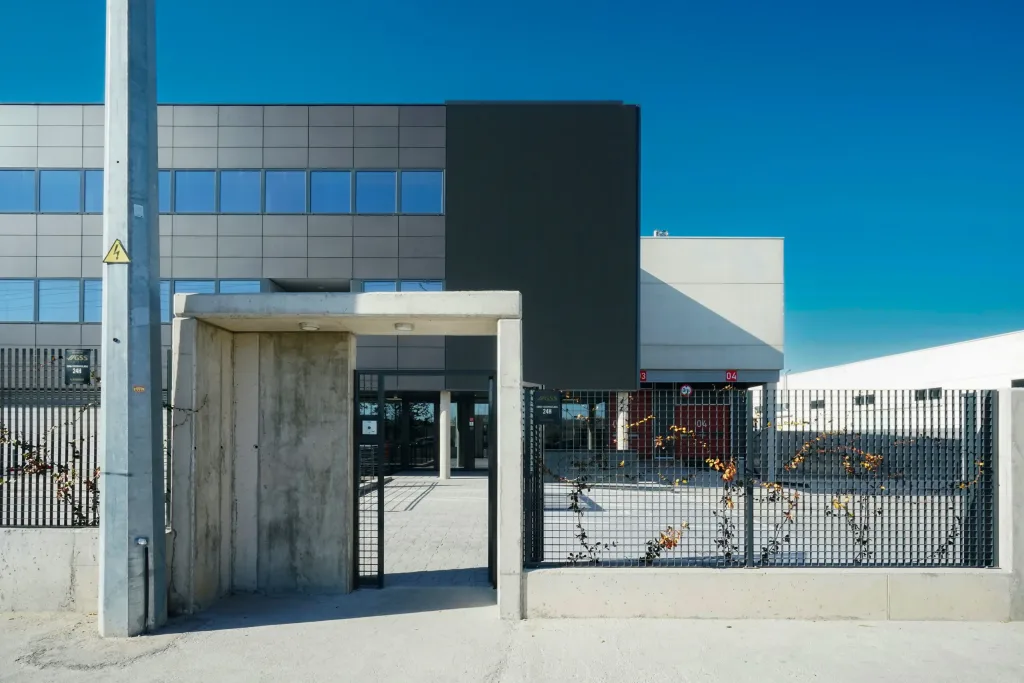
Industrial Space in Matthews, NC

Experience Commercial Real Estate Success in Kannapolis, NC
Industrial Space in Harrisburg, Concord, Kannapolis, Salisbury, and Mint Hill
These cities run up and down the east side of Charlotte and benefit from the I-485/I-85 corridor. This area is filled with more distribution-type companies, which is largely because I-85 goes all the way south into Alabama, and all the way north to Washington D.C., thus making it a major road for transportation.
For this submarket, you’ll find a larger concentration of industrial spaces in Kannapolis and Concord, while Harrisburg and Mint Hill have more local businesses and smaller real estate spaces.
In this eastern market, industrial real estate sells for around $144/sf and consists of mostly Class B and Class C buildings. It has options ranging from 700 square foot garages to 250,000 square foot industrial buildings.
If you’re more interested in leasing, you can expect to pay around $12/sf/yr. The largest concentration of properties for lease in this submarket area is in Concord.
Industrial Space in Belmont and Gastonia
This submarket is home to a lot of the blue collar industries around the Charlotte area. Because of this, the industrial space is mostly older warehouses and textile-type companies.
However, there’s also a significant amount of new development that’s happening in these areas. This is largely because they’re conveniently located on the I-85 corridor, giving locals a straight shot down to Atlanta and Greenville.
If you’re looking to buy industrial space around Belmont and Gastonia, you can expect to pay around $110/sf. Most of these options are Class B or Class C buildings.
In terms of lease options in this area, industrial real estate runs at around $17/sf/yr, and is largely concentrated in Gastonia.

Industrial Space in Gastonia, NC

Industrial Space in Steele Creek (Westinghouse Boulevard)
The main industrial corridor that runs through Steele Creek is called Westinghouse Boulevard. This area is located southwest of Charlotte, in the southwestern area of Mecklenburg County.
Steele Creek is home to a lot of distribution logistics, with some manufacturing companies mixed in.
It also has a lot of suburban areas that attract young professionals and families.
Industrial Space in Pineville
Westinghouse Boulevard then bleeds into Pineville. This area is supplemental to Fort Mill and Ballantyne, and tends to have a lot of distribution, logistics, and manufacturing.
Industrial space for sale in Pineville is priced at around $235/sf, while industrial properties for lease in this area run at about $15/sf/yr. The real estate options in this area offer a mix of office, warehouse, and flex space.

Industrial Space in Pineville, North Carolina

Industrial Space in Plaza Midwood
Industrial Space in Plaza Midwood
Plaza Midwood is located close by to Uptown Charlotte, and is home to mostly retail and office space. This area of Charlotte is more built-up than the outer areas of town. Because of this, it’s much more well known for its dining, shopping, and entertainment than industrial zones.
However, there are a few industrial buildings for lease in this area, which rent for an average of $16/sf/yr.
Industrial Space in NoDa
NoDa, or North Davidson Street, is located right in the heart of downtown Charlotte. While there are some industrial buildings for sale in this area, they’re mostly ready to be converted into retail, restaurants, and breweries, rather than large warehouse space.
These properties are mostly around 10,000 square feet or less, and sell for around $244/sf. They’re largely Class C buildings that are a few decades old. Industrial buildings for lease in this area cost approximately $16/sf/yr.

There’s Hardly Any Industrial Outdoor Storage (IOS) Space in NoDa (North Davidson Street), Charlotte NC
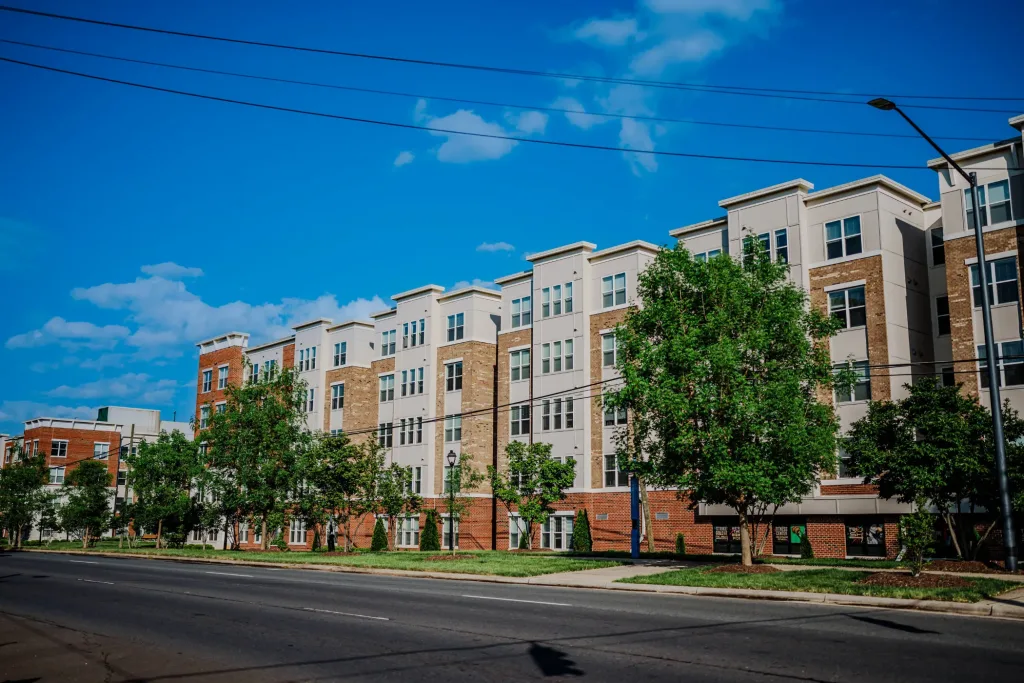
Not a Lot of Industrial Space in the Charlotte University City Neighborhood
Industrial Space in University City
The University City area is conveniently located on the I-85 corridor. However, since it’s home to UNCC (The University of North Carolina at Charlotte), it’s much more popular for office space than industrial real estate.
There are a few options in this area, however, with industrial space for sale priced around $195/sf, and industrial space for lease around $21/sf/yr. These properties tend more on the side of flex space rather than warehouse or heavy manufacturing.
Industrial Space in Monroe
Monroe is located southeast of Charlotte in Union County and is largely filled with manufacturing.
Industrial buildings in this area sell at around $115/sf, while properties for least cost about $13/sf/yr. Most of these options are warehouse space and are conveniently located near Route 74.

Thrive in Monroe, NC’s Booming Industrial Real Estate Market

Industrial Space in Hickory, Conover, and Newton, NC
Industrial Space in Hickory, Conover, Newton, and Lincolnton
These cities are northwest of Charlotte. This area used to be home to furniture-making, and still tends to be more manufacturing based, although there is some distribution as well.
Most of the for sale properties around this area are concentrated in Conover and Hickory. They average around $87/sf.
Industrial real estate property is one of the most common types of commercial space in Lincolnton. Most of the industrial listing opportunities here are concentrated in the 680-acre Lincoln County Industrial Park, boasting easy access off of U.S. Highway 321.
Industrial properties for lease are scattered all around these four towns, and are certainly budget friendly, averaging at only $5/sf/yr. Most are larger buildings, from around 20,000 square feet all the way up to 158,000 (with a few smaller options as well).
Industrial Space in Statesville
Statesville is located north of Charlotte above Mooresville. Because I-40 and I-77 intersect in this area, it’s become a major industrial hub.
Statesville has a mix of different types of commercial real estate and industrial properties available – from warehouse space with acreage to smaller commercial properties with easy customer access. They average at about $98/sf for properties for sale. For lease properties in this area are affordable at around $6/sf/yr.


Industrial Space in Charlotte North – I-85/I-77 Corridor
The intersection area of I-85 and I-77, just north of Charlotte, is another hub for industrial real estate. These properties are largely used for distribution and manufacturing.
In the Charlotte North area, industrial properties for sale run at about $282/sf, and you can expect to pay about $14/sf/yr when leasing industrial space around the Charlotte North area.

Case Study – From 6,000 Square Feet to 32,000!
What does it look like to find an industrial space that fits your needs?
With dozens of options available, starting the search for your next industrial property can be overwhelming and intimidating. Whether you plan to buy or lease, when you sign that contract, you want to be sure that you’ve made the right decision.
Our client Robert and his team knew that they had outgrown their 6,000 square foot space in Belmont. They needed to expand and wanted to be closer to I-85 in order to serve their large customer base coming from Raleigh (about 2 hours east of Charlotte). We set out to work with Robert to find the perfect property.

Step 1 – Getting to know the client’s needs
The first step of the process with every client is really getting to know their needs. Only by understanding what features, location, and type of space a client needs can we help them close on the perfect property.
As we sat down and talked with Robert, we started by narrowing our search into the area he wanted to be in, conveniently near Charlotte and I-85. We landed near the Airport area. We also asked questions about the type of business, what industrial features were important, what type of space was needed (office, warehouse, etc.), and price range.
Step 2 – Options and property tours
Next, we put a report together to show Robert the available properties that might meet his search criteria. From these available options, we toured about 10 different properties together, checking out the features, benefits, and risks of each one.

Step 3 – Proposal and negotiation
We found the perfect property on Sirona Drive near the airport.
It offered 32,000 square feet – a big step up from the 6,000 square feet that they currently owned in Belmont. The building itself had 3,000 square feet of office, which they needed to use as a showroom and an area to meet customers. It had high ceilings (30-foot clear height) and an ESFR sprinkler system. These features were a priority to the company, because high ceilings and this type of top-quality sprinkler system allowed them more cubic square feet to store product up to 28″ feet high.
When searching for warehouse property, looking for available Cubic Square Feet of storage can be a useful alternative to looking at surface area only. Although real estate tends to be more expensive per square foot for taller spaces, many companies actually end up paying LESS overall because they can stack products higher due to having more cubic feet. Having closed hundreds of deals, our team at Regent understands what advantages customers often overlook when it comes to choosing the best space for their business!
A generous amount of dock doors as well as a drive-in door were another priority for this company.
Aside from these important industrial features, the tenant was also drawn by the 3,000 square feet of office space.
Now that we had the perfect space in the right location, it was time to create a proposal and negotiate with the landlord.
When leasing commercial real estate, the negotiation process is a very important step. Not only are there different types of leases, but leases (should) also include numerous negotiations. Provisions to discuss often include the lease term, security deposit, sublease rights, options regarding renewal, tenant improvement, rental rates (and how much it escalates annually), and more. In most cases, this is a back-and-forth process, in which having an experienced commercial real estate broker on your team can save you thousands, and help you avoid tenant frustration.
Lease terms are usually around 20-30 pages, which can feel quite overwhelming for tenants without the advice of a professional broker.
Your broker will help you to make sure that you have a clear understanding of your real estate negotiations and a plan that will work for you and your business.
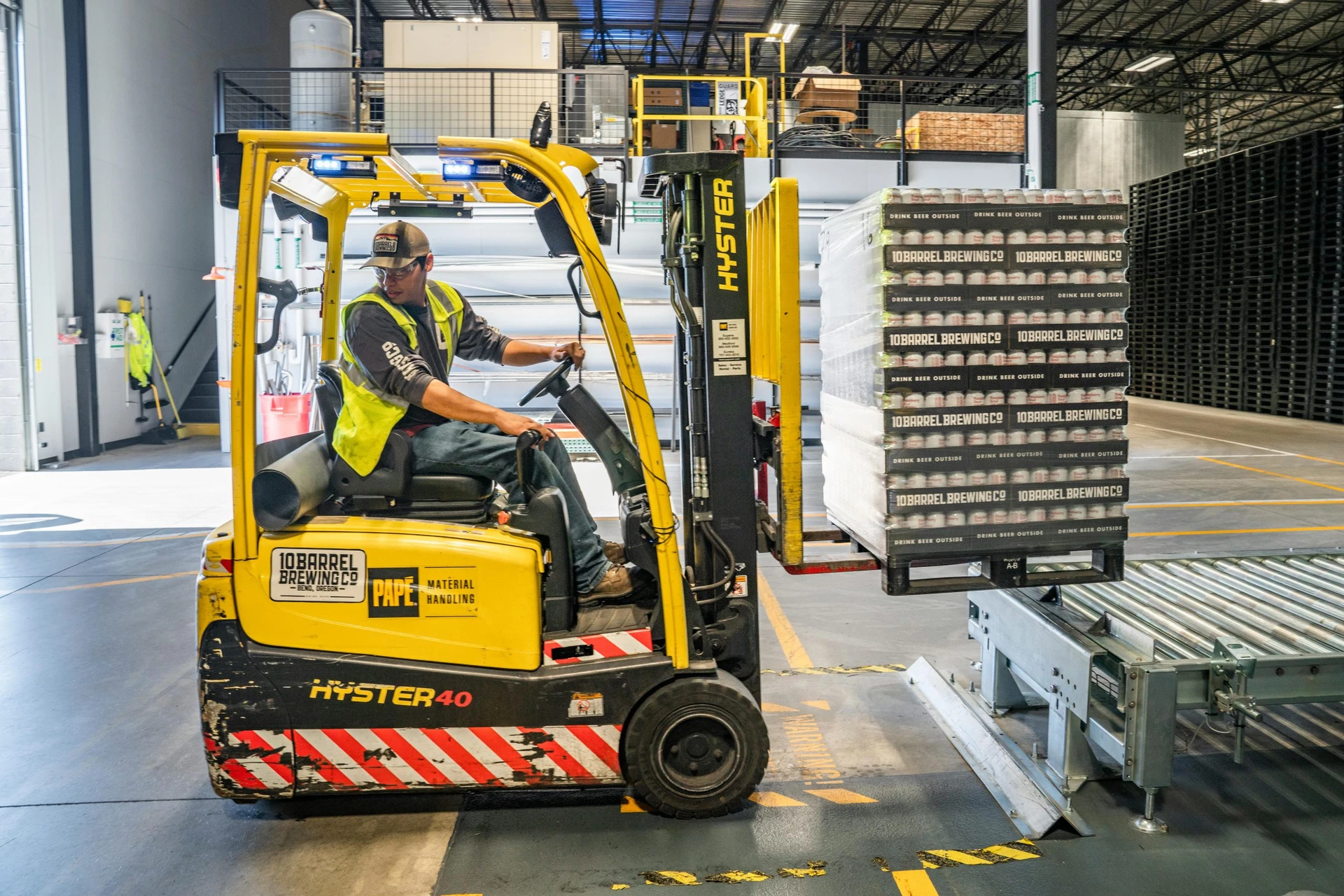
Step 4 – Moving in and troubleshooting
After Robert and his team moved in, it was time for some troubleshooting to make sure that the building was ready to go and able to function smoothly for the business. In this situation, this step involved troubleshooting some air circulation issues in the warehouse, which involved getting in touch with the right contractor to help with larger ventilation fans. Because of an effective lease negotiation, we were able to get the landlord to help financially with improving this situation for Robert, the new tenant, and his team.
Frequently Asked Questions
What is industrial space?
Industrial space is real estate property that’s primarily used for manufacturing and distribution. Industrial properties can be zoned as either light industrial or heavy industrial.
Industrial real estate is somewhat of an umbrella term that can also include warehouse space (which is used mainly for warehousing and storage rather than manufacturing), IOS (industrial outdoor storage) space, and sometimes flex space.
How much does it cost to rent industrial space in Charlotte, NC?
The average cost of renting industrial space near Charlotte is $14/sf/yr, though it can range from around $5/sf/yr to over $20/sf/yr.
The cost of renting or leasing industrial space depends on the location, size, features and amenities (such as loading features, power/electrical, parking, and more), amount of office space, building class, and customer accessibility.
How much does it cost to buy industrial space in Charlotte, NC?
The average cost of purchasing industrial space in the Charlotte MSA is $187/sf, with prices ranging from under $100/sf all the way up to $300+/sf. Buying - rather than leasing - industrial space allows you to more easily make improvements to the building, and provides the opportunity to build equity.
In general, the more office space an industrial building has inside, the higher the price will be.
What types of industrial real estate space are available near Charlotte, NC?
Charlotte’s busy grid of highways and interstates has given way to a wide variety of industrial properties. Whether you’re searching for a pure warehouse, plenty of office space, a newer building, or close proximity to consumers, the Charlotte MSA is full of opportunities for businesses to make use of this convenient area.
Our team at Regent Commercial Real Estate is here to rise to the challenge of finding your perfect property in the greater Charlotte area. Our comprehensive database search tools combined with our knowledge of the local market and careful understanding of our clients’ needs allows us to rise to the top in the commercial real estate industry.
Why choose Charlotte for industrial space?
Charlotte has the benefit of being right in the middle of a vast network of highways and interstates, making it an ideal place for industrial businesses. It’s also just minutes away from the busy Charlotte Douglas International Airport.
Since quick access to the highway is key for many industrial businesses, this area is a prime location for businesses looking for convenient roadways. The Norfolk Southern Intermodal Yard is also located near the airport.
What are the main industries in Charlotte?
Charlotte is a popular banking hub and is home to the headquarters of some of the largest banks, such as Wells Fargo and Bank of America. Other top industries in Charlotte include manufacturing, energy, automotive, health, technology, and retail.
Are You Ready to Find Your Next Industrial Property?
Whether you’re searching for a heavy manufacturing facility, flex space, distribution, or warehousing, the greater Charlotte area is full of opportunities.
Having an experienced tenant representative on your team is the best way to ensure that you not only find the right property for your needs, but also save time and benefit from expert negotiation in the process. And the best part is that it doesn’t cost any more to have a tenant rep broker on your side than to do all the legwork yourself. In fact, in many cases, it ends up costing you LESS over time, since you have an expert working with you to negotiate price and terms and help you find a property that won’t cause frustration for your business later.
At Regent Commercial Real Estate, we’ve closed nearly 1,000 deals and transactions. We take pride in our commitment to customers – which means timely communication, expert market knowledge, client education, a thorough understanding of your goals and needs, and more. In addition, Brian Smith’s SIOR and CCIM certifications set him apart as a top-tier professional in the world of commercial real estate.
If you’re ready to start your search for your next commercial real estate property, contact us today. We’d love to partner with you for your real estate success.