How to Calculate Parking Ratio for Your Business in Charlotte, NC (and Why It Matters More Than You Think)
A Charlotte-based engineering firm signed a lease on what seemed like the perfect office space—great location, competitive rent, and room to grow. But within months, employees were circling the lot every morning, clients struggled to find spaces during peak hours, and nearby businesses began complaining about overflow parking.
The issue wasn’t the building—it was the parking ratio.
Calculating parking needs is one of the most overlooked factors in commercial real estate decisions, yet it can quietly impact everything from employee satisfaction to operational efficiency. Whether you’re leasing office space in South End Charlotte or evaluating an industrial property near I-77, understanding how to calculate parking ratio for your business is essential to making the right move.

What Is Parking Ratio?
Parking ratio describes the number of spaces available per 1,000 square feet of gross floor area in a building. For example, a 30,000 square foot office building with 90 parking spaces would have a parking ratio of 3 spaces per 1,000 square feet.
Parking ratio is a standard metric used across commercial real estate listings, but the “right” parking ratio can vary widely depending on how the property will be used. A business with lots of employees and frequent visitors will usually need more parking than one with fewer on-site staff or a more flexible schedule.
Factors that can influence parking ratio include:
- Type of commercial space. Office, industrial, flex, warehouse, and retail users all have different parking needs based on how many people are in the building at once and how often customers, vendors, or delivery drivers are coming and going.
- Daily operations. Businesses or distribution centers with shift changes, regular client visits, fleet vehicles, or busy peak hours often need more parking than businesses with steady, low-traffic operations.
- Public transportation access. Many major business districts (like Charlotte’s Uptown, NoDa, and South End) depend on the light rail, bus system, or other modes of public transportation, which means lower parking demand.
- Workforce habits. Hybrid schedules, staggered shifts, and remote work can reduce parking demand in comparison with fully in-office teams.
- Customer and visitor volume. Businesses who welcome numerous visitors during the day will need a higher parking ratio for convenient access on site.
How Do You Calculate Parking Ratio for Commercial Buildings?
Parking ratio is fairly straightforward to calculate and can be found by dividing the total number of spaces by the total square footage of the building. Here’s how to calculate parking ratio for commercial real estate using a simple formula:
Parking Ratio = Total Spaces / Building SF x 1,000
For example, you could find the parking ratio of a 150,000 square foot Walmart Supercenter like this:
600 total spaces / 150,000 square feet x 1,000 = 4.0 parking spaces per 1,000 square feet
This metric for finding parking ratios is standard across commercial real estate listings and is used by landlords, brokers, and municipalities across the Charlotte region and the U.S.
Keep in mind, however, that while the metric for finding parking ratio is standard, different types of commercial real estate require different parking ratios.
A Walmart Supercenter with a lower parking ratio can cause shoppers to leave in frustration after being unable to find a spot. On the other hand, a warehouse that houses lots of sitting product and only requires a couple of employees may only require a parking ratio of 0.5 or 1 spaces per 1,000 square feet.
Why Parking Ratio Matters More Than Most Businesses Expect
Why else does parking ratio matter when choosing commercial real estate? For property owners and business managers, the number of parking spots a building has matters greatly and can have a profound impact on customer service and client experience, as well as operational efficiency, expenses, and more.
Here are a few reasons why it’s vital to check parking ratio before proceeding with a commercial lease or sale agreement.
1. Employee Experience
For employees—the most regular visitors in a business’s driveway—parking ratio impacts timeliness as well as employee satisfaction and morale. No employee wants to show up to work only to clock in late because they spent the last 20 minutes circling the lot for a parking spot. And neither do they want to deal with grumpy customers having the same issue.
Frustration over too few parking spots can have a significant impact on employee morale, and low morale leads to increased turnover, which then raises recruiting and training costs.
2. Customer/Client Experience
First impressions don’t start at the front door—they start in the parking lot. If customers and clients can’t easily reach your front door due to traffic congestion or a lack of places to park, you’ll quickly begin to notice them choosing your competitors instead.
Even in office or industrial settings, difficulty parking can reduce repeat visits, if it doesn’t deter clients from visiting altogether.

3. Operational Efficiency
Having sufficient available space on the outside affects daily operations on the inside of a building. When cars are unable to find open spaces, it can result in all sorts of operational setbacks, such as delays in shift changes, deliveries, or meetings.
4. Growth Limitations
When assessing parking ratio, it’s also important to consider not just current needs, but future needs. Minimum parking ratios may make it difficult to add extra hires or new revenue streams to the business in coming years. A space that works today may not work as headcount or the need for outdoor facilities (i.e. outdoor seating, additional structures, etc.) expands.
5. Compliance and Zoning
Be sure to check into local regulations and zoning to find out if minimum or maximum parking ratios are required.
In Charlotte, there is a three-tier system for parking space requirements, with certain areas requiring standard minimums and maximums and other areas requiring no specific minimums.
Working with a local, experienced broker can help you avoid running into future problems with local parking ratio requirements.
6. Operational Costs
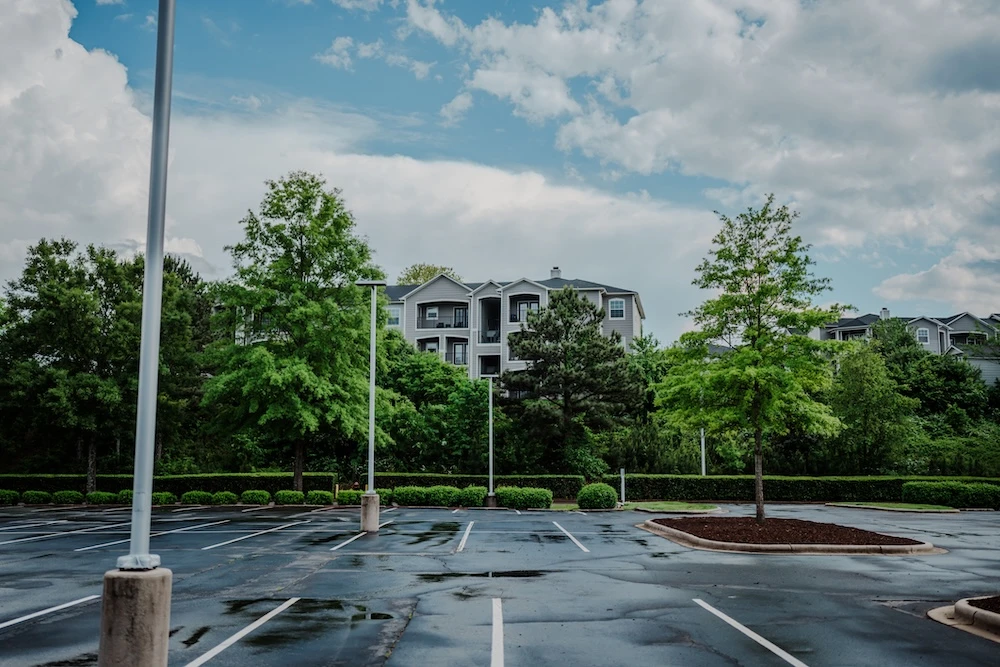
While a parking ratio that’s too low can harm the business in a variety of ways, having too large of a lot can cause its own problems. Too much parking increases costs (both development and maintenance), reduces flexibility (by taking up space that could have supported more building area or outdoor amenities), weakens the customers experience (by making a space less inviting and walkable), and signals poor planning.
How to Calculate Your Parking Needs (Before You Lease or Buy Commercial Property)
How do you know how much parking space you need? Here are a few guidelines to help you determine the best ratio.
- Step 1: Estimate employee count at full capacity (not just current headcount). Take future growth and the potential of a changing business model into account, too.
- Step 2: Factor in peak usage, including overlapping shifts, busiest days, and seasonal spikes.
- Step 3: Add visitors and vendors, such as clients, deliveries, and service providers.
- Step 4: Consider company-specific factors, including hybrid work and fleet parking.
- Step 5: Check into ADA compliance for your area, including proper signage, parking space dimensions, and the number of accessible parking spaces required.
- Step 6: Build in a buffer. Add 10-20% more to the total number of parking spaces, if possible.
In tighter areas of metro Charlotte and other big cities, excess parking can be hard to find later. Estimating correctly the first time is crucial to business success.
Parking Needs by Property Type
Understanding parking needs by property type can give you a good idea of the right ratio for your next commercial building. For example, industrial properties that mainly welcome delivery vehicles, a fairly low parking ratio may be sufficient.
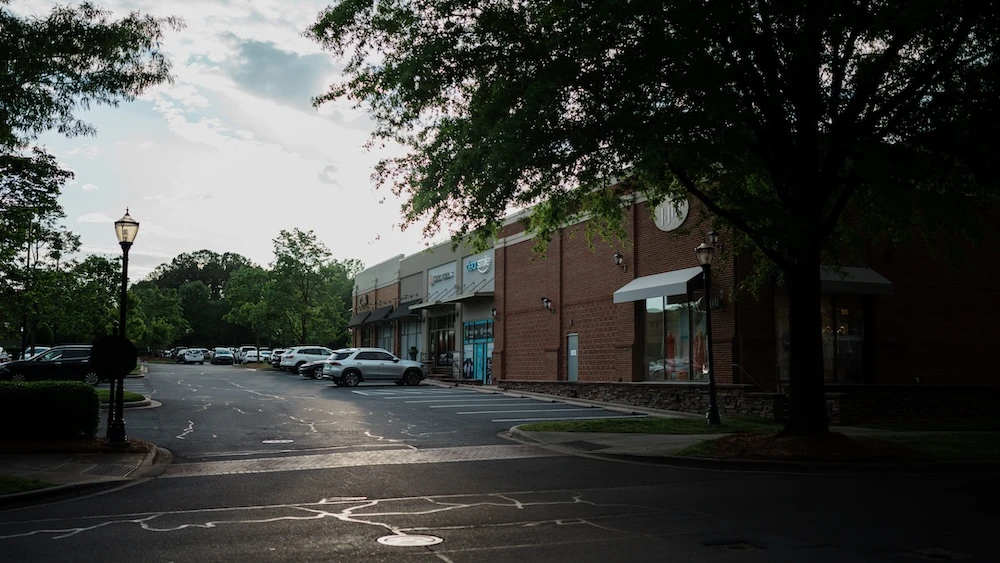
On the other hand, a shopping center or other types of retail stores require a higher parking ratio to provide a positive customer experience.
Here’s a quick guide to finding out how many commercial parking spaces you’ll need based on property type.

Evaluating Parking Lot Quality
In addition to evaluating whether a lot has enough parking space, it’s important to conduct proper due diligence to assess the quality of a parking area.
Check into key features of the lot by evaluating:
- Surface condition. Cracks, potholes, and drainage issues can become hidden costs.
- Layout and efficiency. Including poor striping or narrower aisles.
- Accessibility. The Americans with Disabilities Act (ADA) mandates certain access requirements.
- Traffic flow. Effective property entry and exit design, congestion points, and circulation around a commercial building provides a positive parking experience and gives a competitive edge.
Finding the Right Property in Charlotte
When you’re searching for the right commercial property, parking ratio is just one piece of a larger real estate decision. Working with a local expert to evaluate parking ratios, zoning, access, building condition, and tenant suitability can help you make a smarter decision and choose a property that aligns with your long-term goals.
In the greater Charlotte region, Brian Smith, CCIM and SIOR-designated commercial broker, stands out by providing expert real estate services with an emphasis on meeting the individual needs of each client. With over 1000 lease and sales transactions completed and nearly 600 5-star reviews, Brian works tirelessly to guide clients to the right property, whether retail, office, or industrial.
Ready to start your search? Brian and the Regent CRE team are here to help. Contact us today or request your free custom market report to get started.
Share This Story, Choose Your Platform!
About the Author: Brian Smith, SIOR | CCIM | MBA

Related Posts




What our clients are saying


Unlock Exclusive Commercial
Property Listings