Understanding Commercial Real Estate: Types and Categories
The commercial real estate industry encompasses a handful of different types of commercial real estate, ranging from office to retail and so much more. If you’re curious about what is considered commercial property, keep reading to find out the most common categories within the commercial realm.
From Multifamily to Retail: A Closer Look at Commercial Properties
You may be familiar with the basic types of commercial real estate, like office, retail, and industrial. But in reality, these are just a portion of what falls under commercial real estate spaces. Let’s take a look at the most common categories of commercial real estate.
Office

Office buildings can range from single story to high-rise buildings and can have one tenant or multiple tenants. These include business tenants, medical office tenants, or dental professionals.
Executive suites and coworking spaces also fall into this category. Office buildings are further broken down into commercial property grades. These include Class A, Class B, or Class C properties.
- Class A buildings are the newest and highest quality. They offer the best amenities, are in the most desirable locations, and have the highest rents. Within Class A, office space can even be separated into A+, A, and A-.
- Class B buildings are a little older. These may be due for some renovations, may be in a nice location, and typically have little to no amenities.
- Class C office properties are the oldest, the least maintained, are in the least desirable locations, and will have the cheapest rents in the market.
Industrial

Industrial properties have several categories that are broken down based on their specific use.
- Flex: Flex industrial buildings include a mix of office and warehouse space. They typically have a dock high or drive-in door.
- Heavy Manufacturing: This term refers to a special use property that is customized with heavy-duty machinery for a specific end user.
- Light Assembly: These types of industrial facilities are customized with machinery (that is smaller than a heavy manufacturer) for a specific end user.
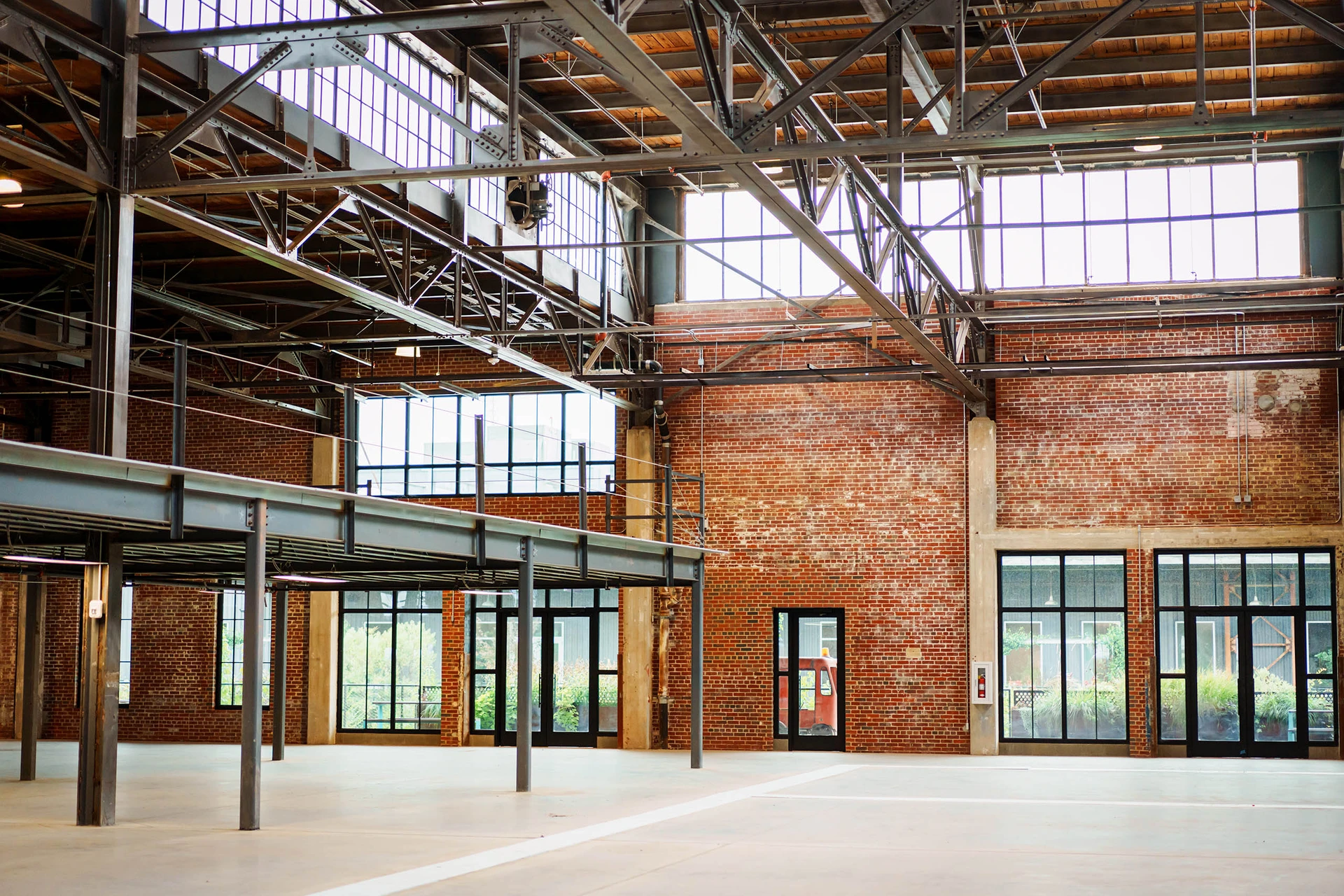
- Warehouse: Warehouses are very large industrial spaces often used for storage or as distribution centers. The layout tends to be open space with high ceilings. They’re typically located near freeways/highways.
- IOS: Industrial outdoor storage (IOS) properties have a small building with a large outdoor area. These are typically used for companies that can store equipment, supplies, or vehicles outdoors.
Retail
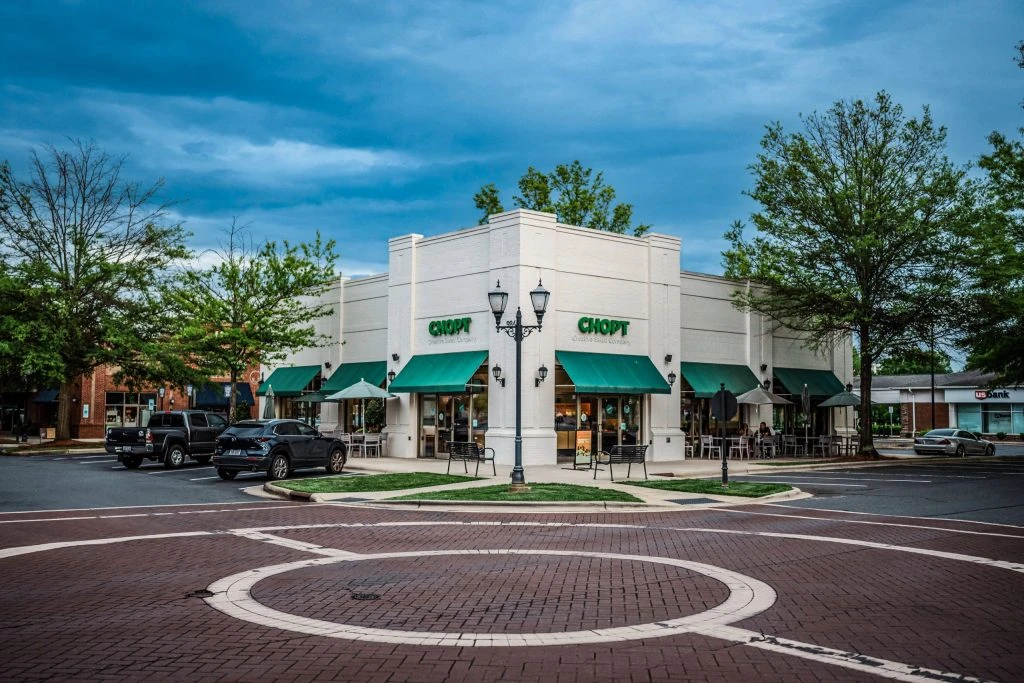
Retail properties come in many forms and are broken down into subcategories of retail space. Although they can be broken down further, these are the most common types of retail properties:
- Mall: An enclosed shopping center with tenants that include department stores, clothing retailers, a food court, full-service restaurants, and maybe a movie theater. Malls can be broken down into regional malls—which are typically large, enclosed shopping areas with multiple stores—or strip malls—which are a row of stores that share a parking lot and each have their own outdoor entrances.
- Neighborhood or Community Center: These can also be called a plaza or strip mall and can vary in size. These retail centers are most often clustered around anchor tenants, such as a pharmacy or grocery store. Small retail stores and restaurants fill out the rest of the space.
- Power Center: These outdoor shopping centers are home to multiple big box stores or grocery stores like Walmart, Target, Best Buy, or Home Depot. They usually include smaller retailers and restaurants surrounded by a shared parking lot.
Multifamily
Multi-family residential buildings include apartment buildings, condos, and townhomes.
Generally, any residential properties that are larger than a fourplex are considered a commercial property. This is because large apartment complexes or other residential real estate properties with more than five units are used for generating a profit, as opposed to small residential property buildings which are mainly used only for housing.
Mixed Use
Mixed-use properties can be a combination of any of the types of properties mentioned above. The most common form is retail/restaurant on the first floor with office and/or residential in the space above. But really, it could be a combo of just about anything.
Other examples within this commercial property type might include:
- Live-work spaces. An example of a live-work space could be a small business, such as an art studio, that has living quarters attached.
- Multi-use commercial buildings. This could be a large commercial building that combines restaurants, retail spaces, and apartments.
- Converted spaces. An example might be a converted warehouse that holds a restaurant on the ground floor and apartment lofts on the upper floor.
- Parking structures. This could be a parking structure with retail on the ground floor and a multi-floor garage above it.
Special Use
There are some properties that just don’t fit into any of the above property types. This catch-all category—also referred to as special purpose properties—includes self-storage, hotels, amusement parks, golf courses, hospitals, and anything else not defined in any of the above categories.
These commercial property types generally have one main intended use and are difficult to convert into different commercial real estate classifications for other uses.
Land
This is undeveloped and raw land to be used for future development. It could include agricultural land or simply vacant land.
City zoning codes will determine the type of commercial property that can be built on undeveloped land.
Charlotte’s Thriving Commercial Real Estate Market
The metro Charlotte area brimming with opportunities for commercial spaces within all commercial real estate types. From the prime office, retail, and restaurant opportunities in the central business district to spacious flex commercial spaces next to the highway, and even to IOS developments with large parking lots, Charlotte has something for everyone.
At Regent CRE, we understand the benefits and risks of each Charlotte neighborhood and use top-notch market research tools to assess the best areas for each of the commercial building types as well as specific business needs.
FAQs About the Types of Commercial Real Estate
What is commercial property?
Commercial property is real estate that's specific purpose is to generate income. The main commercial real estate sectors include office, industrial, warehouse, flex, retail, and IOS (industrial outdoor storage).
What is it called when a property is both commercial and residential?
When a real estate property has both commercial sections and residential sections within one building, this is referred to as a mixed-use property.
Common examples of mixed use commercial real estate would include a two-story building with retail on the bottom floor and apartments on the top floor, or a mixture of commercial and residential spaces within the same floors, such as a town center with retail, apartments, and restaurants interspersed.
These can also be classified into vertical mixed use (with one floor being commercial and one being residential), or horizontal mixed use (different developments mixed within the building).
Are multi-family properties considered commercial?
Multifamily properties are typically only considered commercial if they have five or more units within one building.
Single-family homes, duplexes, triplexes, and quadplexes are considered residential, since their main purpose is to provide housing. Units of five or more are typically part of an investment strategy and used for their income-generating potential, thus placing themselves in the category of commercial real estate properties.
What is considered a commercial building?
A commercial building is a real estate building that's used to generate a profit. Different types of commercial buildings have different uses, such as office, retail, and industrial.
When a building is classified as commercial, it's attached to different zoning laws and usage requirements than a residential property.
What are the four food groups of commercial real estate?
The four main types of commercial properties are sometimes referred to as the "four food groups". These are: office, industrial, retail and multifamily.
What's the best type of commercial real estate for investing?
Choosing the best types of commercial property to invest in depends on major factors such as location, risk tolerance, market conditions, and investor goals. In general, it's a good idea to invest in properties that have strong growth potential and attract multiple long-term tenants. Across the U.S., some of the best commercial real estate property types for investing include industrial, retail, and multifamily properties.
In the Charlotte, NC metro area, IOS (industrial outdoor storage) and flex space properties have some of the strongest growth potential around.
What is Class A commercial real estate?
Class A commercial real estate refers to the highest-quality properties. These typically offer modern infrastructure, the latest features, state-of-the-art amenities, and easily accessible locations. Class A commercial buildings are priced the highest compared to other local properties.
Stepping down from Class A, you'll find Class B properties. These options may be in convenient locations but without all the best amenities or modern infrastructure.
On the bottom tier, Class C properties typically need renovation work and/or may be in the least desirable locations.
Find Your Next Charlotte Property With Regent CRE
We hope this helps shed some light on the vast range of commercial property definitions. Every tenant is unique and has specific needs—a local tenant rep broker can help you determine the best space that will meet your needs.
Brian Smith, SIOR, CCIM, and lead broker at Regent Commercial Real Estate, has over 10 years of experience in the Charlotte metro area.
Ready to start your property search? Contact us today.
Share This Story, Choose Your Platform!
About the Author: Brian Smith, SIOR | CCIM | MBA

Related Posts



What our clients are saying

Unlock Exclusive Commercial
Property Listings