Find Prime Retail Space Around Charlotte, NC With Regent Commercial Real Estate
Finding the right retail space has a profound impact on your business and your bottom line for years to come. Let Regent CRE help you navigate the neighborhoods of Charlotte to select the ideal space for your business.
When you work with Regent, you’ll get:
- A Tailored List of Potential Properties: Our custom market report hones in on your top priorities for your location.
- Insights Into the Charlotte Neighborhoods: Benefit from our in-depth understanding of the market to select a site that aligns with your business needs.
- Expert Negotiation: Leverage our expert negotiation skills to get the best possible deal on your retail space.
- More Time: Let us take the time-consuming tasks off your plate so that you can focus on your business.
- Optimized Budget: Our professional negotiation skills allow you to maximize your business dollars.
In an ever changing market, you can secure the best deal on your next retail space by tapping into Regent CRE’s commercial real estate expertise. Download your free market report today, or give us a call to get started on your search.
Find Retail Space
Find the Perfect Retail Space in Charlotte, NC


Welcome to 4310 Sharon Road Suite 10: High-End Retail Showroom for Sublease in SouthPark
Price on call


Finding Retail Space in Metro Charlotte
The thriving city of Charlotte is alive with opportunities when it comes to retail space. Charlotte’s busy and varied submarkets offer diverse and opportune retail investment options for retailers of all types. Whether you’re searching for a new location for your restaurant, bar, gym, coffee shop, grocery store, shopping center, mall, or boutique, the ever-growing and evolving communities around this metro city are bursting with business advantages. From brand new startups to well-known chains, the benefits that Charlotte offers are plentiful.
Charlotte’s numerous highways and interstates, the light rail, and the walkable city streets all make it easy for Charlotte residents and visitors to get around throughout these cities. In addition, the busy Charlotte Douglas International Airport provides convenient opportunities for locals, business people, and industry to transport into and out of the area.
With access to thousands of metro opportunities, professional sports, countless dining and entertainment experiences, a beautiful climate with parks, trails, stunning views, and a mid-level cost of living, it’s no wonder that Charlotte continues to grow. Charlotte’s strong economy also plays a role in attracting new families and business professionals to the area.
The average household income in Charlotte varies throughout the neighborhoods surrounding this busy metro city. From the wealthy neighborhoods around Lake Norman to the more modest incomes of Monroe, Salisbury, Gastonia, and Hickory, the cities around the greater Charlotte area offer a range of opportunities for different types of retail experiences.
From boat sales to dollar stores, our team at Regent Commercial Real Estate is honored to focus in on your specific needs, helping you find your prime location in the right neighborhood of Charlotte so that your business can grow and thrive.

Benefit from Prime Site Selection With Regent CRE
With over 10 years of commercial real estate experience in the Charlotte metro market, we understand the ins and outs of sifting through retail space listings in order to hone in on the perfect site for your business. For local businesses, it’s vital to understand the landscape around you— including average household income, rental rates, your neighbors, trade area, major attractions, and more. Whether you’re searching for a 1,000-square-foot space for a cozy boutique or 100,000 square feet with high ceilings, the site selection process is crucial.
At Regent Commercial Real Estate, our top priority is to help bolster your business to greater success through your real estate experience. Choosing the ideal location can make or break any company—small or large. When you work with Regent CRE, we’ll take the time to really understand your business so that we can help guide you to a space that will maximize your success.
From Charlotte natives to those who have never before experienced the beautiful Carolinas, we’ll take the time to get to know your business, needs, and goals in order to find a commercial space that will propel you forward.
Whether you’re a new business owner or an established company, leverage our deep knowledge of the entire market of Charlotte and neighborhood submarket conditions to help you achieve your goals.
What our clients are saying

Types of Retail Real Estate
What types of retail space listings are popular in the Charlotte metropolis? From grocery-anchored retail centers to indoor and outdoor malls, let us help you find the property that fits your needs.
Here are the main types of real estate that you’ll find around this metro city.
Grocery-Anchored Retail Centers
Grocery-anchored retail centers are simply collections of retail store properties that are anchored around a grocery store. The big grocery store (or “anchor tenant”) is often the main draw, and then smaller tenants surround it, offering other products and services. Salon space (hair and nail salons) and dry cleaners are examples of types of businesses you’ll find in these centers.
Examples of anchor tenants include sizable retailers such as Walmart, Target, Aldi, Trader Joe’s, or JCPenney.
These retail centers tend to be popular investments for a few reasons.
Firstly, they’re anchored around an essential business: grocery. Everyone needs grocery stores, making these centers a resilient area that always attracts customers regardless of the economy. And because shoppers return to grocery stores again and again, these retail areas also tend to have high foot traffic. They’re also generally located in popular residential areas.


Lastly, a grocery-anchored shopping center can be more e-commerce-resistant than other retail areas, since many people still choose to shop for fresh groceries regardless of being able to order certain dry foods online.
Grocery-anchored shopping centers tend to draw in plenty of foot traffic, and the consistent traffic also helps to increase occupancy levels for the surrounding stores. Successful grocery-anchored retail centers generate loyal customers, and the cycle of high traffic and better occupancy rates continues.
Understanding grocery-anchored retail:
- Offers a built-in “neighborhood” of complementary tenants
- Resilient against the continual increase of e-commerce
- A popular choice for investors
- Typically have longer leases
Retail Strip Center
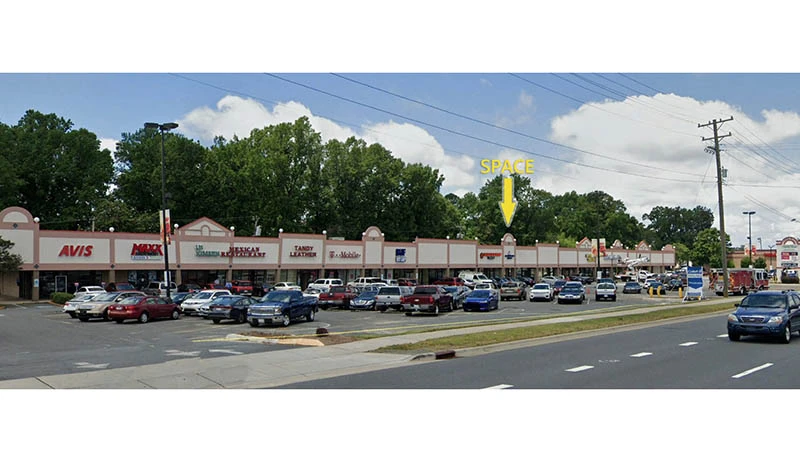
A retail strip center is a strip of buildings that’s divided up into smaller segments. For example, while the entire strip could be 10,000 square feet, it might have ten, 1,000-square-foot tenants. Retail strip centers typically have a sidewalk spanning the front of the buildings as well as a large parking lot out front.
These shopping areas can be “anchored” (as in grocery-anchored retail) or “unanchored”. Unanchored retail strip centers don’t have one major tenant, but have a mix of smaller retailers such as hardware stores, coffee shops, fitness centers, salons, dollar stores, and more.
Retail strip centers tend to be more popular in suburban areas where most people are driving, rather than in the heart of the city, where there are more pedestrians.
Understanding retail strip centers:
- Typically single-story buildings
- Usually have a linear layout with a shared sidewalk
- Offer plenty of parking
- Can have a mix of tenants (i.e. restaurants, convenience stores, service providers, specialty shops, etc.)
- Smaller individual stores (typically around 500-2000 square feet each)
- Can offer shorter (3-5 year) or long-term (10 year) leases


Standalone Retail Centers
Standalone retail centers tend to be leased by tenants who prefer to be close to the road and benefit from excellent visibility. These might include restaurants like McDonald’s or Wendy’s, or drug stores like Walgreens or CVS.
Often, these types of buildings are occupied by smaller retailers that are well known. Because of their standalone nature, they offer more control to the business and allow for a strong brand presence and designated parking.
The building size can vary depending on the type of business. Generally, these types of properties have a higher price point due to the premium road frontage and great visibility that they offer.
Understanding standalone retail centers:
- Higher price point compared to strip retail centers
- Offer the lessee more control over building design and brand presence
- Dedicated parking
- Prime visibility and signage opportunities on all sides
- Varied sizes
- Typical lease term of 3-5 years, but sometimes longer
Indoor Malls
Indoor malls became very popular around the ’50s and continued in popularity all the way through the ’90s. Now, indoor malls are losing their draw a bit. New malls are rarely built, and sadly, some of the existing malls are failing and even being torn down.
While indoor malls still exist around Charlotte, traffic is decreasing in these locations. The Northlake Mall and the Pineville Mall are a few examples of this.
However, indoor malls aren’t all becoming extinct. On the contrary, the SouthPark Mall, located in the SouthPark neighborhood of Charlotte, continues to attract upwards of 12 million visitors a year. With over 150 stores, retailers continue to experience success due to the high volume of foot traffic that this prestigious mall attracts. Part of the reason for this mall’s success is due to the high household income demographics immediately surrounding it.


While indoor malls offer retailers some distinct values, such as increased foot traffic, convenience, fewer maintenance responsibilities (typically accomplished by mall staff), and an existing customer base, downsides can include higher rental costs, less control over signage and hours, and more shoppers preferring strip retailers or outdoor mall locations.
Understanding indoor malls:
- Established traffic and built-in advertising
- On-site maintenance and security
- No designated parking spaces
- Higher rental costs, but lower utility costs
- Higher competition
- Low to no autonomy for choosing daily or holiday hours
- Commonly offer 5-10-year lease agreements
Outdoor Malls
While many indoor malls are losing their draw, shoppers seem to be even more drawn to the outdoor mall shopping center experience. One example of this success is the Charlotte Premium Outlets, a newer upscale outlet center featuring over 100 stores. The Charlotte Premium Outlets is located just south of the airport and north of Steele Creek.
Outdoor malls are set up with a strip-center-type feel, with the doors facing a connected sidewalk. Shoppers enjoy the open-air concept of these central walkways and the ability to visit the stores of their choosing without having to drive if they so choose.
What are some other reasons why shoppers seem more drawn to outdoor malls rather than indoor malls in recent years?
For one, as culture changes as people’s lives speed up, more shoppers are looking to get in and out, buying what they want without spending hours loitering through an indoor mall. Outdoor malls are more accessible and visible, so shoppers can easily see what’s available and can (often) park close to the store they want to visit.
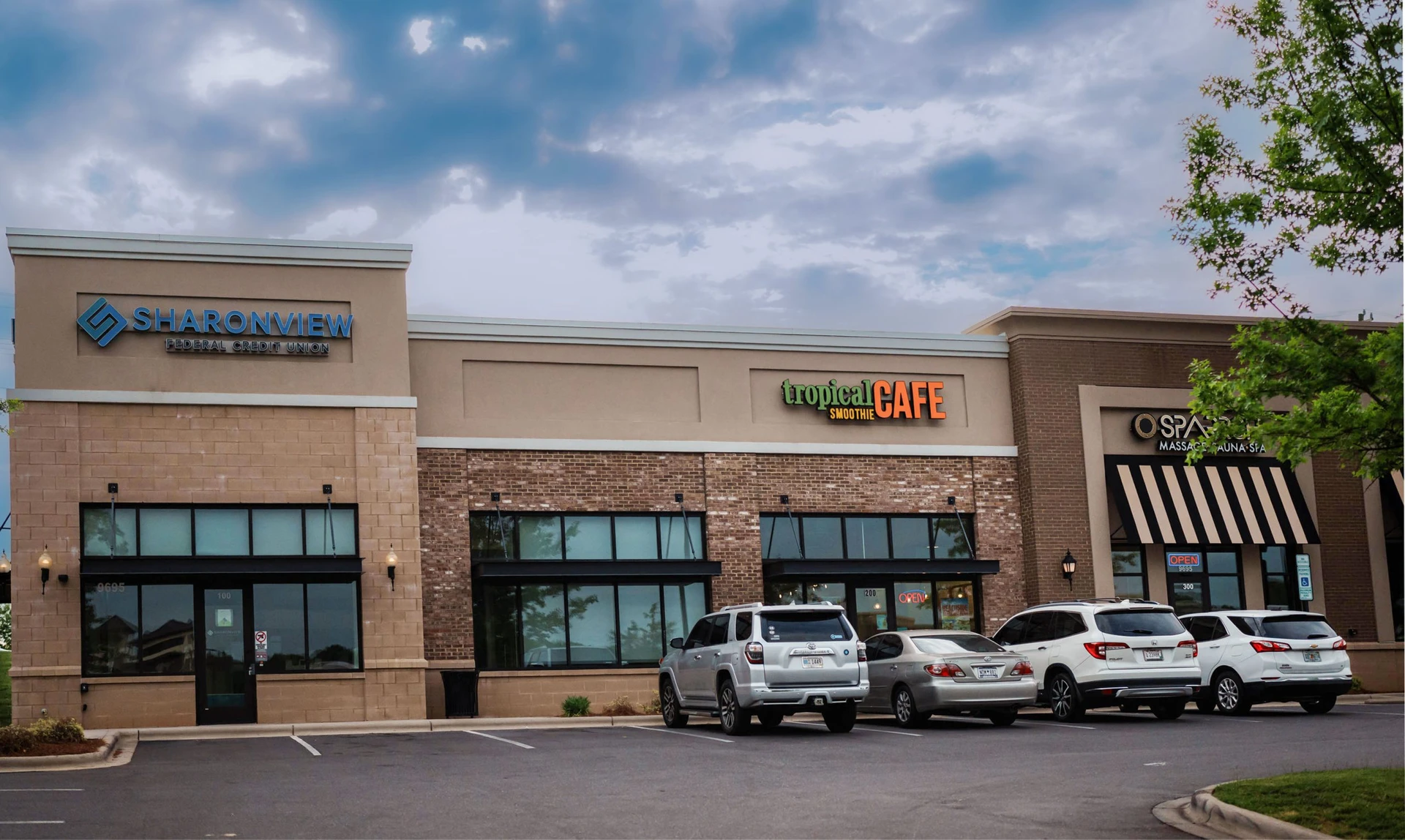
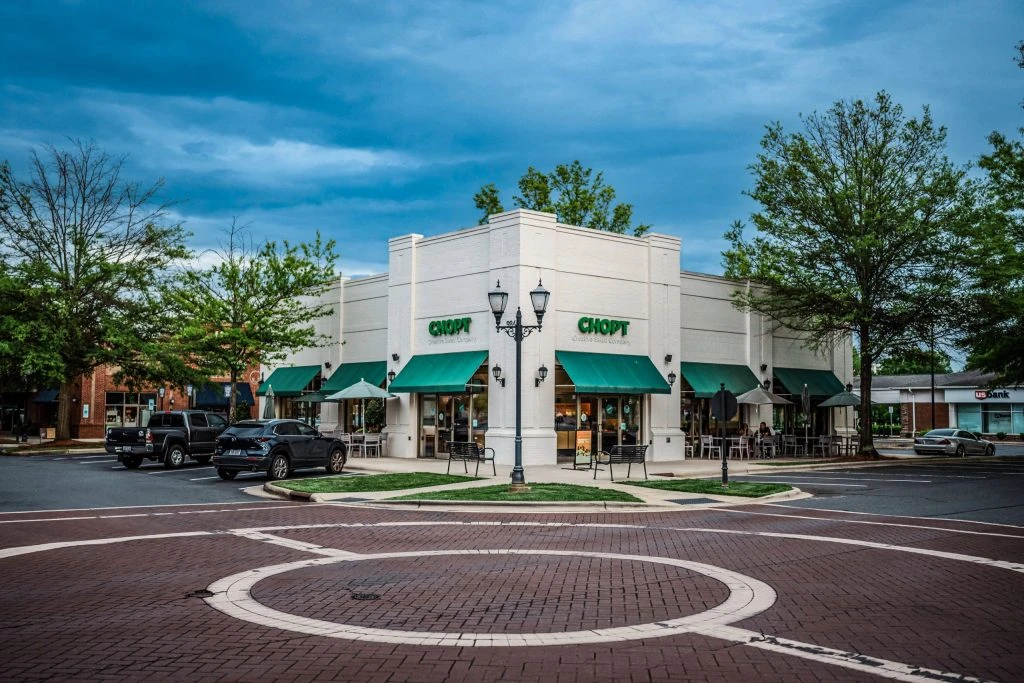
In many cases, outdoor malls also offer better deals (which may be influenced by the lower operating costs), and many shoppers enjoy the fresh air environment. Some malls even have outdoor activities.
For retailers, outdoor malls offer the benefits of better visibility, a lower marketing cost, and reduced operating costs compared with indoor malls. On the downside, these stores can sometimes have more competition, tenants may have more maintenance and security responsibilities, and business can be more easily influenced by inclement weather. The shared parking can also be a challenge, especially during holidays and busy seasons.
Understanding outdoor malls:
- Lower operating costs and rental rates
- High competition
- More autonomy than indoor malls
- Typically have 3-10-year lease agreements
Retail Space Considerations
Aside from the type of retail, there are many other considerations to take into account when selecting your next property. Finding the right location for your new retail lease space is just the start. Here are some more important considerations to think about when honing in on your next retail space.

Location
In general, popular locations for retail tend to be near residential units because, of course, you need people to shop. The other big factor that typically plays into choosing a great location is household income. The higher the amount of discretionary income the households have, the more they can spend on retail. In the same vein, convenience stores and dollar stores tend to do well in lower-income areas.
In the Charlotte area, the higher areas of wealth are concentrated in a few strategic locations. The lakes – including Lake Norman, Mountain Island Lake, and Lake Wylie – attract higher household incomes. In addition to waterfront living areas, the triangle near South End/Uptown and south of this area also has higher amounts of wealth. This includes the neighborhoods of Ballantyne, Blakeney, Weddington, and Waxhaw, and then back into South Park, Dilworth, and Myers Park. The water around the Tega Cay area of South Carolina is another great location with direct access to the water and more disposable income.
Because of the major concentration of wealth in these market locations, these areas tend to be where you’ll find the best retail and restaurants around Charlotte.
Trade Area
Choosing the right search area is important, but matching up your location with your clients or customers is even more important. Assessing your trade area includes considering who your customers are and how far they’ll travel to get to your location. Proximity to roads is a key factor in this equation.
While convenience stores might only have a 1-mile trade area (where most people are walking to the store or living in close proximity), a larger store like Lowe’s Home Improvement or Home Depot might have a trade area of 20 miles. Not surprisingly, people will drive a farther distance to buy lumber, a washing machine, or remodeling tools.
Since all retail has different trade areas and different target customers, a trade area analysis is essential for honing in on your ideal property. Knowing your target customer is key when it comes to considering the right area for your business.
When you partner with Regent CRE for buying retail property, we’ll do an in-depth trade area analysis and take into consideration where your business will best thrive around the Charlotte metropolis.


Buy or Lease?
In Charlotte, 90%-95% of the retail real estate is owned institutionally, meaning that it’s only for lease and not for sale. While the vast majority is leased space, there are a few standalone-type buildings that go up for sale in this area.
Buying property has its own advantages, such as having complete ownership over property decisions, expansions, and improvements, along with the opportunity to build equity.
For many retail businesses, though, leasing is a more practical option. Leasing a commercial building provides the flexibility to have more cash on hand, offers the opportunity to more easily move to a larger or smaller property if needed, and means that you aren’t responsible for all of the maintenance that goes into owning a commercial building.
Size
Property size is another important factor when choosing your space. A majority of retail spaces are going to be around 1,500-2,500 square feet. Grocery stores tend to run in the 40,000-50,000 square feet range. And big box retail stores, such as a Walmart Supercenter or Lowe’s Home Improvement are often upwards of 100,000 square feet.
When considering the right size for your retail space, you’ll want to contemplate factors such as how much space you’ll need for storage, inventory display, and employee operations. When it comes to customer experience, it’s important to have an adequate amount of square footage for easy movement without having a space that’s too open. Both can lead to a potentially negative customer impression. You should also keep in mind the possibility of future expansion.
Visiting similar retailers in the neighborhood can help to give you an idea of approximately how many square feet you may need.
At Regent CRE, we’ve worked with hundreds of business owners in the Charlotte area. We’re honored to use our experience to help guide you on your search for the perfect property that will drive more customers to your location.

Features
While the features of retail real estate vary somewhat depending on the building’s usage, most have a number of commonalities.
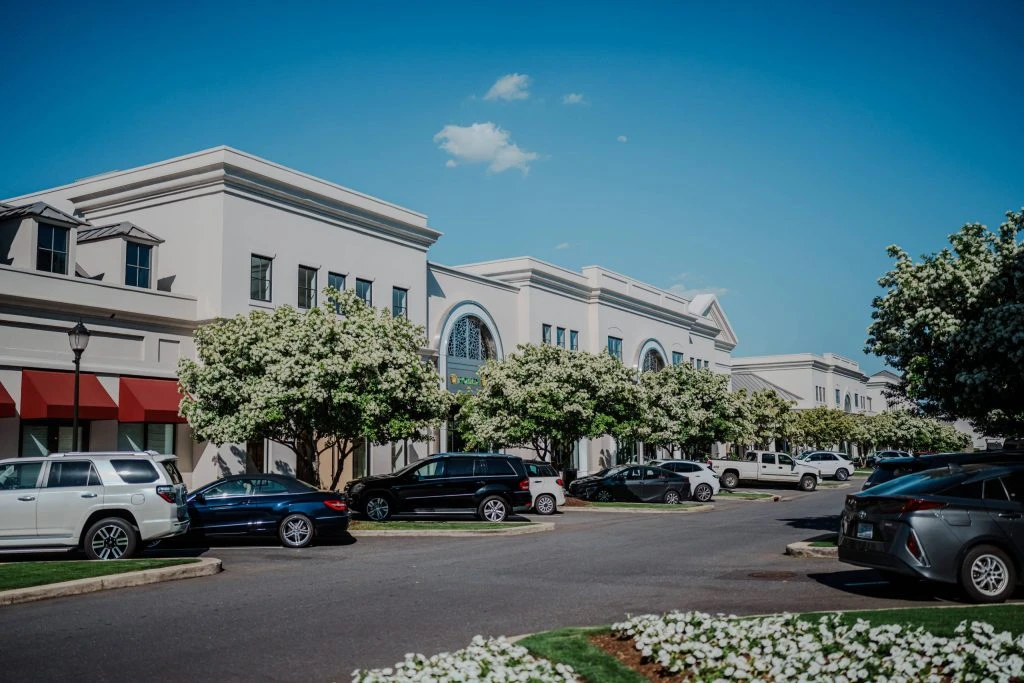
Retail space likes to have a significant amount of parking in order to keep customers happy and make getting inside convenient. Most buildings also tend to be nicely landscaped and well-lit so that customers enjoy visiting. Another key feature of a lot of retail space property is being near busier roads to help attract customers and make shopping convenient. Heat and air conditioning are usually available in nearly all retail buildings as well.
Other features vary by the type of building. For example, restaurants are equipped with kitchens, and big box stores usually have large storage areas in the back of the building.
Building Class
Commercial buildings are often filtered into either Class A, Class B, or Class C.
Class A buildings are generally newer, with the most up-to-date features and in ideal locations. The high-class SouthPark Mall, for example, would fall into the Class A building category.
Class B is the next step down, and includes buildings that are well-functioning and in decent locations. These buildings don’t usually need major repairs or upgrades, but they’re also not in pristine condition or perhaps not in the most prime locations.
Class C buildings might be older, run down, and need some work done. They may also be in the least ideal parts of the city. For example, a retail strip center in a bad part of town could be an example of a Class C retail space.
Of course, the higher the building class, the steeper the price.


Budget
The last major consideration is budget. It’s a good idea to define your budget before you start your retail space hunt.
When it comes to retail space, the best space deals are going to be found in the parts of town that have lower incomes, less foot traffic, and less residential housing. Of course, the higher the household income around your space, the more customers you’ll attract. Balancing your target customer, trade area, and location needs can be a tricky equation.
At Regent CRE, we put our in-depth understanding of the market to work as we help you balance your retail space needs with your budget. Let us help you find a location that boosts your business success and your bottom line.
Finding Your Ideal Customer
One of the most important factors in choosing the right space in your search for retail property is genuinely understanding your ideal customer. Unlike other commercial property types – such as warehouse space or industrial outdoor storage – the success of a retail location depends largely on how accessible it is to your target consumer.
Whether you have your eye out for a small retail space in a local retail strip center or want a freestanding building with a drive-thru, the location benefits of any area only matter if you’ve first done your research on your desired customer base.
So before you start searching in popular areas, take your time to sit down and genuinely get to know your prime customer. At Regent CRE, this is one of our very first steps when helping our clients find their perfect retail property.
How do we do it?
First, we want to know about your business. We’ll take the time to understand your products and services, business goals, pricing, and more. Then, we’ll help you create your avatar. Once we have a thorough understanding of your ideal customer, we’ll leverage our extensive experience and expertise of the Charlotte neighborhoods gained from over a decade of working in the local market.


Tips for Leasing Retail Space – Important Questions to Ask About Your Lease
The location and building you choose for your retail location will heavily impact the success of your business. But the other major factor that will influence your bottom line is the details of your lease. When you’re choosing a retail space – or any type of space for that matter – taking the time to understand and negotiate lease terms is vital.
What kinds of questions should you ask when considering a lease? Here are a few.
What Type of Lease Is It?
The main types of leases include a net lease, gross lease/full-service lease, percentage lease, and modified gross lease. For retail space, net leases and gross leases tend to be the most common options.
How Long Is The Lease Term?
Typically for retail space, lease terms fall into the 3-5 year range. However, they can be longer or shorter. It’s important to not only make sure you’re comfortable with the lease term offered, but also to ask about lease renewal opportunities as well as sublease options.


Is Subleasing Allowed?
While you probably aren’t starting out your search with plans to sublease your retail property, the reality is that sometimes, it’s necessary. Perhaps the direction of the business changes and you have to make an unexpected pivot. It’s good to know whether or not your landlord will let you sublease the property so that you can avoid subleasing pitfalls.
What Are the Tenant Responsibilities?
Who’s in charge of maintenance for the building? What is the protocol for necessary fixes, such as for HVAC systems, plumbing, sanitary systems, or other repairs around the property? Who’s in charge of landscaping and snow removal? How does garbage disposal work?
How Much Are Utilities?
Be sure to ask about utility charges such as for electric, water, trash, and heating and air conditioning.
Is There a Tenant Improvement Allowance (TIA)?
In some cases, the landlord will offer a tenant improvement allowance for the building. This is a sum of money that the landlord pays in order to cover construction fees and other upgrades that not only make the building more usable for the tenant’s needs, but also increase the value of the building for the long term.
If the space you intend to lease needs upgrades, such as improved displays, fitting rooms, specialty lighting, or handicap-accessible areas, a tenant improvement allowance may save you thousands out of your own pocket.
What Insurance is Necessary?
Make sure you have a proper understanding of what type of insurance you’ll need, what it covers, and how much it will cost.
What Amenities Are Included?
In addition to having a thorough understanding of how maintenance works for the building, make sure to ask about what amenities are included. This can be especially important for spaces that are part of larger buildings.
How does restroom use work? Are there security systems? Janitorial services? How many parking spots are available for your employees’ and customers’ use? What about Wi-Fi?


Working with a Tenant Representative
As you can see, the terms of your lease can not only significantly affect your monthly costs, but also your customer experience and your future plans for your location. Because of this, it’s essential to ask the right questions about your lease terms and to make negotiations where necessary.
Working with an experienced tenant representative is the best way to make sure that no questions are missed and to ensure that you wind up with a successful outcome. Having an adept negotiator on your team doesn’t cost you any extra, since commission comes out of the landlord’s pocket.
Find out more about the benefits of having a tenant representative, or contact us to help you with your next Charlotte area lease.
Retail Space in the Charlotte MSA Neighborhoods
Each neighborhood around metro Charlotte has its own unique location perks and considerations. Let’s take a walk around the different neighborhoods to find out more about the available retail space options.


1. Retail Space in Uptown Charlotte/Central Business District (CBD) Neighborhood
Uptown Charlotte, also called the Central Business District, is the heart of the city. Although it can be thought of as the downtown Charlotte area, Uptown’s history as a ridgetop Native American trading path and its high elevation earned it the endearing and unique name, Uptown.
This busy neighborhood center is an ideal place for retail space. It tends to lean heavily on entertainment retail, such as bars, restaurants, movie theaters, and even bowling alleys. People are understandably attracted to this captivating downtown area of the city. As far as entertainment goes, it’s also home to NBA and NFL sports, which draw even more people in.
Uptown tends to attract a younger crowd, including numerous business professionals who work in the office space around this city center. A lot of the retail commercial properties here are actually street retail located on the first floor of the tall Uptown buildings, with an office suite or private offices stacked densely above. Apartment living is also common in this area, and many apartments are located in the higher stories on top of a first-floor retail space.
Around this dense city center, retail leases for around $30/sf/yr.
2. Retail Space in the Charlotte South End and Midtown Neighborhoods
These areas on the south side of the Central Business District are well-liked for their close proximity to the light rail, as well as the high traffic and visibility around this part of town. It’s a fairly dense area that’s home to bars, restaurants, gyms, and other stores that are attractive to millennials. These neighborhoods tend to draw in the 35-and-under crowd.
The South End/Midtown area offers both taller and single-story buildings that range from around 1,000 – 16,000 square feet. Rental properties here tend to average at around $30/sf/yr. There are also some standalone properties for sale in this area, which are commonly listed in the $400/sf range.

3. Retail Space in Ballantyne and Blakeney
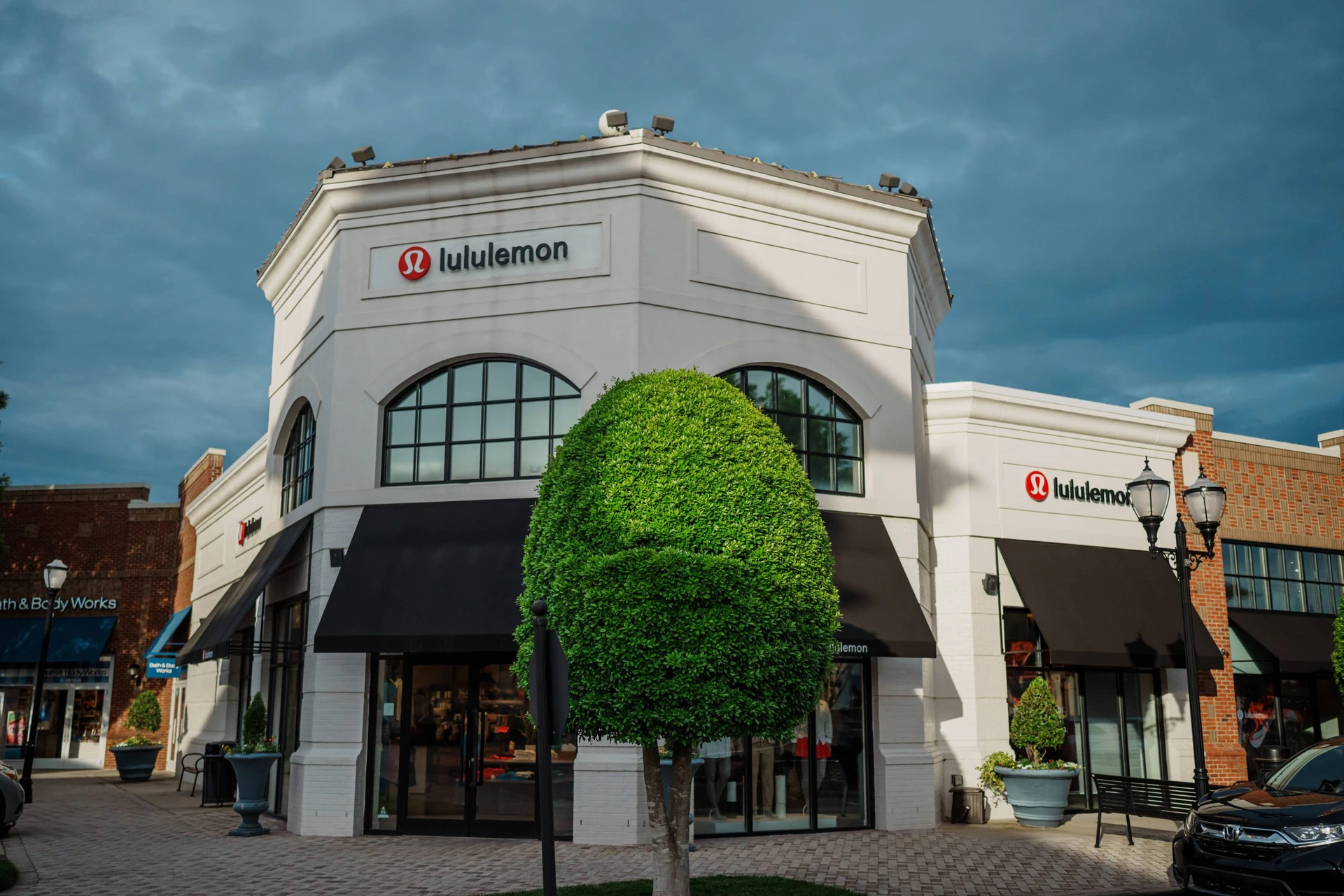
These suburban communities are a bit more upscale than other areas around Charlotte, and they tend to cater to families with children. They’re more white-collar type neighborhoods that are home to business professionals and offer a plethora of family-oriented activities and shopping experiences. Because of this, you might find more kid-centric food options, family-oriented barbershops, or photography centers. But you’ll also find plenty of traditional retail stores and restaurants.
The heart of Ballantyne and the nearby city of Blakeney both offer excellent opportunities for catering to a suburban crowd with higher household incomes. Around $30/sf/yr is an average price for retail for lease in these neighborhoods, while for sale options hover around $600/sf.
4. Retail Space in the Charlotte Airport Neighborhood
The Airport Neighborhood – home to the busy Charlotte Douglas International Airport – is best known as one of the top markets for industrial space and warehouse space. Because of this, it’s not as busy of a retail center as the more suburban and walkable neighborhoods around Charlotte. Still, there are some restaurants and hotels, and of course, retail space within the airport itself. The popular Charlotte Premium Outlets outdoor mall is also located on the southern side of the airport area.
Much of the space for lease here tends to be in retail strip centers and leases for around $23/sf/yr. There are also some standalone properties for sale that average at around $640/sf.

5. Retail Space in the Charlotte SouthPark Neighborhood
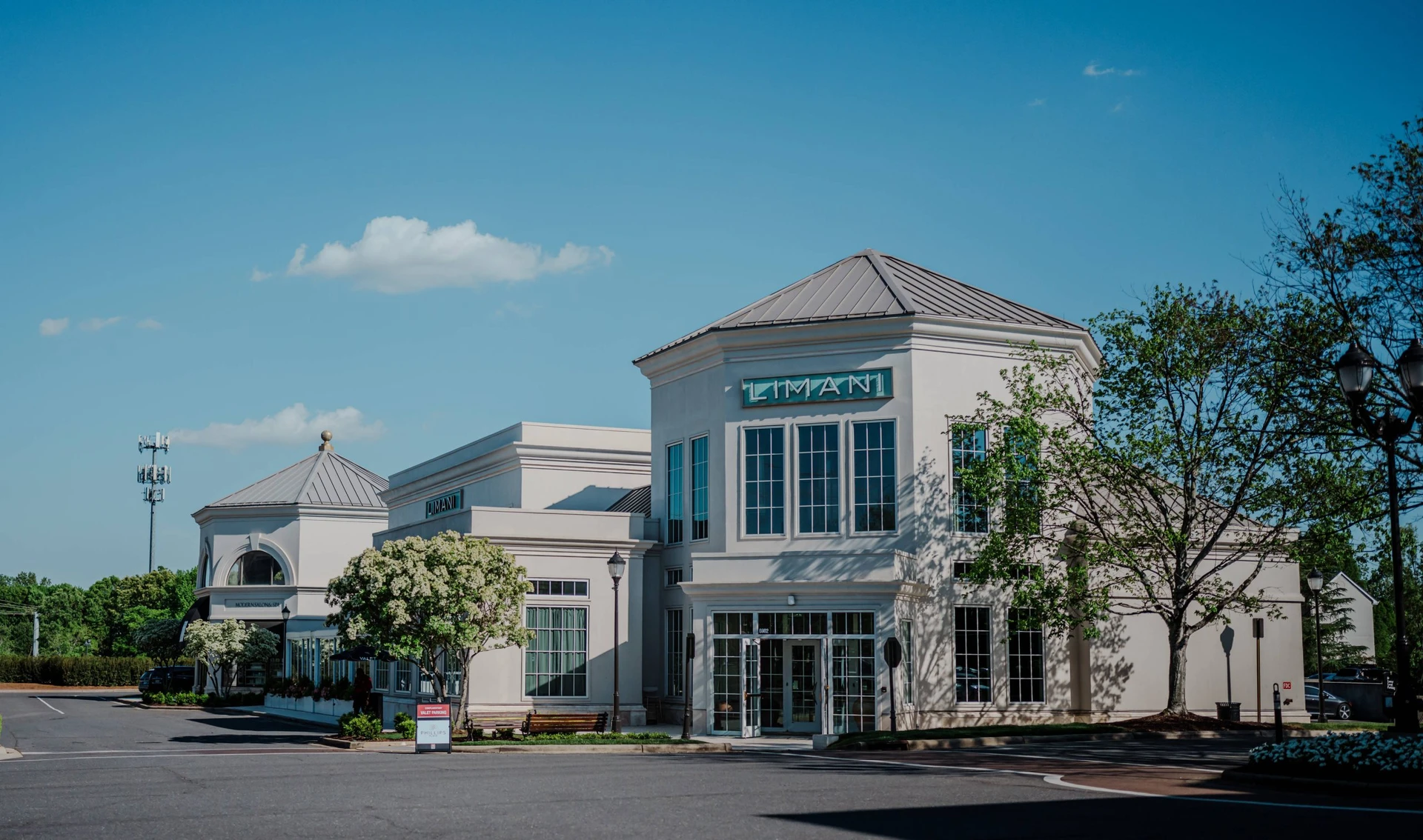
The SouthPark neighborhood is a popular retail area, largely due to the presence of the SouthPark Mall. While the mall is a sort of centerpiece for the shopping in this neighborhood, many smaller retail shops and restaurants surround it.
The SouthPark Mall – located just 5 miles from Uptown – is a premier shopping center that covers over 1,600,000 square feet and is home to over 150 stores and restaurants. Each year, it brings over 12 million visitors to the area. High-end stores like Coach, Louis Vuitton, Gucci, Rolex Boutique, and Tiffany & Co. tend to be major luxury attractions in this high-class mall.
This major attraction boosts the retail success of the entire area of SouthPark, with the neighborhood offering a number of high-quality listings. Due to the higher-end properties in this area, prices tend to be a bit steeper in SouthPark, averaging around $60/sf/yr.
6. Retail Space in the Charlotte Lake Norman Area: Davidson, Cornelius, Huntersville, Mooresville, and Denver
The Lake Norman area north of Charlotte has higher concentrations of wealth due to the beautiful lakeside living options. It has your usual retail, like grocery stores, boutiques, restaurants, and service-oriented retail, but it also has water-related stores such as jet-ski and boat retail.
Many properties you’ll find here are grocery-anchored retail. Chinese restaurants, nail salons, hair salons, and other fast food options are common. There are also some more high-end retail options here too, like Berkdale Village and the Apple store in Huntersville.
Pricing for retail real estate throughout these upscale towns tends to run at around $28/sf/yr for rental space and $340/sf for for sale properties.

7. Retail Space in Fort Mill, Indian Land and Rock Hill
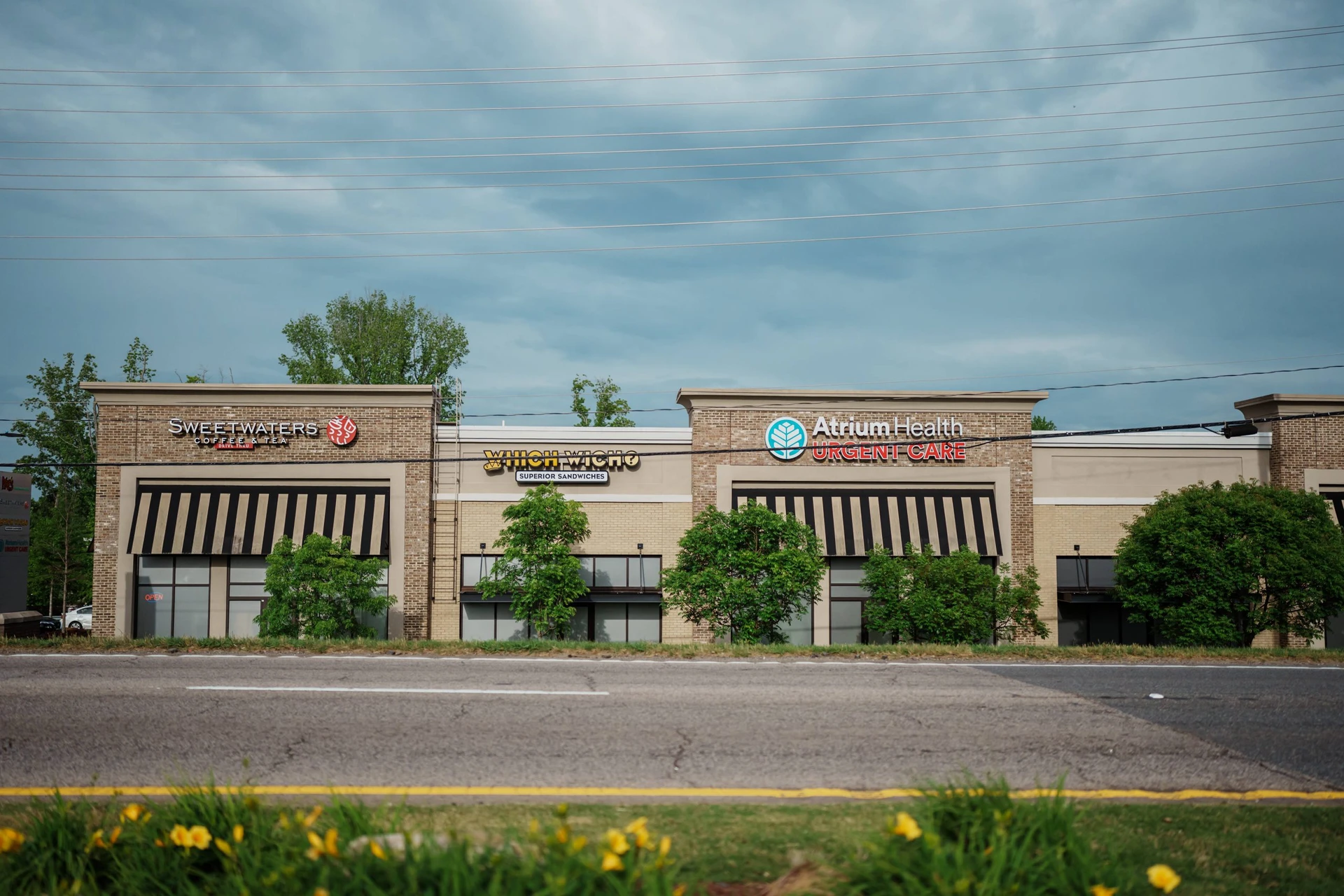
Fort Mill, Indian Land, and Rock Hill are located in South Carolina but still offer close proximity to Charlotte. These cities tend to have a family-oriented feel and are home to grocery stores, retailers, gyms, restaurants, and more.
These neighborhoods tend to be a little bit more spread out than others closer to the city, and therefore, have more available land to build on. Because of this, they offer the opportunity for bigger concepts like golf courses. Plentiful lease options in this area cost around $26/sf/yr, while for sale properties run at around $460/sf.
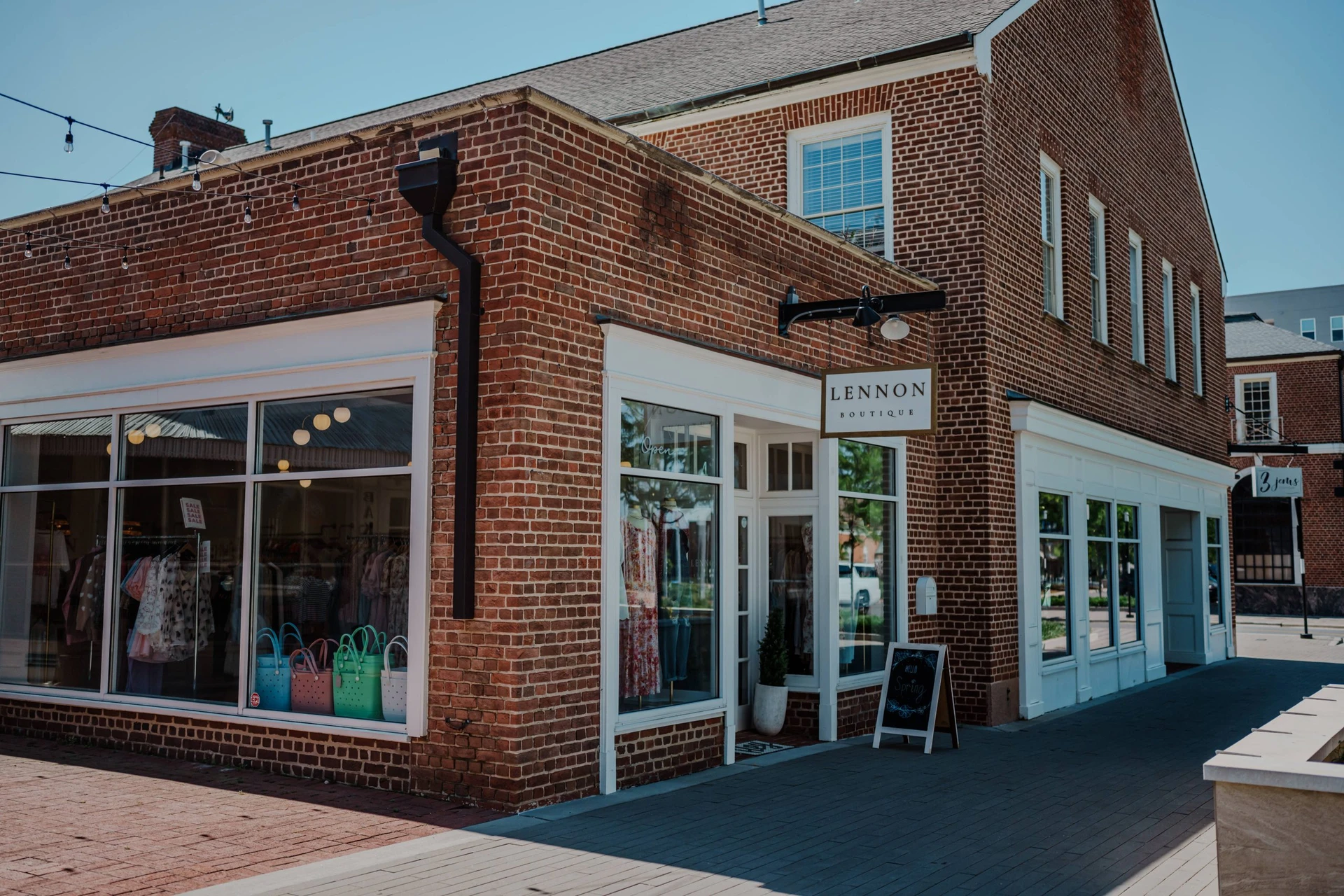
8. Retail Space in Matthews and Indian Trail
Matthews and Indian Trail are southeast of Charlotte and offer convenient access to I-485 and U.S. Route 74. Matthews has a higher concentration of weather with nicer shops and retail, and the area gets a bit more rural as you head through Indian Trail. Heading even further southeast toward Monroe, the retail landscape starts to target lower household incomes, offering more discount-type stores.
On average, retail real estate up for sale in this region averages around $508/sf, while retail for lease is around $25/sf/yr. Retail strip centers are popular in this area.

9. Retail Space in Harrisburg, Concord, Kannapolis, Salisbury, and Mint Hill
Similar to Indian Trail, these areas a little further outside of the city offer more available land and opportunity for bigger concepts. At the same time, household income is lower and retail tends to be a little bit less upscale. Grocery stores and restaurants are common in these cities. There’s also the Concord Mills Mall in Concord – a mega indoor mall that has an aquarium, movie theater, escape room center, and more.
Retail space for lease in the neighborhoods of Harrisburg, Concord, Kannapolis, Salisbury, and Mint Hill tend to be more affordable at an average of around $20/sf/yr. Properties that are for sale average around $590/sf.
10. Retail Space in Belmont and Gastonia
Belmont, just west of the Charlotte Douglas International Airport, is an up-and-coming town with access to the Catawba River. Because of this, it tends to have nicer boutique shops and restaurants.
Gastonia is west of Belmont and a bit farther from Uptown, Charlotte, and tends to target a lower household income demographic. This I-85 corridor makes both of these Charlotte cities easy to access.
Retail space in this area tends to be quite affordable, with many for lease properties running at just $10/sf/yr. Retail space for sale typically runs between $100/sf – $300/sf.

11. Retail Space in Steele Creek (Westinghouse Boulevard)
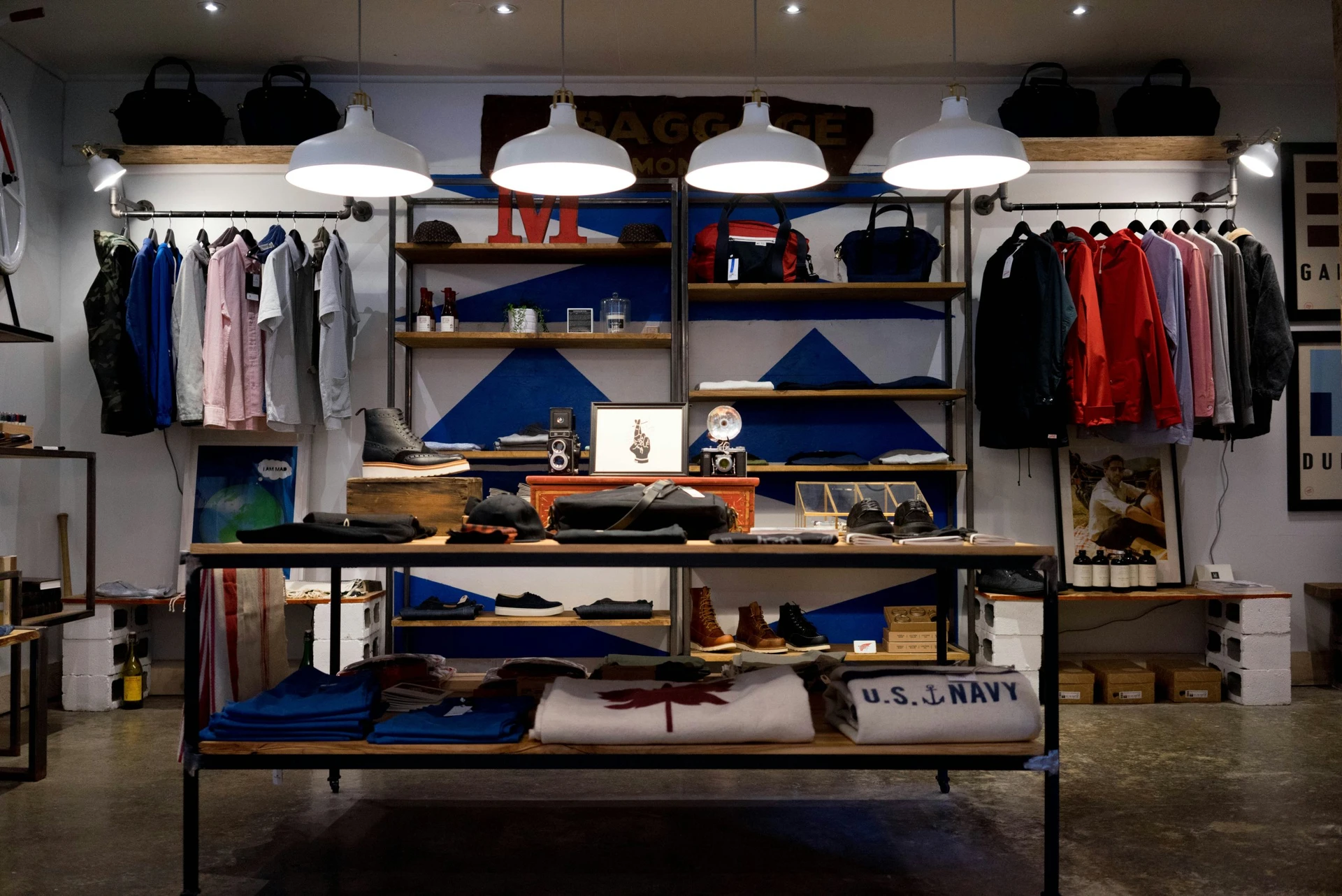
Steele Creek is southwest of Charlotte and is parted by Westinghouse Boulevard running through it. It holds a mix of different retail space options, including restaurants and other stores and shopping opportunities. Perhaps Steele Creek’s best-known retail experience is the Charlotte Premium Outlets, a newer outlet mall on the border of Steele Creek and the airport neighborhood. This mall has quickly become a popular attraction in Mecklenburg County. At nearly 400,000 square feet, it’s home to over 100 stores.
For lease options in this area tend to include a lot of retail strip centers, which lease for around $28/sf/yr. There are some properties for sale as well, which are mostly standalone buildings.
12. Retail Space in Pineville
Just northwest of Ballantyne and pressed up against the South Carolina border, Pineville has a plethora of restaurants, shopping opportunities, and grocery stores, but with a bit lower household income than its neighboring city of Ballantyne. Pineville is located on the I-485 corridor and close to I-77, making it easy for residents to access other parts of the Carolinas.
The Pineville mall, called Carolina Place, is a major retailer in this area, although as is typical of an indoor mall, it doesn’t attract as many shoppers as it once did.
Properties are affordable in this area. For lease properties average at $18/sf/yr and range from 2,000-20,000 square feet.


13. Retail Space in the Charlotte Plaza Midwood Neighborhood
Plaza Midwood is a busy neighborhood that’s just northeast of Uptown, Charlotte. It’s especially attractive for business professionals and tends to draw shoppers and diners with its many restaurants, entertainment options, and retail opportunities. In general, this neighborhood tends to be a bit more upscale than other parts of Charlotte that might be farther from the center of the city.
Tryon Street is an especially popular shopping strip close to this neighborhood, although you’ll find opportunities sprinkled around the roads of Plaza Midwood. There are quite a few standalone buildings here in the 1,000-2,000 square foot range, as well as some taller options with 5,000 square feet or even more. For leasing in this area, you should expect to pay around $26/sf/yr.
For sale properties here are also largely concentrated on Tryon Street. Most are Class C, larger buildings and range from around $100-$400/sf.
14. Retail Space in the Charlotte NoDa Neighborhood
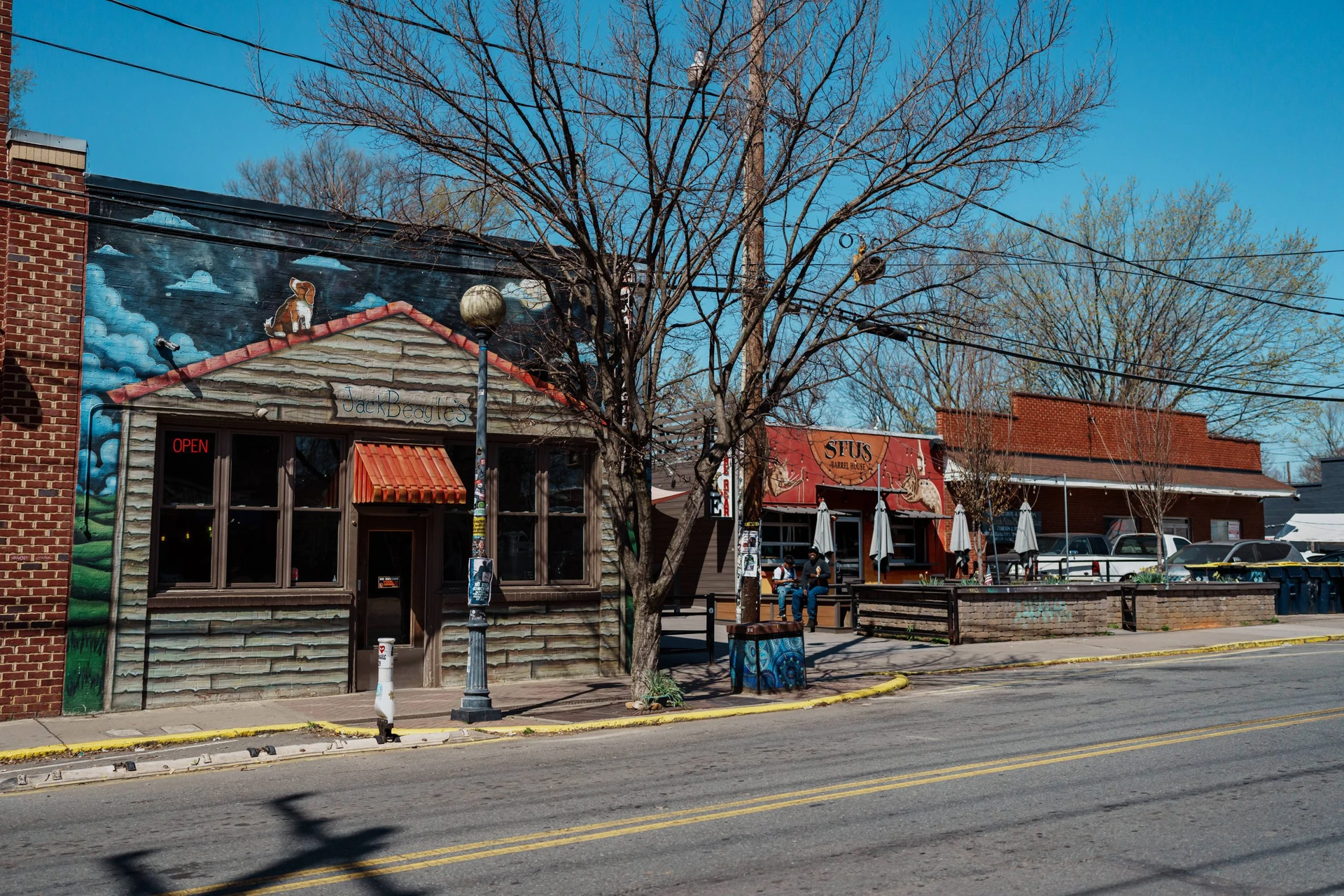
NoDa – short for North Davidson – is somewhat of an up-and-coming area that’s also nestled closely to Charlotte’s city center. It’s right on the light rail and tends to target a younger audience without kids. Because of this, its retail space mostly consists of bars, breweries, and restaurants that cater to single people, rather than a family-type atmosphere. A lot of these retail spaces are actually older industrial buildings that have been converted through adaptive reuse.
NoDa has some for sale and for lease properties available when it comes to retail real estate. Tryon Street is a busy part of this area. For lease properties around NoDa tend to range from $18/sf/yr to $40/sf/yr, with an average of about $26/sf/yr.

15. Retail Space in the Charlotte University City Neighborhood
The University City neighborhood of Charlotte is home to The University of North Carolina at Charlotte, a public university located on the north east side of Uptown. This area tends to be a mixture of commercial real estate due to the campus feel. It has retail – grocery stores, restaurants, shopping spaces, and more – as well as a lot of corporate companies.
A lot of the retail here tends to be concentrated in the North Tryon area. Rental properties vary from about 1,000-7,000 square feet and generally cost around $21/sf/yr. For sale options around this area tend to be a little bit larger and cost an average of $235/sf.
16. Retail Space in Monroe
Monroe is located southeast of Charlotte in Union County. This area is far enough away from the city that the household income here has dropped off fairly significantly. Because of this, a lot of the retail around Monroe revolves around more discount options, like dollar stores. Much of the retail in this area is located along the busy Highway 74.
Most of the properties available for lease in this neighborhood are standalone stores that range from around less than 1,000 square feet to 3,000 square feet. The average cost to lease retail property here is $18/sf/yr.
If you’re looking to buy, you can expect to pay around $550/sf in Monroe. These buildings are mostly Class B or Class C. The for sale options here tend to be larger properties than the leasable buildings.

17. Retail Space in Hickory, Conover, Newton, and Lincolnton
The northwest area of Hickory, Conover, Newton, and Lincolnton is big for furniture manufacturing and other factories. The household incomes are not as high in this area, and retail mainly consists of grocery stores, restaurants, and shopping centers that are targeted to mid-level-income consumers.
While all of these cities have available retail space, Hickory tends to offer the largest amount of property options.
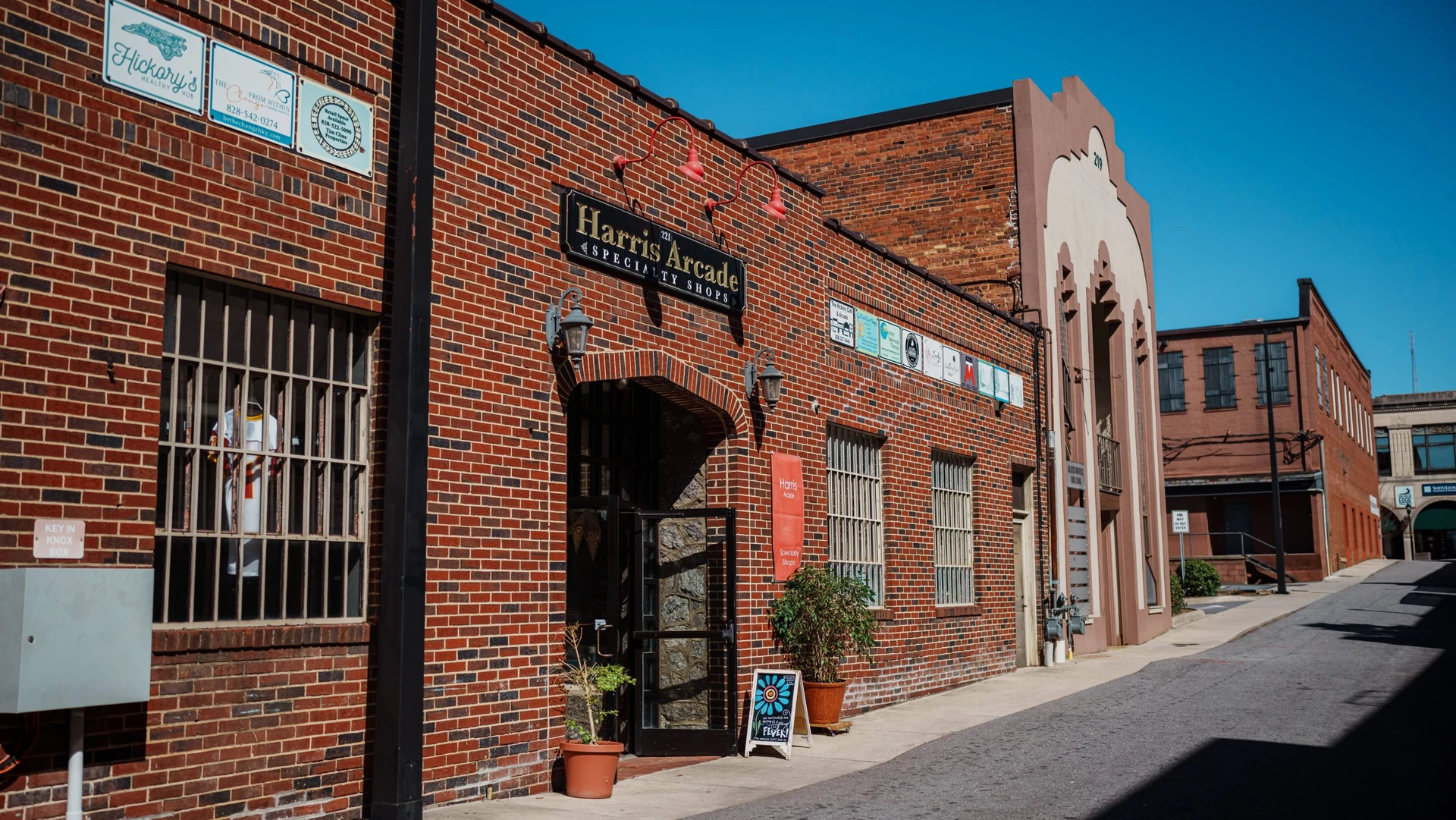
There are a lot of retail strip centers in these neighborhoods. Some of them offer the entire strip for lease, but there are also options for leasing out smaller segments. The average price of retail rent around this area of Charlotte is $15/sf/yr.
For sale properties here range quite a bit in price. Some of the older, Class C buildings that need more work are listed for as low as $65/sf, while more high-end buildings with good visibility and easy access can run as high as $1,000/sf. The average cost of retail buildings for sale in this area is $313/sf.
18. Retail Space in Statesville
Statesville is another up-and-coming area that’s conveniently located close to I-40 and I-77. It has a lot of distribution and warehousing, as well as plenty of traditional retail. The household income here is mid-range, so you don’t have much for upscale retail in this area.
Most of the retail options that are for lease in this area are located in retail strip centers, while the properties for sale are more standalone buildings. The average cost of leasing retail space in Statesville is $13/sf/yr, while buying generally costs around $190/sf.

19. Retail Space in the Charlotte North – I-85/I-77 Corridor Neighborhood
This high-traffic area north of Charlotte is home to a lot of industrial usage with less retail real estate. Although you won’t find a lot of shopping options here, there are a few stores and restaurants that specifically cater to the industrial users who work in the area.
In the Charlotte North submarket, rental properties average around $27/sf/yr. Retail properties that are for sale in this neighborhood run at around $600/sf.
Case Study – Transforming a New Pineville Grocery Retail Space
At Regent Commercial Real Estate, we help all sorts of businesses to find the ideal space that they can transform into their new retail home. From taekwondo studios to ice cream shops to gyms, tea stores, restaurants, and more, we’re honored to help you find your next retail property.
Recently, we helped a client close on a 15,000 square foot Indian grocery store retail space in Pineville. In order to make the new space “home”, they essentially had to demo the inside of the space and do an almost brand new build out. This required architectural planning, permitting, and coordination of numerous details. But it was worth it to create an ideal space for the new grocery store on just the right property, at an affordable price, and in their perfect location.
We had the privilege of helping our client find this workable property in a location that worked well for their target customers. After finding and touring the property, we negotiated the contract and helped the client walk through the many steps of planning and permitting in order to make the new store just what they needed it to be.
For our team at Regent CRE, simply giving you a list of properties and taking you on a tour isn’t enough. We’re dedicated to getting to know your business and your goals in order to help find the best space for you, as well as sticking with you through the many additional steps of the closing and move-in process.

FAQs About Charlotte Retail Space
What are the main types of retail real estate?
Most retail locations fall into one of the following categories:
- Grocery-anchored retail centers
- Retail strip centers
- Standalone retail centers
- Indoor malls
- Outdoor malls
What are the most important factors to consider when choosing a retail space?
Before buying or leasing a property, be sure to carefully consider the following:
- Location. This includes household incomes for the area, the density of residential units close by, and your competition.
- Your trade area. Consider your proximity to customers and how far they expect to drive for your products.
- Buy or lease? There are pros and cons of each.
- Features. These might include parking, landscaping, heat and air conditioning, kitchens, storage areas, etc.
- Building class. Properties tend to be classified within Class A (best), Class B, or Class C (worst) depending on their age, quality, features, and location.
Budget. It’s vital to define your budget as well as the income levels you’ll attract.
What's the average cost of renting retail space in Charlotte?
The average cost of renting retail space around metro Charlotte is about $25 per square foot. The location, building class, features and amenities, lease options, and more all play a factor in determining the cost of renting Charlotte retail space.
How much does it cost to buy retail space in Charlotte?
While most of the retail space for sale around Charlotte, NC is for lease, you will find a few properties for sale in the mix. While the price of retail space varies significantly based on location, building class, and features, properties average around $450 per square foot.
How big are Charlotte's retail space properties?
Many of the traditional retail real estate options around Charlotte fall into the 1,000 - 2,500 square foot range. However, there are opportunities for everything from small spaces in retail strip centers to 50,000 square foot grocery stores to 100,000 square foot big box stores.
What are the wealthiest areas around Charlotte, NC?
The highest income areas around Charlotte tend to be concentrated around the lakes (Lake Norman, Mountain Island Lake, and Lake Wylie) as well as the Uptown area and neighborhoods south of Uptown. These include South End, Ballantyne, Blakeney, Myers Park, and others.
What is the safest neighborhood around Charlotte, NC?
According to a 2024 report, some of the safest neighborhoods around the Charlotte metropolitan area include Tega Cay, Davidson, Fort Mill, Huntersville, Waxhaw, Stallings, Belmont, Mooresville, Cramerton, Mint Hill, Mount Holly, Clover, Stanley, and China Grove.
Where are the best neighborhoods for high-end retail around Charlotte?
High-end retailers tend to do best in the highest household income areas of Charlotte. These include the lake areas, such as Mooresville, Davidson, Cornelius, and Huntersville. Other high-end retail neighborhoods are SouthPark, Ballantyne, Blakeney, and Matthews.
Experience a Competitive Advantage in Your Retail Real Estate Goals With Regent CRE
At Regent Commercial Real Estate, we understand that the retail property you choose has a significant impact on your business. We’re committed to taking the time to understand your business goals in order to help you find commercial listings that line up with your priorities.
When you work with Regent CRE, you can have peace of mind knowing that we’ll walk with you through the whole process, from initial market survey to negotiation to closing. We’ll be there every step of the way.
With over 1000 successful lease and sales transactions closed, we’re well-versed in commercial real estate deals as well as deeply integrated into the greater Charlotte commercial market. Our network of resources means that you can have the greatest advantage as we navigate the many steps of closing on your property together.
We understand the benefits and downfalls of the Charlotte neighborhoods and are honored to put our experience and knowledge to work in order to help you succeed. As a CCIM– and SIOR-designated broker, you can encounter a competitive advantage as you search for your next commercial property – at no extra cost to you.
Ready to move forward with your retail goals? We’re here to help. Contact us today.